Women report mass rapes and looting by military as violence against Rohingya explodes in northwest Myanmar
Locals from U Shey Kya village allege that soldiers stormed their homes, committed mass rape, stole valuables, and burned homes, accusations dismissed as “illogical” and “propaganda” by governmental spokespeople.
The raids in northern Rakhine State follow coordinated attacks by an emergent group of Rohingya militants on multiple border patrol posts, leading to nine police officers’ and five soldiers’ deaths.
Many homes in the village were left with only women after men evacuated from fear of being indiscriminately identified as insurgents, with many fearing disregard of recently imposed political constraints on the Burmese military.
Shelterless migrants arrive on streets of Paris, leading to denunciation by French president
More than 6,000 migrants and refugees seeking to enter the U.K. from France have been funneled into shelters and streets around France following the forced evacuation of the “Jungle” camp in Calais.
Paris security officials estimate an increase in the number of unsheltered asylum-seekers from around 1,500 to 2,000-2,500 in just a few days.
Hundreds of tents and cardboard flooring mark attempts by migrants to shelter themselves from the cold as Paris’s shelter supply—fewer than 1,000 beds—has been far outstripped by demand in the French capital.
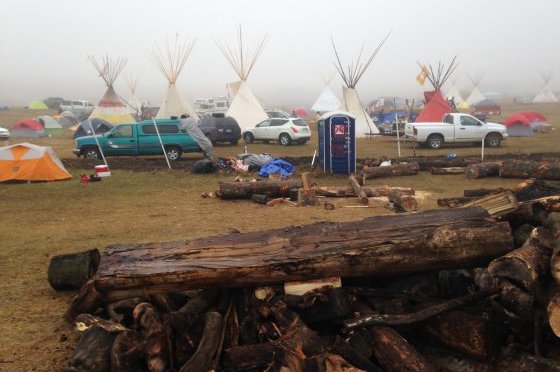
Though having only recently had the spotlight of the national media trained on them, the Dakota Access Pipeline protests have been a months-long clash between, on the one hand, Standing Rock Sioux tribe members, indigenous and non-indigenous allies, and environmental activists, and, on the other, proponents of the nearly 1,200-mile long oil pipeline from western North Dakota to southern Illinois. Indigenous protesters have made recourse to both litigation and direct action in an attempt to halt construction on a pipeline slated to come within a half-mile of the Standing Rock Sioux reservation. The protests have drawn both state and federal intervention, with the National Guard having been brought to protest sites, violent clashes between police and protesters, a legal tango between the Obama administration and district court judges, and increasing pressure on the U.S. presidential candidates to take a stand on the issue.
At issue is what activists say has been a failure on the government’s part to engage Native communities, conduct a thorough environmental and cultural impact assessment ahead of the pipeline’s construction, confront tribe members’ concerns about the potential for water contamination, and adhere to laws regarding the preservation of sacred cultural sites. The approach of the bitter North Dakotan winter has punctuated current protests with a question mark as activists and advocates seek to perpetuate the recently gained media momentum and mobilize public opinion—and, by extension, political pressure—against the pipeline’s construction.


 Outlas