India News | HIV+

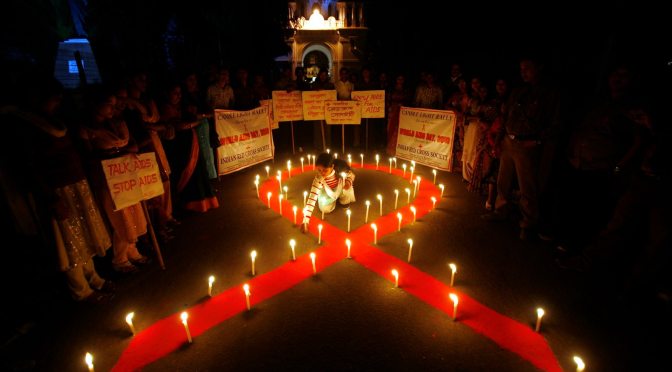
India passes nondiscrimination law securing rights for people with HIV
  • The first of its kind in South Asia, the law prohibits discrimination in employment, housing, education, healthcare, and public accommodations such as restaurants and calls for the establishment of an ombudsman to monitor violations.
  • An estimated 2.1 million people live with HIV in India, with some 1 million currently receiving treatment.
  • Some advocates for the positive community argued that the law does not go far enough to guarantee free treatment for the afflicted.
Read

Parliament clears landmark HIV Bill” (The Hindu | April 2017)

What is HIV/AIDS Bill? All your questions answered” (The Indian Express | April 2017)

India takes flawed first step towards ending HIV and Aids prejudice” (The Guardian | April 2017)

(Image Credit: Jayanta Dey/Reuters, via The Guardian)

Brazil Feature | Black, Brown & Indigenous

The Uncertain Task of Defining Race in Brazilian Affirmative Action

The redress of racial injustice in Brazil, long stymied by the country’s reputation as a “racial democracy,” has gained increasing political attention thanks to the work of black activists across the nation. Brazil’s recent attempts to install socioeconomic and racial quotas in public university admissions have created a number of challenges as fraud and race-policing have pitted student against student in ensuring fair enforcement, particularly as verification committees decide race based on appearance rather than heritage. Foreign Policy and The Globe and Mail examine the volatile debates surrounding Brazil’s new affirmative action policies and the general uneasiness the country has experienced as it has begun to address the long history of discrimination against its black, brown, and indigenous citizens.

Read

Brazil’s New Problem With Blackness” (Foreign Policy | April 2017)

Black or white? In Brazil, a panel will decide for you” (The Globe and Mail | January 2017)

(Image Credit: Tiago Mazza Chiaravalloti/NurPhoto, via Foreign Policy)

Australia & Canada Feature | Indigenous

The Fight for Indigenous Equality, from Australia to Canada

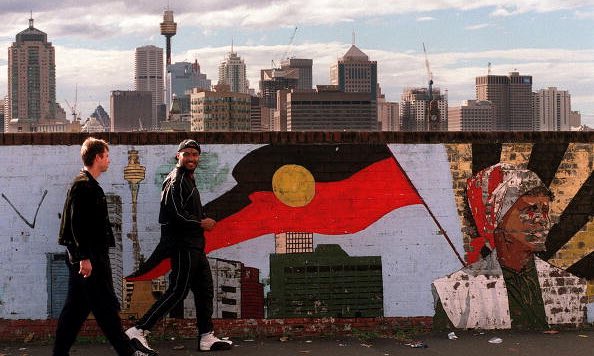
As increased attention to negative outcomes in indigenous communities has pushed their governments to address racial disparities, Australian and Canadian indigenous advocates have drawn attention to the markedly similar ways in which English settler colonialism and systemic racial inequality unfolded in their countries. In both countries, indigenous peoples make up at least a quarter of the prison population, 40% of incarcerated children, and half of those in the child welfare system. Similar policies of forced family dissolution, detention, and delayed dismantlement of legal inequality have pushed advocates an ocean apart to come up with comparative solutions to the persistent indigenous/non-indigenous gap in their countries.

Read

‘It’s the same story’: How Australia and Canada are twinning on bad outcomes for Indigenous people” (The Guardian | April 2017)

(Image Credit: Torsten Blackwood/AFP/Getty Images, via The Guardian)

Italy Feature | Women & Migrants

The Enduring Exploitation of Italy’s Grape Harvesters

Two years after the plight of its grape harvesters crashed into the global consciousness, Italy continues to struggle to uproot the labor practices that have been called “modern-day slavery” by human rights and labor rights advocates. Recent legislation has prioritized the eradication of exploitation, but underground organizations continue to take advantage of the dire conditions of Italy’s most vulnerable. Overworked, underpaid, and subject to extortion by recruiting and transportation agencies, the migrants and poor Italian women enduring the strenuous work of picking and cleaning grapes continue to struggle with difficult choices between precarious work, personal health, and acquiescence in a system designed for their failure.

Read

A Woman’s Death Sorting Grapes Exposes Italy’s ‘Slavery’” (The New York Times | April 2017)

Additional

Fire kills two in Italy migrant farm workers’ ‘ghetto’” (Reuters | March 2017)

(Image Credit: Nadia Shira Cohen/The New York Times)

Russia News | Gay Men

Scores of gay men reportedly sent to concentration camps in Chechnya
  • According to reports from human rights organizations, more than 100 men have been imprisoned in camps the Russian republic of Chechnya where they have been tortured.
  • The abducted men have ranged in age from 16 to 50, some having been lured via social media and with three among them having reportedly been killed.
  • The abductions began as an LGBT advocacy group began applying for permits to hold parades in provincial cities around the country, although the group avoided applications in much of the predominantly Muslim North Caucasus region given the volatile climate.
Read

Chechen Authorities Arresting and Killing Gay Men, Russian Paper Says” (The New York Times | April 2017)

Chechen police ‘have rounded up more than 100 suspected gay men’” (The Guardian | April 2017)

More than 100 gay men ‘sent to prison camps’ in Chechnya” (The Independent | April 2017)

(Image Credit: Musa Sadulayev/AP, via The Guardian)

Egypt News | Christians

At least three dozen killed in church bombings in Egypt
  • At least 25 were killed and 78 injured at St. George’s Church in the Nile Delta city of Tanta, while a second targeted St. Mark’s Cathedral, the seat of the Coptic Pope in Alexandra, killing at least 11 and wounding 35.
  • The bombings, claimed by the Islamic State, came during Palm Sunday observances, a week before Easter and ahead of a planned visit by Pope Francis.
  • The attacks are the latest in a series committed by fundamentalist Islamic militants, with the Islamic State having shifted its strategy in Egypt to targeting the country’s Coptic Christian minority.
Read

Bombings at Egyptian Coptic churches kill 36, injure more than 100” (Reuters | April 2017)

ISIS Claims 2 Deadly Explosions at Egyptian Coptic Churches on Palm Sunday” (The New York Times | April 2017)

Egypt: Isis claims responsibility for Coptic church bombings” (The Guardian | April 2017)

(Image Credit: Khaled Elfiqi/European Pressphoto Agency, via The New York Times)