Tag Archives: 2: Unfavorable

Bangladesh News | LGBT

Four LGBT activists detained in Dhaka after attempting to join new year festivities
  • The four members of Roopbaan, a Bangladeshi LGBT rights group, were arrested for attempting to join Bengali New Year processions under suspicion of illegal assembly.
  • The four were released after their families arrived to retrieve them, when police reportedly told their families they were gay.
  • Roopbaan had attempted to arrange a “rainbow rally” weeks earlier but police had denied permission after fundamentalists issued threats of violence.

Read more:
Bangladesh: Police Detain LGBT Members at Pahela Boishakh Rally” (BenarNews)
Boishakh ‘rainbow rally’ cancelled” (Dhaka Tribune)
Four gay activists freed in Bangladesh” (Firstpost)

(Image Credit: AFP via BenarNews)

Arabian Peninsula News | Lebanese Immigrants

Lebanese immigrants in the Gulf fear deportation as GCC-Lebanon relations deteriorate
  • Relations between Lebanon and the Gulf Cooperation Council have deteriorated after Lebanon refused to condemn attacks on a Saudi ambassador in Iran.
  • Sunni Gulf countries have targeted those viewed as sympathetic or connected to Shiite group Hezbollah in Lebanon, though Lebanese immigrants fear what constitutes “sympathy” or “connection” may be broad and arbitrary.
  • To date, Bahrain and Kuwait have deported Lebanese on the basis of Hezbollah sympathy, and Lebanese in other Gulf countries fear their visa-renewal process.

Read more:
Lebanese expats fearful as Gulf expels dozens accused of Hezbollah links” (Reuters)
Bahrain sends home Lebanese citizens” (The National)
Saudi Arabia’s bitter Lebanese divorce” (Reuters)

(Image Credit: Jonathan Ernst/Reuters)

Turkmenistan News | HIV

Turkmenistan passes law requiring HIV test for foreign workers, couples looking to marry, others
  • Testing will be mandatory for foreigners seeing work visas, couples seeking a marriage certificate, prisoners, drug users, and blood donors.
  • The law implies those found to be infected will be denied government documents for the status (residency, marriage) they are seeking.
  • State media indicated that the law was an attempt to promote “healthy families” and includes a provision that guarantees free treatment for AIDS-infected citizens.

Read more:
Turkmenistan To Require HIV Test For Those Seeking Marriage License” (Radio Free Europe/Radio Liberty)
HIV tests now required before marriage in Turkmenistan” (The Philippine Daily Inquirer)
Turkmenistan requires HIV test for marriage license seekers” (AP)

U.S. News | LGBT

Mississippi governor signs sweeping anti-LGBT bill into law
  • House Bill 1523 allows for businesses and government workers to set religiously based workplace policies and refuse service to LGBT and unmarried cohabitating individuals on religious grounds, including public accommodations, adoption, foster care, counseling, and marriage certificate registration.
  • Governor Phil Bryant claimed the law didn’t conflict with federal laws but merely provided protection for persons who for religious reasons wished to refuse service to LGBT customers and clients.
  • The bill declares the government cannot discriminate against such “persons,” which includes a “sole proprietorship, or closely held company, partnership, association, organization, firm, corporation, cooperative, trust, society or other closely held entity.”

Read more:
Mississippi Governor Signs Sweeping Anti-LGBT Bill Into Law” (BuzzFeed News)
LGBT couples can be refused service under new Mississippi law” (The Guardian)
Religion law adopted in Mississippi over gay rights protest” (Reuters)

(Image Credit: Rogelio V. Solis/AP, via BuzzFeed News)

Canada News | Immigrants & Refugees

Canadian government warns refugees and other immigrants about phone scams
  • Extortionists have targeted new arrivals, homing in on those with non-English/French last names and demanding money to avoid denaturalization, passport seizure, or deportation.
  • Total complaints—including new arrivals—reached 15,000 in 2015, ten times more than the previous year, and already number more than 5,000 in 2016.
  • More than 1,100 victims, native-born and immigrant, have lost more than C$3.5 million (US$2.68 million) since 2014.

Read more:
Canada warns refugees, immigrants about phone extortion scams” (Reuters)
RCMP warn of phone scam targeting and threatening immigrants” (CBC News, January 2015)
Phone scam targets immigrants across Canada” (Global News, January 2015)

(Image Credit: via CBC News)

Japan News | Women & Youth

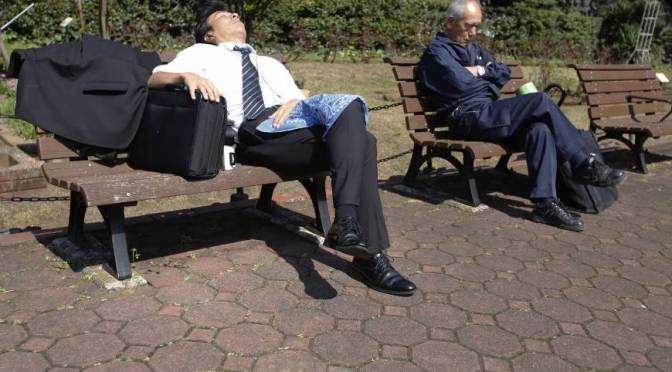
Death from overwork on the rise among Japanese youth and women as non-regular contracts increase
  • Karoshi, or death by overwork, is a long-recognized phenomenon in Japanese society often associated with white-collar men, but labor and demographic changes have contributed to its expansion to youth and women.
  • For a death to qualify as karoshi, claimants—usually family members—must prove the victim died from work-related cardiovascular illness or suicide from overwork (including demonstration of significant overtime work).
  • Karoshi claims hit a record high of 1,456 in 2015, with labor analysts pointing to the rise of non-regular work in Japan (including temporary and temp-to-perm contracting) as a significant contributor to their growth.

Read more:
Death by overwork on rise among Japan’s vulnerable workers” (Reuters)
Abe administration looks to reduce limits on overtime work” (The Japan Times)
Karoshi: Stroke, heart attacks and suicide attributed to overwork killing hundreds of Japanese employees” (ABC, June 2015)

(Image Credit: AP, via The Japan Times)

Interregional Feature | Refugees with Mental Illness

The Spiraling Mental Health of Syrian Refugees

“Is it because these refugees are coming from somewhere where they’ve seen their families butchered and suffered some kind of trauma? […] Or is it because as refugees they had to wander across half of Africa for a couple years before they ever got to Europe? Or is it because that when they got to Europe and eventually Sweden, they lived in fear of being kicked out of the country?”

As refugees find themselves piling up at closed borders, stuck indefinitely in overcrowded camps, and resettled in countries they may have had little to no connection to, reports are indicating an increasing prevalence of mental health problems and risk of long-term illness. The stresses of war, upended lives, separated families, life-threatening travel, and an uncertain future have caught up to a growing number of refugees, causing severe degradation of their mental health relative to other non-refugee migrant groups.

Humanitarian workers have observed that deteriorating mental health conditions with little access to appropriate healthcare have contributed to violence and vulnerability to radicalization. While refugees tell stories of loss, desperation, and disillusionment, field psychologists report increases in or risk of PTSD, panic disorders, depression, anxiety, and a range of psychotic conditions among refugee populations, further compounding their already marginalized status and setting the stage for potentially lifelong psychological battles.

Read more:
Refugees Suffer a Higher Rate of Psychotic Disorders” (Scientific American)
Lebanon struggles to help Syrian refugees with mental health problems” (Reuters)
Idomeni’s refugees suffer mental anguish” (Deutsche Welle)
Psychological toll on Syrian refugees alarming, many suffer from mental illnesses” (The Daily Sabah)
Syrian Refugees In Canada Face Ongoing Health Challenges: Study” (The Huffington Post)

(Image Credit: D. Tosidis/Deutsche Welle)

Zimbabwe News | Black & White

Zimbabwe looks to black farmers to provide reparations to displaced white farmers
  • As the Zimbabwean government struggles to keep its economy afloat, it has toyed with shifting the burden of reparation to black farmers, who lease land from the government, through a compensation fund created through their rent payments.
  • White farmers were displaced as a part of a contentious indigenization program that saw massive land redistribution beginning in 2000, promoted as a corrective to the expropriation of land from black families under colonialism.
  • More than 6,000 farms remain for reparation assessment, with only 240 white farmers having begun to receive payment.

Read more:
We can’t pay: Zimbabwe farmers resist compensating evicted white landowners” (Reuters)
Zimbabwe May Ask Black Farmers to Help Repay Ousted Whites” (Bloomberg)
Zimbabwe begins talks to compensate evicted white farmers” (AfricaNews)

(Image Credit: via AfricaNews)

South Korea News | Sex Workers

South Korean sex workers protest court ruling upholding criminalization of sex work
  • Pro-sex work activists protested the Constitutional Court’s decision to uphold a 2004 law that set punishments for both sex workers and customers, arguing it unfairly limits women’s economic opportunity and punishes poor clientele while paid relationships among the wealthy persist.
  • Sex workers and consumers face up to a year in jail or a fine of 3 million won ($2,600).
  • Activists say the ruling violates their right to work and announced intentions to petition the United Nations.

Read more:
South Korean Court Upholds Ban on Prostitution” (The New York Times)
South Korea prostitutes decry court ruling, demand right to work” (Reuters)
South Korea Upholds Tough Anti-Prostitution Laws” (AP via ABC News)

(Image Credit: Jean Chung/The New York Times)

Ethiopia News | Oromo

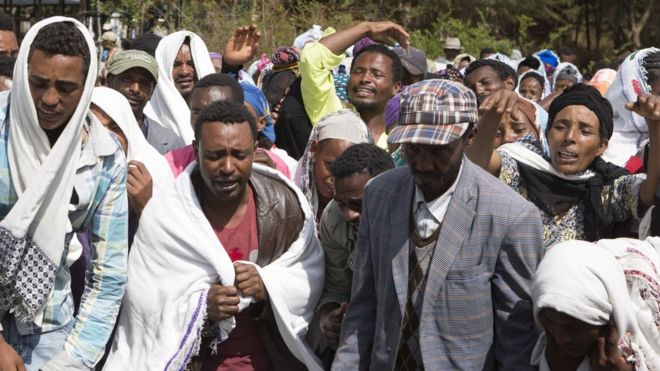
Oromo Ethiopians clash with government over land, language rights
  • Members of the ethnic community have been protesting in a cycle of dissent and retribution since November, with activists reporting as many as 200 dead despite largely peaceful demonstrations.
  • The Oromo have clashed with the government over land rights as they have found themselves pushed off their land by ongoing urban development driven by the country’s economic boom.
  • Language rights have been a particular flashpoint, with the government’s refusal to officially recognize Oromo, the country’s most widely spoken native language, leading to Amharic-only instruction in schools.

Read more:
Video: Anger among Ethiopia’s Oromo ethnic group boils over” (France 24)
What do Oromo protests mean for Ethiopian unity?” (BBC)
Ethiopian students demand end to police crackdowns in rare protest” (Reuters)

(Image Credit: via BBC)

Mozambique Feature | LGBT & HIV

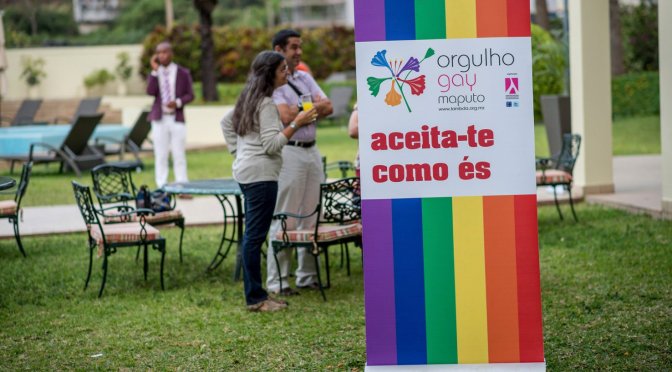
LGBT Mozambicans’ Struggle for Healthcare Visibility and Protection

Despite the decriminalization of homosexuality in Mozambique in June 2015, LGBT Mozambicans, particularly those living with HIV, are still struggling for health security in the nation. While international organizations have stepped in to provide support, domestic clinics continue to discriminate while attempting to contain the country’s HIV infection rates, one of the highest in the world. Advocacy groups have begun working to create guidelines for the testing and treatment of the LGBT population as the continued exclusion of the highest-risk population has exacerbated the public health crisis.

Read more:
Mozambique’s enduring discrimination leaves gay men untreated for HIV” (The Guardian)

Additional:
Lambda (Mozambique LGBT advocacy group)
Dispatches: Mozambique’s Double Speak on LGBT Rights” (Human Rights Watch, January 2016)
Mozambique decriminalises gay and lesbian relationships” (BBC, July 2015)

(Image Credit: LambdaMoz, via The Guardian)

U.S. Research | Black & Children with Disabilities

Disproportionate Suspension Rates in U.S. Charter Schools

A new study has found that black students and students with disabilities are suspended at considerably higher rates than their peers in charter schools at both the elementary and secondary level. At the secondary level, Latino and Native American students join them in disproportionate suspension. The report from the Center for Civil Rights Remedies at the UCLA Civil Rights Project spells particular trouble for black students with disabilities and has troubling implications in the fight against the school-to-prison pipeline.

4.1% (all students) vs. 9.7% (with disabilities) vs. 3.7% (without disabilities)

Suspension rates at the elementary level by ability

4.1% (all students) vs. 8.7% (black) vs. 2.1% (white) vs. 2.4% (Latino) vs. 3% (Native American)

Suspension rates at the elementary level by race/ethnicity

11.6% (all students) vs. 20.8% (with disabilities) vs. 10.6% (without disabilities)

Suspension rates at the secondary level by ability

11.6% (all students) vs. 22% (black) vs. 5.6% (white) vs. 9.1% (Latino) vs. 10.9% (Native American)

Suspension rates at the secondary level by race/ethnicity

7.8% (charters) vs. 6.7% (non-charters)

Suspension rates at the K-12 level

15.5% (charters) vs. 13.7% (non-charters)

Suspension rates of students with disabilities (K-12)

7% (charters) vs. 5.7% (non-charters)

Suspension rates of students without disabilities (K-12)

50+%

Suspension rate of students with disabilities at 235 charter schools

Years studied: 2011-12

Read more:
Charter Schools, Civil Rights, and School Discipline: A Comprehensive Review (The Center for Civil Rights Remedies)
Students With Disabilities Suspended More Often At Charters” (Disability Scoop)

Malawi News | Mozambican Refugees

Mozambicans flee to Malawi as political violence spreads in their country
  • Since December, more than 11,500 have fled Mozambique to Malawi as RENAMO, Mozambique’s major opposition party, clashed with the ruling FRELIMO government.
  • Congested conditions have pushed the UN High Commissioner for Refugees (UNHCR) to look at relocation options for the Mozambican refugees, but the Malawi and Mozambique governments have clashed over refugee support.
  • RENAMO’s militarization has threatened to reignite violent conflict in Mozambique, which languished under a civil war from 1977 to 1992.

More:
More Mozambicans flee to Malawi as rebels, govt forces clash (SABC Digital News, YouTube)
Refugees pay the price of Mozambique power struggle” (IRIN News)
Malawi, Mozambique clash” (Malawi24)
Malawi to reopen former camp, as Mozambique refugee numbers grow” (UNHCR press release)

(Image Credit: via IRIN)

Nauru News | Refugees

Dozens of refugees held in Nauru while seeking asylum in Australia protest their detention
  • Protests have continued for more than a week as some of the asylum-seekers have been detained in the open-air center Nauru runs for Australia for 1,000 days.
  • The demonstrations coincided with Australian protests decrying Australia’s controversial offshore detention policy sending refugees who attempted to enter the country without authorization almost 2,800 miles away to Nauru.
  • Despite reports to the contrary, Australian and Nauruan authorities argue facilities are well-maintained, have good healthcare and activities, and, except during times of protest, allow for detainees to travel into the surrounding community.

Read more:
Locked gates and erected fences contain Nauru asylum seeker protests” (The Guardian)
Asylum seekers on Nauru determined to keep up protests” (Radio New Zealand)
Rapes and fears for safety on Nauru uncovered by independent Moss review” (The Guardian)

(Image Credit: via The Guardian)

Australia News | Refugees

Few of Australia’s controversial temporary visas for refugees are reaching their targets
  • Temporary protection visas (TPVs) and the Safe Haven Enterprise Visa (SHEV) were introduced as three-year and five-year work or education visas for refugees, respectively, requiring them to work or study to avoid losing their residency.
  • While some 2,000 have applied for the SHEV, refugee advocates say only 20 have been processed in the 18 months since the immigration ministry announced they would be used instead of opening pathways to permanent residency.
  • Without a SHEV, refugees are forced to remain in offshore detention, another of Australia’s controversial refugee policies.

Read more:
Temporary Protection Visa and Safe Haven Enterprise Visa (Government of Australia)
Turnbull government accused of ineptitude as refugee visa scheme stumbles” (The Sydney Morning Herald)
Refugees allowed to work and get services in Tasmania from today under SHEV” (ABC, October 2015)
NSW signs up to place refugees in regional areas on five-year visas” (The Guardian, May 2015)

(Image Credit: Firdia Lisnawati/The Sydney Morning Herald)