Tag Archives: East Asia

Cambodia News | Advocates

Demonstrators protest proposed NGO law outside Cambodian parliament
  • Around 100 protesters rallied in solidarity against a draft law requiring NGOs to report their activities and finances to the government.
  • NGOs could face disbandment in the country if the government deems their activities “jeopardize peace, stability and public order or harm the national security, national unity, culture, and traditions of Cambodian society.”
  • Around 5,000 NGOs have registered in Cambodia since 1993, and human rights monitors worry the new legislation–currently awaiting parliamentary approval–would dissolve the strategic barrier between government and civil society and curtail the ability of organizations to defend rights and provide services.
“The draft… appears designed to restrict the legitimate activities of civil society and human rights defenders in violation of the right to freedom of association.”
Read the full AFP story at the Jakarta Post.
Indonesia News | Nationals & Visitors

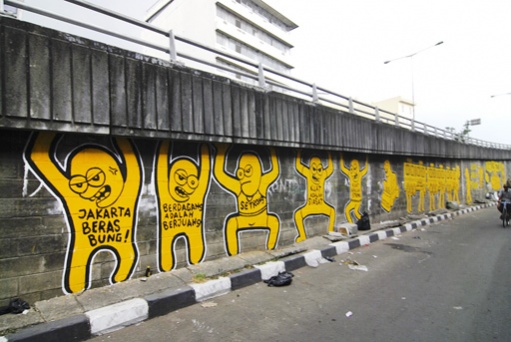
Jakarta Biennale looks to bring Indonesian artists, curators, and histories to world stage
  • With the theme “Learning from the Present: Act Now,” the global art exhibition will open in November under the direction of British art curator and writer Charles Esche.
  • Indonesian artists will make up two-thirds of the 60 artists whose work will be included, with six emerging Indonesian curators shaping the works’ presentation.
  • Esche hopes to combine the unique location of Jakarta and the history of Indonesia with a political perspective on global issues such as wealth inequity, women’s rights, and environmental degradation.
“There is a mural artist who has painted all that had happened in Aceh from the 1980s but the work is still unrecognized. I hope this year’s Biennale could be the right moment to talk about our history.”
Read the full story at the Jakarta Post.

(Image Credit: via the Jakarta Post)

Beer festival in Muslim-majority region of China angers exiled leaders
  • The centerpiece of the festival, held in Niya County in Xinjiang, was a drinking competition that offered monetary prizes to the winners among the 60 attendees from the largely agricultural community.
  • The local government–with regional backing–promoted the event in the run-up to Ramadan, and with Quranic prohibitions on the consumption of alcohol, Muslim leaders from the exiled World Uyghur Congress considered the event a deliberate provocation.
  • The Communist Party allows restricted freedom of religion only for recognized groups, and fears of extremism have led to crackdowns on activity in Muslim communities, of which ethnic Uyghur communities form a part.

Read the full story at Reuters.

Malaysian court fines nine and sentences two trans women to jail for “cross-dressing”
  • The group of women were arrested in Kelantan, one of the 13 of Malaysia’s 14 states that criminalizes cross-dressing.
  • The lawyer representing the group has filed an appeal, and the two jailed have been released on bail.

“Laws against ‘a male person posing as a woman’ not only deny transgender women in Malaysia our fundamental rights as citizens of the country, they also contribute to a hostile environment. … These laws lead people to perceive us as criminals and subject us to humiliation, hate crimes, and other forms of violence.”

Read the full story at PinkNews.

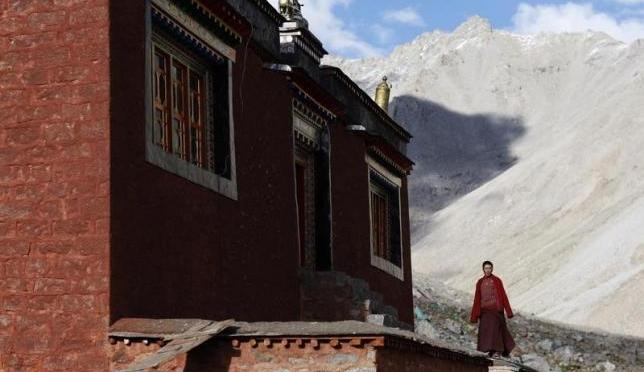
China opens new path to Tibet holy site for Indian pilgrims
  • The new land passage offers a route from India through the Himalayas to Mount Kailash.
  • In addition to its geographic isolation, Kailash has remained out of reach for Hindu and Buddhist pilgrims due to China’s tight visa restrictions on travel to Tibet.
  • The opening comes as China and India work to improve relations and remove obstacles–including ongoing border disputes–to improved economic and political ties.

Read the full story at Reuters.

(Image Credit: Jacky Chen/Reuters)

Taipei becomes second Taiwanese city to recognize same-sex partnerships
  • The registration is the gateway for partners to represent each other in hospital, court, and police institutions in the Taiwanese capital.
  • Couples still lack inheritance rights and identification via household registration and ID cards.
  • Kaohsiung became the first city in Taiwan to recognize same-sex partnerships in May.

More on this story at Gay Star News.

(Image Credit: Facebook photo, via Gay Star News)

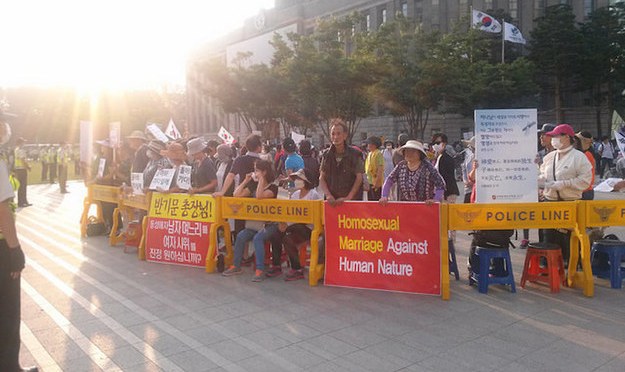
South Korean court rules LGBT march can proceed as planned following the police’s injunction against the event
  • Police had earlier denied the necessary permits to the Korean Queer Cultural Festival as a result of permit applications filed by conservative Christian activists to block the event.
  • Last year’s march saw conservative activists disrupting the parade through route blockage and protesting.
  • Organizers expect around 20,000 to participate in the march.

“This court’s decision in relation to the police’s unjust notice prohibiting assembly is important. … Within a democratic country, built on civil society, the guarantee that society can use their voice has a deep meaning.”

More on this story at BuzzFeed.

(Image Credit: Simon Williams-Im via Flickr, via BuzzFeed)

Ahead of Myanmar elections, concerns mount over extremist tactics among Buddhist nationalists as memories of recent violence persist
  • Hundreds were killed in 2012 and 2013 in clashes between Myanmar’s Buddhist majority and Muslim minority, particularly in the western state of Rakhine.
  • Politicians are leery of alienating Buddhist-majority constituents by condemning the violence, but face international pressure to speak up for ethnic and religious minorities.
  • Myanmar transitioned to semi-democratic rule in 2012, but with uneven rights to expression and anxiety over the upcoming elections, non-Buddhists (particularly Muslims) are fearful for their security.

More on this story at Reuters.

(Image Credit: Soe Zeya Tun/Reuters)

African immigrants in China face strict immigration restrictions and an ambivalent public
  • One report puts the number of Africans with residence permits in Guangzhou at 30,000, with an additional undocumented 300,000.
  • The detention of some in the community for overstaying or failing to obtain their visas contributes to a public perception of criminality in the black Chinese population.
  • As China has begun aggressive efforts at building Sino-African relations and investment in the African continent, overt online racism and xenophobia create setbacks in friendly bilateral exchange, though the attitudes are not universal.

“People tend to be much braver online where there’s no fear of identification or retribution. Most people that spout racism online are generally people who’ve had no contact with black people or have been slighted by one and then hate all of them.”

More on this story at Global Voices.

(Image Credit: Apple Daily, via Global Voices)

Organizers say this year’s Pink Dot SG, Singapore’s major annual LGBT event, was largest ever
  • Around 28,000 participated in Saturday’s seventh-annual event at Hong Lim Park.
  • The organizers hope that the growing numbers indicate growing acceptance in conservative Singapore and hope to expand into a larger venue in the near future.
  • Since its founding in 2009, Pink Dot has expanded to other major East Asian cities, including Taipei, Hong Kong, and Okinawa.

More on this story at Channel NewsAsia.

(Image Credit: Photo: Goh Chiew Tong, via Channel NewsAsia)

Indonesian authorities claim Australian government paid human traffickers not to return to Indonesia rather than land at Australia
  • A boat crew arrested in Indonesia told the police that Australian authorities had paid them each A$5,000 (US$3,860) to turn back with the 65 migrants on board.
  • Australia has made every effort to ensure that asylum seekers do not reach its shores, including turning boats back to Indonesia and detaining refugees in camps in Papua New Guinea and Nauru.
  • Australia’s Foreign Minister and Immigration Minister have denied the claims, but PM Tony Abbott has declined to comment, citing security reasons.

“Under Australian’s push-back policy we have been consistently saying they are on a slippery slope. … Should this situation be confirmed and it turns out to be true, it would be a new low for the way the government of Australia handles the situation on irregular migration.”

More on this story at Reuters.

(Image Credit: Reuters/David Gray)

Ethnic minority women from Thailand’s mountains find difficulties in adjustment and opportunity in the country’s urban centers
  • Government and international efforts to crackdown on deforestation, rebel territories, and drug production have driven many of Thailand’s “hill people” into the cities.
  • There, women in particular often find labor only in fruit and flower preparation or selling embroidery, which provide uneven wages at or below subsistence levels and renders women vulnerable to trafficking.
  • With little money for services, community members often rely on religious institutions for service provisions including identity card acquisition assistance and schooling for children.

“It’s better to live in the city. We don’t have land to farm in the mountains. If we had land in the mountains, I would prefer to live there.”

More on this story at Equal Times.

(Image Credit: Konstantina Vasileva, via Equal Times)

Uneven law enforcement in Japan regarding same-sex union recognition for immigrants and Japanese nationals causes concern for some
  • Although same-sex unions are not legally recognized in Japan, some immigrant couples have reported both partners being able to enter the country, with one listed as the dependent of the other, opening up a host of benefits.
  • Legal professionals have clarified that while a “designated activities” dependent visa is an option for a same-sex spouse, spousal visas are not currently an option for same-sex couples.
  • Tokyo’s Shibuya Ward announced in March that it would begin issuing marriage licenses to same-sex couples, but these are not federally recognized and businesses are not required to recognize them.

“We have been together over 15 years and became civil partners in 2012. We are considering changing this to a marriage, an option that only became possible in December 2014. I have heard of same-sex couples applying for a visa to stay in Japan with both being non-Japanese and getting visas to support this application, but they are being quiet about it for political reasons, it seems. But if it is the case of Japanese and non-Japanese, (the government) won’t do this.”

More on this story at The Japan Times.

(Image Credit: Mustapha Mokrane, via The Japan Times)

Osaka delays decision on establishment of ordinance banning hate speech, which would be the first of its kind in Japan
  • The municipal council of Japan’s third-largest city has been considering an ordinance that would criminalize hate speech motivated by race or national origin.
  • It has delayed its final decision as some assembly members have expressed concerns over free speech infringement, choosing instead to join the more than 100 other local governments who have issued legally nonbinding statements.
  • If approved, the ordinance would likely establish a five-member council to review hate speech allegations; if found guilty, perpetrators would be named on the city website and victims could receive financial assistance for legal aid.

“In recent years, hate speech directed at foreigners in Japan with a specific nationality has taken place, creating concern about human rights problems involving foreigners. In the streets of Osaka as well, demonstrations involving hate speech have frequently occurred.”

More on this story at The Japan Times.

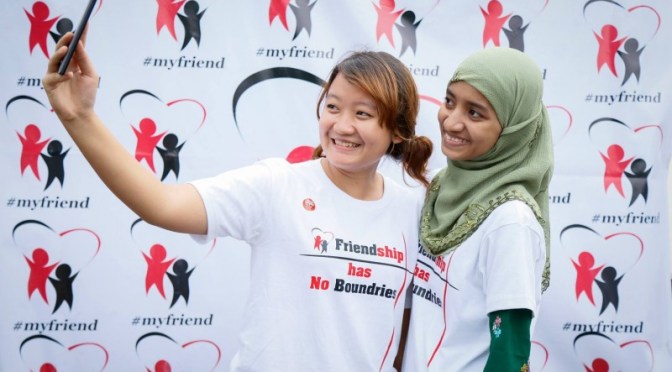
#MyFriend campaign shows interfaith friendships in Myanmar, currently an international spectacle because of its persecution of Rohingya Muslims.
  • Hate speech and harassment online have created hostile conditions for many religious minorities in Myanmar.
  • Launched in April, the selfie Facebook campaign hopes to provide a counternarrative to prevailing discriminatory attitudes.

More on this story at Global Voices.

(Image Credit: Facebook photo, via Global Voices)