Raising the Voices of the Visually Impaired in Armenia
As the Internet has created new channels for the inclusion of marginalized communities, people with disabilities in particular have looked to the technology as a chance to discover and create new, accessible labor and creative opportunities. In Armenia, government agencies and international NGOs have worked together to promote information literacy and use among blind and visually impaired Armenians. One new program, Radio MENQ, has bridged the technical with the creative, offering blind and visually impaired people the chance to work as presenters and sound technicians for an internet radio station focused on issues and interests of relevance to the visually impaired community. Global Voices sat down with two of the project’s leaders to discuss the history and future of Radio MENQ and how opportunities like the station help combat pervasive unemployment and marginalization in the community.
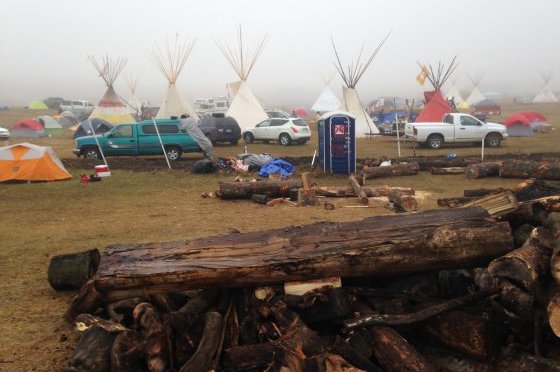
Though having only recently had the spotlight of the national media trained on them, the Dakota Access Pipeline protests have been a months-long clash between, on the one hand, Standing Rock Sioux tribe members, indigenous and non-indigenous allies, and environmental activists, and, on the other, proponents of the nearly 1,200-mile long oil pipeline from western North Dakota to southern Illinois. Indigenous protesters have made recourse to both litigation and direct action in an attempt to halt construction on a pipeline slated to come within a half-mile of the Standing Rock Sioux reservation. The protests have drawn both state and federal intervention, with the National Guard having been brought to protest sites, violent clashes between police and protesters, a legal tango between the Obama administration and district court judges, and increasing pressure on the U.S. presidential candidates to take a stand on the issue.
At issue is what activists say has been a failure on the government’s part to engage Native communities, conduct a thorough environmental and cultural impact assessment ahead of the pipeline’s construction, confront tribe members’ concerns about the potential for water contamination, and adhere to laws regarding the preservation of sacred cultural sites. The approach of the bitter North Dakotan winter has punctuated current protests with a question mark as activists and advocates seek to perpetuate the recently gained media momentum and mobilize public opinion—and, by extension, political pressure—against the pipeline’s construction.
Largest protests in years bubble up in Zimbabwe as anger over economy grows
Protests against government corruption, unpaid salaries, and a generally failing economy led to a general strike and street protests, prompting a government response that included violent attacks on and intimidation of citizens.
A prominent religious leader who called for the strike was arrested then released on technicality after having been charged with inciting public violence and later with conspiring to overthrow the government.
The protests have been the largest challenge in a decade to the rule of President Robert Mugabe, who has held power in the country since its independence from Britain in 1980.
Leaks of executive compensation at state-owned firms led to controversy when local media revealed some business leaders were receiving dozens of times the amount of pay the average Iranian household received.
Iranian law dictates that the top government salary should not exceed seven times the amount of the lowest paid, but bonuses and additional incentives have at times been used to skirt that requirement.
Four public bank chiefs have been fired in the wake of the revelations as Iranians continue to wait for the economic benefits of the lifting of international sanctions in 2015.
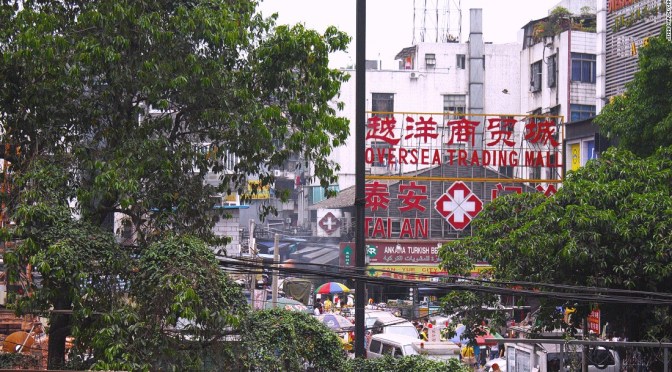
China’s increased economic ties with sub-Saharan Africa countries have opened up new immigration channels, with a flurry of “Chinatowns” and “Little Africas” popping up in destination countries. But as urban “beautification” campaigns expand in China’s cities, African immigrants have found their economic and social spaces under threat. Guangzhou, home to what is estimated to be China’s largest population of black African immigrants, has seen its vibrant African market dampened as urban development, an economic downturn, increased policing, tightening immigration policies, and social stigma have driven many enterprising immigrants out of public areas. CNN takes a look at the shifting prospects for African immigrants in China.
Exodus of wealthy immigrants tightens opportunity in Indonesia
Domestic jobs have decreased and a number of international schools have shuttered as wealthy immigrants have left the country and arrivals have slowed.
A slowdown in oil and gas demand has tightened the Indonesian economy and led to cutbacks in jobs that attract foreign workers.
Fluctuating immigration policy has sent mixed messages to potential investors, including a foreign worker age cap of 55 in oil and gas, an Indonesian language requirement, an expansion of social security to include foreign workers, and the (now-defunct) requirement to hire 10 local workers for every immigrant.
Indonesian women continue migrating to Middle East for work despite government ban
A new report from Migrant Care has found that more than 1,000 women have traveled to the Middle East for domestic work despite government moratorium.
The Indonesian government announced a ban on any new labor-based migration to the Middle East in May 2015 after several high-profile reports of abuse.
The revelation comes amidst ongoing efforts by the government to formalize labor practices in the domestic services industry both at home and abroad, with an estimated 2.3 million Indonesian domestic workers abroad and an additional undocumented population.
A bulge of homeless baby-boomers has been making its way through the nation’s aging pipeline, with more than 300,000 homeless people in the U.S. now over the age of 50. From the recessions and zero-tolerance drug policies of the ’70s and ’80s to contemporary wage stagnation and affordable housing shortages exacerbated by unchecked urban gentrification, many who came of age during the social tumult of the ’60s and ’70s have struggled to maintain their footing in the nation’s rapidly evolving cities. For many, chronic illness and disability have led to homelessness or struck as a result of it, prematurely introducing aging issues into an already vulnerable population. As a result, homeless seniors have found themselves at the center of an epidemic that is increasingly understood to intersect with other national problems, including weak safety nets for seniors, people with disabilities, and the poor.
As national conversations framed through the lens of personal responsibility, urban threat, and moral failings compound the shame many experience in precarious situations, the aging homeless community has found itself not only marginalized on the streets, but within the discourse of homelessness in general, framed as it too often is in terms of workforce reintegration and social re-engagement. With the elderly homeless population expected to more than double by 2050, The New York Times recently examined the structural problems facing the aging homeless population and challenges affecting the development of effective long-term solutions.
Citations
Education for Refugees, from Preschool to Professorship
Global emergencies like war, natural disaster, and health pandemics have uprooted families and disrupted education at all levels as displaced students have been deprived of access to schools. Students in early childhood, primary, secondary, and higher education as well as teachers, professors, and other educational professionals have experienced delayed educational and professional development during times of crisis, disabling dreams and prospects for the future. Whether in Malaysia, Greece, or Lebanon, displaced communities have struggled to adjust to lost livelihoods, new cultures, and uncertain futures.
As the average duration of displacement has dramatically increased over the last three decades, international humanitarian organizations have been pressed to develop long-term programs and partnerships to replace short-term emergency educational provision. These challenges have been compounded by the disproportionate burden of education in emergencies shouldered by developing countries, where refugee populations vastly outnumber those in high-income countries. Over time, the educational pipeline has come to look less like a pipe than a funnel, with progressive exclusion and decreasing resources constraining opportunity as refugee children age. Workarounds developed in earlier stages have at times installed barriers for students at more advanced education stages as credentialing standardization and selective admissions disadvantage students from newly developed, temporary, and informal educational institutions outside of the national curriculum.
From connected learning hubs in refugee camps in Kenya to elementary classrooms in Canada, technological innovation and international coordination have worked to connect displaced students to well-resourced institutions and support educational continuity through crises. Meanwhile, new momentum in the development of transnational platforms for educational financing, advising, and service delivery has reinvigorated the global education community and increased commitment to education for all, regardless of circumstance. Here is a look at select recent news, features, and open research on and resources for global refugee education and scholar protection: Continue reading Citations | Refugee Education→
Massive protests against French labor reform bring about violence, arrests, strikes
Demonstrations have been ongoing since March, when labor and student unions organized against government proposals perceived as decreasing job security and negotiating power for workers.
More than 1,000 have been arrested during clashes with police in cities like Paris and Nantes that have seen more than 300 officers injured as protesters have alleged instances of police brutality, with police unions organizing counter-protests against anti-police violence.
After President François Hollande’s government survived a no-confidence vote, union leaders planned rolling strikes and continuing demonstrations across the country.
Hazara communities in Afghanistan protest changes to new electricity line route
Thousands from Hazara communities in the country are expected to protest after officials outlined a new route away from provinces with large Hazara populations for what they argue are technical and economic reasons.
The electricity project is a part of the Asian Development Bank’s plan to connect energy-rich Central Asia with the energy-deprived countries of the western subcontinent.
The resource row comes as the government has pledged increased protection for the Shiite Hazara minority, who have faced kidnapping and murder at the hands of militants in the Sunni-majority country.
Since the dawn of the new century, the role of international institutions and cooperation in efforts to promote gender equality has grown as economies, migration, and environmental conditions have continued intertwining peoples around the world. The Thomson Reuters Foundation recently interviewed Phumzile Mlambo-Ngcuka, the head of U.N. Women, about efforts to coordinate global efforts to promote women’s rights and security.
Ahead of the upcoming Women Deliver conference set to bring together 5,000 attendees from 150 countries, Mlambo-Ngcuka discussed the challenges of securing long-term investments in gender equality worldwide and the ambitious new agenda set through the new Sustainable Development Goals for 2030. The redress of structural inequalities, ongoing gender-based vulnerabilities, and the continued generational and gender outreach work necessary for equality continue to drive new programs in U.N. Women even as the work is met with derision or indifference from global political and business leaders.
One of the few truly global holidays, International Workers’ Day (May Day) is both a worldwide celebration of the working classes as well as a day to draw attention to ongoing insecurities workers around the world face. May Day has historically had a twofold purpose: a day for workers to voice their concerns over contentious labor policies and for governments to reaffirm their commitments to workers’ rights and just labor practices. At times little more than public relations campaigns and at others violent clashes between governments and workers, global May Day events have highlighted the diverse relationships between labor, employers, and government around the world. Here are the highlights of May Day 2016 in more than 30 countries:
Asia Pacific
Bike rallies were held in Pune as Indian PM Narendra Modi saluted workers on Antarrashtriya Shramik Diwas, a public holiday. Pakistan‘s major labor unions convened in Lahore to speak out against poor working conditions, violations of international labor conventions, and ongoing privatization in the country. As Bangladeshi officials addressed labor relations and welfare reforms amidst a day of union-organized programming, in Kathmandu, Nepali workers marched while awaiting the ratification of the Labour Act, which guarantees greater social security for workers. Across the Indian Ocean, Australian union leader singled out penalty rate protection and tax reform as major Labour Day issues, with the date of the holiday having been a point of contention as well.
In cities across France, tens of thousands marched in protest against proposed labor reforms that would loosen the country’s controversial employment and job security policies. Jeremy Corbyn became the first U.K. Labour party leader to attend a May Day rally in a half-century when he spoke to a crowd of thousands in London, reaffirming solidarity against anti-immigrant sentiment and addressing anti-Semitism accusations that have plagued his party recently. Spain saw thousands across its cities gather, many protesting ongoing austerity measures. An estimated 800,000 gathered in Rome‘s San Giovanni Square, with this year’s event dedicated to slain Italian student Giulio Regeni.
Some 2,000 convened in rain-soaked Zagreb to hear labor leaders protest the increased retirement age and ongoing poverty in Croatia. Moscow hosted a mass demonstration in the city’s Red Square estimated in size from the tens of thousands to 100,000, while thousands gathered in Istanbul’s Bakirköy district under a heavy police presence in the wake of urban suicide attacks and ongoing violence across Turkey.
The Americas
From New York to Los Angeles, demonstrations in the U.S. highlighted widening economic inequality in the country and an election season marred by racist, xenophobic, and Islamophobic sentiment. While most protests took place without incident, a peaceful march turned violent in Seattle, leading to five injured officers and nine arrests. A similar outbreak in Montreal led to one injury and 10 arrests.
In Latin America, Brazil‘s embattled president and Workers’ Party leader Dilma Roussef rallied alongside hundreds of thousands across the country as her impeachment proceedings continue and workers fear the inauguration of her center-right vice president. Cuba‘s May Day parade continued the national tradition of expressing support for the Castro regime rather than directly celebrating labor or expressing concerns over labor conditions. In Argentina, President Mauricio Macro backed employers and touted labor proposals that had spurred mass demonstrations only days before. Elsewhere in the region, minimum wage increases were announced in Venezuela and Bolivia and a march took place in Santiago as Chilean President Michelle Bachelet announced a review of her labor reforms after the Supreme Court rejected a key provision granting exclusive negotiating rights to unions.
Middle East & Africa
Police in Egyptblocked hundreds of workers from assembling in a Cairo office as labor leaders and international organizations called for the government to decriminalize independent union organization. In Israel, more than 5,000 youth marched in Tel Aviv, while a Palestinian trade union renewed its call for the establishment of a minimum wage and the dismantlement of the Gaza blockade. A government-sponsored event in Dubai reportedly drew nearly 200 workers, though labor practices in the UAE continue to draw international scrutiny.
South of the Sahara, events popped up across South Africa as politicians sought to address the country’s high unemployment rate and appeal to workers ahead of August elections. In Nigeria, President Mohammadu Buhari spoke to thousands of workers in Abuja, touting his anti-corruption campaign. A Mozambique labor leader addressed a crowd in Maputo about the debts of state-owned companies and the need for wage and workplace reform. As the decline of oil prices has created economic hardship throughout Angola, the country’s two labor unions marched to draw attention to deteriorating worker conditions and the need for infrastructure maintenance. Workers in Ghana protested the privatization of the management of the state-owned Electric Company of Ghana, while the government insisted the company was still run by the state. Meanwhile, Ethiopia sidestepped Sunday commemorations altogether by moving May Day to May 3, when labor leaders plan to highlight ongoing struggles to organize Ethiopian workers.
Increasing violence plagues Brazilian land rights activists
After 50 died in 2015, at least six activists were killed in the first two months of 2016 as land rights groups report increased intimidation, criminalization, and violence committed against them.
Activists have sought reform to protect the at times conflicting land rights of small farmers and indigenous communities, particularly in rural states.
Brazil has some of the highest land-proprietary inequality in the world, with 1% of the population owning nearly 50% of the land and single families subject to payments from as many as tens of thousands of property owners thanks to a colonial-era law.
Thousands from Argentina’s main unions protest economic policies in Buenos Aires
Demonstrators took to the streets to protest currency devaluation, inflation, and massive layoffs stemming from new President Mauricio Macri’s economic policies.
Union leaders delivered speeches accusing the government of shifting the burden of economic stabilization onto workers and demanding measures to protect job security.
The mass demonstration took place ahead of International Workers’ Day, with leaders threatening to strike if the government ignored their concerns.





 Outlas