Tag Archives: Latin America & The Caribbean

Argentina News | Transgender Women

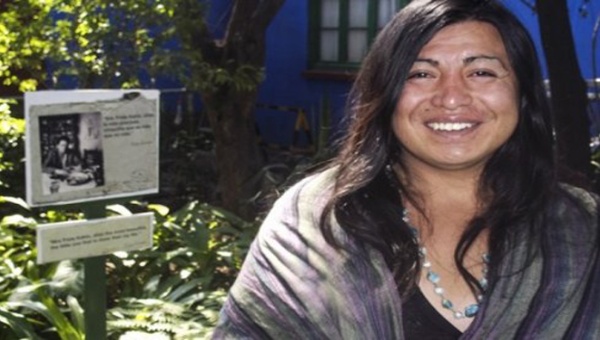
Argentinian president calls for investigation after murder of trans activist
  • Trans rights activist Diana Sacayán was found dead in her apartment, the victim of a fatal stabbing that police believe may have been perpetrated by an acquaintance of Sacayán.
  • Sacayán had led both the International Association of Lesbians, Gays, and Bisexuals (ILGA) and the Anti-Discrimination Liberation Movement (MAL) in Argentina, and had been personally issued her new national identity card with her correct gender identity by President Cristina Kirchner.
  • With Sacayán’s death the third for transwomen in a month, President Kirchner called for local police and national security forces to investigate as a part of a broader push to tackle the high rates of gender-based violence in the country.

Read more:
Matan en Flores a una dirigente trans de una puñalada” (La Nación, in Spanish)
Hallan muerta a la activista trans Diana Sacayán en Argentina” (teleSUR, in Spanish)
Argentine President Demands Inquiry into Trans Activist’s Death” (teleSUR English)

(Image Credit: La Izquierda Diario, via teleSUR)

Interregional News | Jamaican

US-based Jamaican writer wins Britain’s top literary prize
  • Novelist Marlon James has become the first Jamaican writer to win Britain’s prestigious Man Booker Prize.
  • He captured the award with his work A Brief History of Seven Killings, an epic crime novel weaving together multiple stories around the attempted assassination of Bob Marley in 1976.
  • James’s first novel, John Crow’s Devil, was published in 2005; he currently lives in Minneapolis and teaches at Macalester College.

Read more:
Marlon James, Jamaican Novelist, Wins Man Booker Prize” (The New York Times)
Marlon James wins the Man Booker prize 2015” (The Guardian)
Amazon: A Brief History of Seven Killings

(Image Credit: Bryan Derballa/The New York Times)

Jamaica News | People with Disabilities

Jamaica-based disability foundation to focus on education in annual conference
  • The Nathan Ebanks Foundation was founded by Christine Staple-Ebanks as a disability support organization after Staple-Ebanks found local resources lacking after her child was diagnosed with cerebral palsy.
  • Poor visibility of disability issues in the country have made public advocacy and resource-building difficult, a problem which the foundation tackles through its annual conferences.
  • Scheduled for October 28-31 in Montego Bay, this year’s conference will focus on inclusive education both to inform Jamaicans with disabilities of their rights and to combat lack of awareness about disability issues in Jamaica.

“What floored me was not the diagnosis, it was what to do. All the different specialists that we went to were only telling me what my child would never ever do but no one could tell me what my role was as a mother or how I could better support my child.”

Read more:
Conference to help educate, sensitise people about disabilities” (The Jamaica Observer)
The Nathan Ebanks Foundation

Saint Lucia News | Saint Lucians

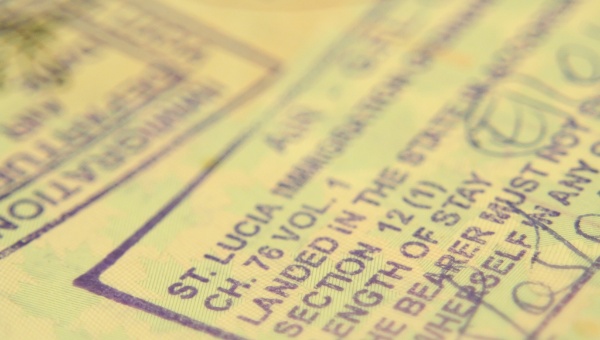
Saint Lucia prepares to launch new economic citizenship program
  • Saint Lucia’s Citizenship by Investment Programme is an economic initiative that will allow foreign investors to purchase Saint Lucian citizenship through direct investment in the country.
  • Set to launch January 1, 2016, Saint Lucian officials anticipate investment in sectors like tourism in exchange for citizenship in the Eastern Caribbean nation.
  • The country will be the fifth Caribbean nation to implement such a program, following Antigua and Barbuda, St. Kitts and Nevis, Grenada, and Dominica.

Read more:
Saint Lucia Sets a Date for the Sale of Citizenship to Investors” (teleSUR English)
Senate gives green light for economic citizenship programme in St. Lucia” (Caribbean360)
Economic Citizenship Program forthcoming for Saint Lucia” (Invest Saint Lucia)

(Image Credit: @madmack Flickr photo, via teleSUR)

Brazil Feature | Black Brazilians

Brazilian TV’s Race Problem

With the slow emergence of a black middle class in the country, demands have grown for more and better media representation among Brazil’s majority black and mixed-race population. Television has become a prime battleground for visibility and equal representation as Brazil continues the difficult process of shedding its history of racial repression. The Guardian takes a look at Mister Brau, Brazil’s new musical comedy at the forefront of that battle, its popular stars, and the cultural landscape it’s making a statement in.

Read more:
Brazilian television slowly confronts country’s deeply entrenched race issues” (The Guardian)

Other coverage:
Groundbreaking New Series – ‘Mister Brau’ – Gives Afro-Brazilians Representations to Cheer Despite Flaws” (Indiewire)

(Image Credit: Corbis & Getty Images, via The Guardian)

Ecuador News | Afro-Ecuadorians

Ecuador government passes resolution to include Afro-Ecuadorian history in textbooks
  • As Ecuadoreans around the country celebrate National Day of the Afro-Ecuadorian People, the government announced the new education measure to foster inclusion of Afro-Ecuadorians in the nation’s history.
  • Afro-Ecuadorians number more than 600,000 in the country, but continue to face discrimination and economic difficulty.
  • The National Day of the Afro-Ecuadorian People began with the 1997 congressional declaration of the National Day of the Black Ecuadorian, symbolized by celebration of fugitive slave leader Alonso de Illescas and Afro-Ecuadorian history and culture.

“On this day we have to remember all the contributions we have made as a people and bring it, together with our history, to the rest of the people because many don’t know it, which enables a lot of forms of discrimination.”

Read more:
Ecuador to Include Afro-Ecuadorean History in Textbooks” (teleSUR English)

(Image Credit: El Telegrafo, via teleSUR)

Jamaica News | Jamaicans

Jamaican leaders find no traction on reparations issue with U.K. PM
  • British PM David Cameron rejected calls from Jamaican PM Portia Simpson Miller and other Caribbean leaders for reparations and an unconditional apology during his recent visit to Jamaica, the first by a British PM in 14 years.
  • Caribbean leaders have chronicled the long-term economic damages that the lack of reparations following Britain’s 1833 emancipation of the enslaved has inflicted on their national economies.
  • The call for reparations in the Caribbean has been particularly strong in the region because of the significant financial compensation offered to slave owners at the time of emancipation.

Read more:
David Cameron rules out slavery reparation during Jamaica visit” (BBC)
Apologise for slavery! – Reparations committee wants David Cameron to say sorry for wrongs of UK past” (The Gleaner)
David Cameron Grapples With Issue of Slavery Reparations in Jamaica” (The New York Times)
Britain, Jamaica, and the Looming Battle Over Reparations” (The Atlantic)

(Image Credit: Francois Lenoir/Reuters, via The Atlantic)

Colombia News | Indigenous Colombians

Indigenous Colombian communities condemn arrest of leader Feliciano Valencia as blow to autonomy
  • In a blow to Indigenous criminal justice autonomy, Valencia was arrested for the alleged 2008 kidnapping of a Colombian soldier, which community members say involved the soldier’s detention and sentencing to 20 lashes for espionage in Indigenous territory.
  • Delegates from multiple of Colombia’s 84 registered Indigenous communities arrived at the Indigenous Intercultural University of Popayan to organize the Symbolic March for the Freedom of Feliciano Valencia.
  • Valencia had faced the same charges in 2010 but released after the defense argued that Indigenous communities’ right to administer justice in their own territories, guaranteed in the Colombian Constitution, was administered collectively and not just by Valencia.

“They want to delegitimize (a right) that is inscribed in the Constitution and that should prevail over ordinary legal norms.”

Read the full story at teleSUR English.

(Image Credit: via teleSUR)

Argentina News | LGBT

Argentina lifts ban on blood donations from LGBT individuals
  • After more than a decade of petitioning, LGBT advocates saw another major rights victory in the country as the Ministry of National Health ended its ban on LGBT blood donation.
  • The change specifically targets the pre-donation medical history questionnaire that singled out LGBT individuals for discrimination through questions about gender identity and sexual history.
  • Health officials hope the development will assist in promoting awareness of voluntary donation in an effort to increase its pool of blood donors.

“El cambio de paradigma de grupos de riesgo por el de prácticas de riesgo vuelve a posicionar a la Argentina a la vanguardia mundial en materia de igualdad y no discriminación”

Translation: “The paradigm change from at-risk groups to at-risk practices again positions Argentina in the global vanguard in matters of equality and non-discrimination.”

Read the full story at La Nación (in Spanish).

(Image Credit: via La Nación)

Bolivia News | Indigenous

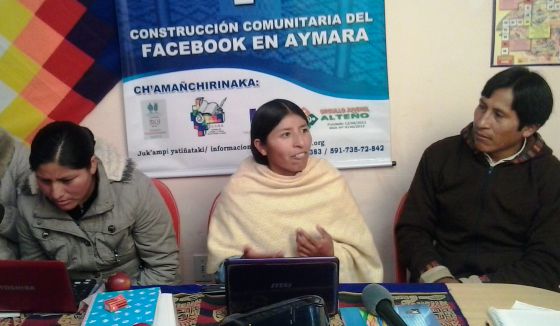
Bolivian volunteers translate Facebook into endangered language to help preserve indigenous culture
  • A group of 15-20 volunteers organized the work through Jaqi Aru, an El Alto-based virtual community dedicated to promoting the use of Aymara, Bolivia’s second most widely spoken indigenous language.
  • Facebook requires that at least 24,000 words be translated in order for a language to be added to the options for public use, which the group says it has achieved.
  • Aymara is included in UNESCO’s list of the world’s most endangered languages, leading Jaqi Aru to promote its presence and use through Internet destinations like Wikipedia and social media.

“Si no trabajamos hoy por nuestra lengua y cultura, será tarde recordar mañana lo que somos y siempre viviremos inseguros de nuestra identidad”

Translation: “If we don’t work for our language and culture today, tomorrow it will be too late to remember what we are and we will always live unsure of our identity.”

Read the full story at El País (in Spanish).

El Salvador News | LGBT

El Salvador toughens punishments for hate crimes against LGBT individuals
  • The country’s lower chamber approved changes that will see those convicted of identity-based homicide against LGBT individuals facing up to 50 years in prison.
  • The changes increase the maximum penalty for hate crimes–which also include racially, ethnically, and religiously based targeting–by 20 years.
  • Gender continues to lag behind other protected classes, however, with those convicted of homicides against women facing 20 to 30 years of imprisonment.

“We have made a lot of progress in the democracy (of the country). This is a significant step toward the recognition of rights in the LGBT community.”

Read the full story at teleSUR.

(Image Credit: EFE, via teleSUR)

Brazil News | Refugees

Brazilian president welcomes refugees as asylum process is expedited
  • President Dilma Rousseff reiterated Brazil’s openness to taking in refugees to support international efforts to provide haven to the millions of refugees pouring out of Asia and Africa.
  • In addition to granting 90-day tourist visas to asylum seekers awaiting their application results, the government approved a new program to simplify the asylum application process.
  • Brazil has led Latin America in providing asylum to Syrian refugees, having welcomed 1,740 into the country.

Read the full story at teleSUR.

Venezuela News | Syrian Refugees

Venezuelan president offers to take in 20,000 Syrian refugees
  • President Nicolás Maduro indicated that the country is ready to take in the refugees to help cope with the global migration crisis.
  • Maduro has previously expressed support for Syrian President Bashar al-Assad, whose conflict with rebel forces has driven much of the flight from the country.

“How many more Arabs must die before a great human conscience of peace is awakened? … I want 20,000 Syrians to come to our Venezuelan fatherland, to share this land of peace, of Christ, of (independence hero Simon) Bolivar, and to help with the development of this magical land.”

Read the full story at Reuters.

Latin America & the Caribbean Feature | Afro-Latinas

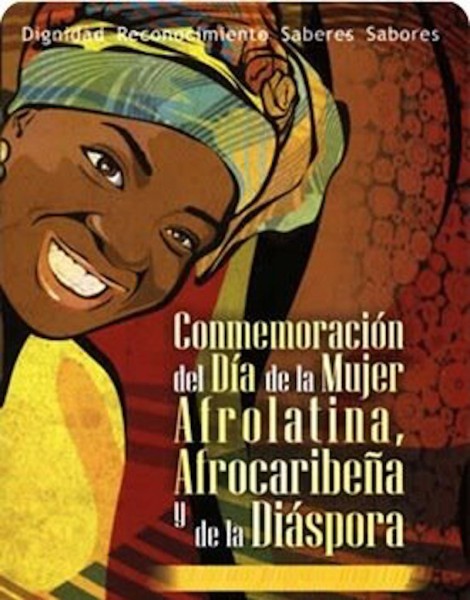
The Summer of the Afro-Latina

Image Credit: planeta-afro.org, via Global Voices

Summer 2015 saw a flurry of activities as Afro-Latina advocates and organizations united in forums and campaigns addressing the racial, ethnic, and gender discrimination experienced by women of African descent throughout Latin America. Events including the Afro-descendant Women Leaders of America Summit and advocates including bloggers, Descato Feminista (Feminist Contempt), Teatro en Sepia (Theater in Sepia), and the Red de Mujeres Afro-Latinoamericanas Afro-Caribeña y de la Diáspora (Network of Afro-Latin American and Afro-Caribbean Women of the Diaspora) focused on issues including gender-based violence, domestic labor, and political representation. Global Voices explores the busy summer for Afro-Latina advocacy.

View the feature at Global Voices.

ClimateWatch: Latin America & The Caribbean

ClimateWatch periodically analyzes the security climates of the world’s regions, focusing on conditions and developments affecting the most vulnerable identity communities while highlighting meaningful political and social steps towards security and integration. This week’s Latin American & Caribbean report summarizes developments in identity security from late July through mid-August.

Continue reading ClimateWatch: Latin America & The Caribbean