Massive protests against French labor reform bring about violence, arrests, strikes
Demonstrations have been ongoing since March, when labor and student unions organized against government proposals perceived as decreasing job security and negotiating power for workers.
More than 1,000 have been arrested during clashes with police in cities like Paris and Nantes that have seen more than 300 officers injured as protesters have alleged instances of police brutality, with police unions organizing counter-protests against anti-police violence.
After President François Hollande’s government survived a no-confidence vote, union leaders planned rolling strikes and continuing demonstrations across the country.
France’s leading political women, journalists, and activists confront sexism in French politics
Two op-eds appeared over the last week as protests have grown confronting what many women in French politics—politicians, reporters, and petitioners alike—report is a culture of silence and impunity towards sexual harassment.
Appearing in the Journal du Dimanche and Libération, the op-eds called for women who have experienced sexual harassment to speak out and register formal complaints and for an expansion of investigative capacity to ensure the behavior does not go unpunished.
The effort comes as a number of scandals have engulfed male politicians, including the most recent leading to the resignation of Denis Baupin, vice president of the National Assembly, following multiple allegations of sexual harassment.
“Ce n’est pas aux femmes à s’adapter à ces milieux, ce sont les comportements de certains hommes qui doivent changer.”
Translation: “It’s not on women to adapt to these environments; it’s the conduct of certain men that must change.”
Hazara communities in Afghanistan protest changes to new electricity line route
Thousands from Hazara communities in the country are expected to protest after officials outlined a new route away from provinces with large Hazara populations for what they argue are technical and economic reasons.
The electricity project is a part of the Asian Development Bank’s plan to connect energy-rich Central Asia with the energy-deprived countries of the western subcontinent.
The resource row comes as the government has pledged increased protection for the Shiite Hazara minority, who have faced kidnapping and murder at the hands of militants in the Sunni-majority country.
Since the dawn of the new century, the role of international institutions and cooperation in efforts to promote gender equality has grown as economies, migration, and environmental conditions have continued intertwining peoples around the world. The Thomson Reuters Foundation recently interviewed Phumzile Mlambo-Ngcuka, the head of U.N. Women, about efforts to coordinate global efforts to promote women’s rights and security.
Ahead of the upcoming Women Deliver conference set to bring together 5,000 attendees from 150 countries, Mlambo-Ngcuka discussed the challenges of securing long-term investments in gender equality worldwide and the ambitious new agenda set through the new Sustainable Development Goals for 2030. The redress of structural inequalities, ongoing gender-based vulnerabilities, and the continued generational and gender outreach work necessary for equality continue to drive new programs in U.N. Women even as the work is met with derision or indifference from global political and business leaders.
ILGA-Europe recently released its annual report on the state of LGBT rights and security across the Europe. Covering developments in individual countries and transnational institutions from 2015, the report notes increasing legal protections for gender minorities and family and partnership rights for sexual minorities in Southern and Western Europe as well as ongoing political exclusion, persecution, and violence in Eastern Europe and Eurasia. Here are some of the highlights:
Malta
Rated the most progressive European country, Malta’s groundbreaking law prohibiting surgical intervention into a person’s sex characteristics without consent and inclusive education policies for trans, intersex, and other gender minorities were cited as distinctive policies.
Finland, France, Greece, Ireland
Other countries with significant judicial or policy victories regarding the rights of gender minorities.
Ireland, Luxembourg
Countries extending marriage rights to same-sex couples
Cyprus, Greece
Countries extending civil partnership rights to same-sex couples
Austria, Portugal
Countries extending adoption rights to same-sex couples
Portugal extends reproductive rights to gay and bisexual women and women with fertility issues
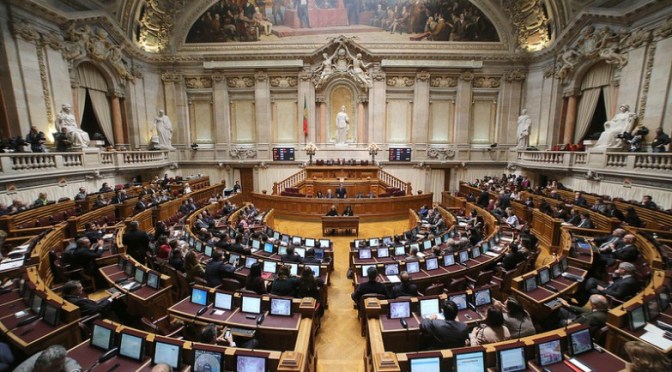
The Portuguese Parliament voted to extend artificial insemination access to women in same-sex relationships.
The bill also legalizes surrogacy for women with health conditions adversely impacting their ability to conceive.
The inclusive measure broadens family rights for women in same-sex partnerships following the passage of a bill legalizing adoption by same-sex couples in November 2015.
Bermuda prepares for referendum on same-sex civil unions and marriage
Set for June 23, the referendum will ask respondents two questions: whether they support same-sex marriage and whether they support same-sex civil unions.
“Yes” campaigners include a constellation of pro-LGBT groups include Rainbow Alliance, Marriage Equality Bermuda, Same Love Bermuda, and OUTBermuda.
The referendum follows a November 2015 Supreme Court ruling granting same-sex partners of Bermudians residency and employment rights in the country.
Same-sex civil unions in Italy on track to become reality following lower house vote
Italy’s lower house voted to support PM Matteo Renzi’s government and, by extension, a bill legalizing same-sex civil unions.
Following Senate approval in February, the confidence vote removed the potential for last-minute attempts to revise the bill, making final approval a formality.
The bill has undergone a controversial history including massive anti-LGBT protests and pro-LGBT outrage over the continued exclusion from marriage and removal of a provision granting same-sex partners universal adoption rights to their partners’ children.
Caught in the orbit of Russia’s anti-LGBT political campaigns, Kyrgyzstan has seen increases in the persecution of its LGBT citizens as the former Soviet state’s realignment with Russia has led to the adoption of some of its most socially conservative policies. Much as in Russia, nationalism and anti-LGBT sentiment have gone hand in hand, with LGBT rights construed by reactionary nationalists as Western encroachment on Kyrgyz values and sovereignty. Amidst a floundering economy, anti-NGO and anti-LGBT bills have found significant support in Kyrgyzstan’s parliament, and though they have yet to be signed into law, police and citizens have used them as excuses to target the LGBT community and antagonize the few advocacy organizations that exist. Coda Story highlights Kyrgyzstan’s politicized homophobia and the stories of victims’ suffering under police extortion and indifference, sexual assault, and relentless threats.
Long-term care for people with chronic illnesses and certain physical and cognitive disabilities has become an important civil rights battle ground over the last two decades. While media attention has focused on government responses to civil rights issues including anti-LGBT legislation and racial inequalities in the criminal justice system, the U.S. Department of Justice has opened more than 50 investigations into what it reports has been the segregation of people with chronic illnesses and disabilities in nursing facilities. Effectively institutionalizing people with disabilities, nursing facilities have detached an estimated 250,000 from economic opportunity and social life, despite a 1999 Supreme Court ruling that people with disabilities should only be placed in nursing facilities if medically necessary. The New York Times analyzes the push for home-based care and the DOJ’s active investigations into violations of protections secured under the Americans with Disabilities Act and the Supreme Court’s 1999 decision.
Sadiq Khan elected mayor of London, first Muslim to hold the post
A member of the Labour party, Khan defeated his Conservative opponent Zac Goldsmith with 57% of the vote, ending eight years of Conservative rule of the British capital on pledges to build more affordable housing and freeze fare prices for public transit.
Amidst rising Islamophobia throughout the U.K. and Europe as a whole, the mayoral campaign was marred by accusations from Goldsmith and PM David Cameron that Khan, a former human rights lawyer, was connected to extremists.
Khan, 45, grew up in a South London housing estate, one of eight children of working-class Pakistani immigrants, and went on to become a lawyer before his election to Parliament in 2005.
One of the few truly global holidays, International Workers’ Day (May Day) is both a worldwide celebration of the working classes as well as a day to draw attention to ongoing insecurities workers around the world face. May Day has historically had a twofold purpose: a day for workers to voice their concerns over contentious labor policies and for governments to reaffirm their commitments to workers’ rights and just labor practices. At times little more than public relations campaigns and at others violent clashes between governments and workers, global May Day events have highlighted the diverse relationships between labor, employers, and government around the world. Here are the highlights of May Day 2016 in more than 30 countries:
Asia Pacific
Bike rallies were held in Pune as Indian PM Narendra Modi saluted workers on Antarrashtriya Shramik Diwas, a public holiday. Pakistan‘s major labor unions convened in Lahore to speak out against poor working conditions, violations of international labor conventions, and ongoing privatization in the country. As Bangladeshi officials addressed labor relations and welfare reforms amidst a day of union-organized programming, in Kathmandu, Nepali workers marched while awaiting the ratification of the Labour Act, which guarantees greater social security for workers. Across the Indian Ocean, Australian union leader singled out penalty rate protection and tax reform as major Labour Day issues, with the date of the holiday having been a point of contention as well.
In cities across France, tens of thousands marched in protest against proposed labor reforms that would loosen the country’s controversial employment and job security policies. Jeremy Corbyn became the first U.K. Labour party leader to attend a May Day rally in a half-century when he spoke to a crowd of thousands in London, reaffirming solidarity against anti-immigrant sentiment and addressing anti-Semitism accusations that have plagued his party recently. Spain saw thousands across its cities gather, many protesting ongoing austerity measures. An estimated 800,000 gathered in Rome‘s San Giovanni Square, with this year’s event dedicated to slain Italian student Giulio Regeni.
Some 2,000 convened in rain-soaked Zagreb to hear labor leaders protest the increased retirement age and ongoing poverty in Croatia. Moscow hosted a mass demonstration in the city’s Red Square estimated in size from the tens of thousands to 100,000, while thousands gathered in Istanbul’s Bakirköy district under a heavy police presence in the wake of urban suicide attacks and ongoing violence across Turkey.
The Americas
From New York to Los Angeles, demonstrations in the U.S. highlighted widening economic inequality in the country and an election season marred by racist, xenophobic, and Islamophobic sentiment. While most protests took place without incident, a peaceful march turned violent in Seattle, leading to five injured officers and nine arrests. A similar outbreak in Montreal led to one injury and 10 arrests.
In Latin America, Brazil‘s embattled president and Workers’ Party leader Dilma Roussef rallied alongside hundreds of thousands across the country as her impeachment proceedings continue and workers fear the inauguration of her center-right vice president. Cuba‘s May Day parade continued the national tradition of expressing support for the Castro regime rather than directly celebrating labor or expressing concerns over labor conditions. In Argentina, President Mauricio Macro backed employers and touted labor proposals that had spurred mass demonstrations only days before. Elsewhere in the region, minimum wage increases were announced in Venezuela and Bolivia and a march took place in Santiago as Chilean President Michelle Bachelet announced a review of her labor reforms after the Supreme Court rejected a key provision granting exclusive negotiating rights to unions.
Middle East & Africa
Police in Egyptblocked hundreds of workers from assembling in a Cairo office as labor leaders and international organizations called for the government to decriminalize independent union organization. In Israel, more than 5,000 youth marched in Tel Aviv, while a Palestinian trade union renewed its call for the establishment of a minimum wage and the dismantlement of the Gaza blockade. A government-sponsored event in Dubai reportedly drew nearly 200 workers, though labor practices in the UAE continue to draw international scrutiny.
South of the Sahara, events popped up across South Africa as politicians sought to address the country’s high unemployment rate and appeal to workers ahead of August elections. In Nigeria, President Mohammadu Buhari spoke to thousands of workers in Abuja, touting his anti-corruption campaign. A Mozambique labor leader addressed a crowd in Maputo about the debts of state-owned companies and the need for wage and workplace reform. As the decline of oil prices has created economic hardship throughout Angola, the country’s two labor unions marched to draw attention to deteriorating worker conditions and the need for infrastructure maintenance. Workers in Ghana protested the privatization of the management of the state-owned Electric Company of Ghana, while the government insisted the company was still run by the state. Meanwhile, Ethiopia sidestepped Sunday commemorations altogether by moving May Day to May 3, when labor leaders plan to highlight ongoing struggles to organize Ethiopian workers.
Church seizures and political scapegoating heighten unease in Armenian-Turkish community
Turkey’s Armenian minority has found itself caught in the middle of increasing conflict between the Turkish government and Kurdish separatists, subject to intimidation, slurs, and attacks from politicians.
The Armenian-Turkish community has been particularly upset by the ongoing expropriation of historic churches through eminent domain seizures by the government.
In the wake of the centennial of the mass slaughter of Armenians in Turkey during World War I, the community has been fearful of hypernationalist discourse targeting Armenians.
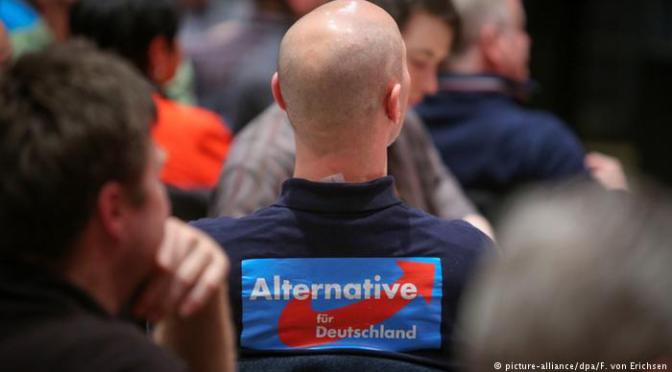
German anti-immigrant party adopts anti-Islam manifesto
The manifesto from the Alternative for Germany (AfD) states Islam is incompatible with the German Constitution and calls for bans on minarets, full-body veils, and calls to prayer.
The AfD holds no seats in the German Parliament, but has members in half of Germany’s state assemblies and polls as high as 14% nationally, causing concern ahead of the country’s 2017 federal elections.
Some 2,000 protesters descended on Stuttgart to disrupt the AfD conference, clashing with police during demonstrations.







 Outlas