Tag Archives: Law & Politics

Malaysian court fines nine and sentences two trans women to jail for “cross-dressing”
  • The group of women were arrested in Kelantan, one of the 13 of Malaysia’s 14 states that criminalizes cross-dressing.
  • The lawyer representing the group has filed an appeal, and the two jailed have been released on bail.

“Laws against ‘a male person posing as a woman’ not only deny transgender women in Malaysia our fundamental rights as citizens of the country, they also contribute to a hostile environment. … These laws lead people to perceive us as criminals and subject us to humiliation, hate crimes, and other forms of violence.”

Read the full story at PinkNews.
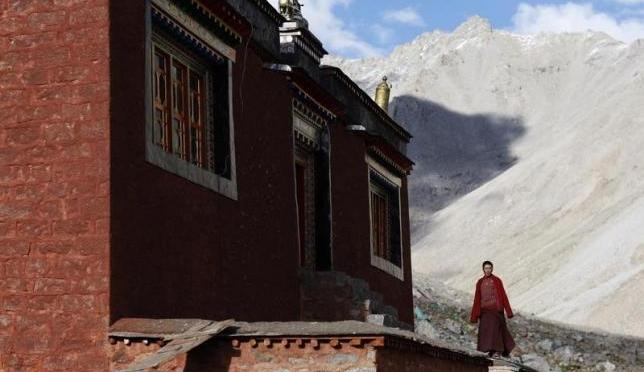
China opens new path to Tibet holy site for Indian pilgrims
  • The new land passage offers a route from India through the Himalayas to Mount Kailash.
  • In addition to its geographic isolation, Kailash has remained out of reach for Hindu and Buddhist pilgrims due to China’s tight visa restrictions on travel to Tibet.
  • The opening comes as China and India work to improve relations and remove obstacles–including ongoing border disputes–to improved economic and political ties.

Read the full story at Reuters.

(Image Credit: Jacky Chen/Reuters)

Muslim Azerbaijani athletes receive waiver for Ramadan as they compete in the European Games
  • Azerbaijan, a predominantly Shia Muslim country, has 285 athletes competing in the Games, which the country is hosting.
  • Local clerics issued a fatwa excusing athletes from the period of abstention from food, drink, and sex during daylight hours.
  • The Games have brought unwanted negative attention to Azerbaijan, where political dissidents have faced aggressive crackdowns and rights violations.

“To make sure that the valiant Islamic sportsman is stronger than his competitor in the month of Ramadan, he cannot observe oruj [fast]. … To defeat a competitor on a sports field, to defend the honor of your country and raise the flag of your homeland is important and pleases God.”

Read the full story at EurasiaNet.

Brazil’s legislators eye controversial measure to lower the age of criminal majority from 18 to 16
  • The National Congress will vote this month on the legal status change as the country faces sky-high homicide rates, particularly in the state of Ceara, which sees 76.8 per 100,000 people murdered.
  • In Ceara (whose capital, Fortaleza, has been named the eighth most violent city in the world), adolescents commit 31% of violent crimes.
  • Under current law, Brazilian minors face a maximum three-year detention at “educational centers” for rehabilitation, which President Dilma Rousseff’s government would like to increase to 10 years rather than lower the age of majority.

“The solution is not to send them to adult prison. … This will give them a certificate in crime.”

More on this Washington Post story at the Guardian.

(Image Credit: Aurora Photos/Alamy, via the Guardian)

Mexico drops burdensome requirements for children coming from abroad attempting to enroll in schools
  • The Education Department announced that migrant students will no longer have to provide government-certified, translated transcripts from their original schools in order to enroll officially.
  • Previously, families faced costs that climbed into the hundreds of dollars in order to obtain apostilles and government-approved translations.
  • According to one NGO, there are an estimated 307,000 foreign-born students studying in Mexican schools, with the population of Mexico-born returning migrant children potentially as large or larger.

“Our task is to guarantee equal access to educational services … for migrants, who are an extremely vulnerable sector of the population. … Our goal is to make sure that access, retention and promotion in the educational system is based only on children’s academic performance.”

Read the full story at Fox News Latino.

(Image Credit: Getty Images, via Fox News)

Venezuelan students join jailed opposition leader in partial hunger strike
  • Leopoldo Lopez’s protest against the detention of opposition activists and for the announcement of a date for parliamentary elections began four weeks ago.
  • Students and other activists have begun their hunger strikes in public places to call attention to the increasing dismantlement of civil liberties and the worsening economic situation under President Nicolas Maduro.
  • The protests follow last year’s much larger demonstrations involving thousands of youth in public sit-ins.

“We want Venezuelans to understand there are young people ready to give their lives for liberty, democracy and sovereignty.”

Read the full story at Reuters.

(Image Credit: Jorge Dan Lopez/Reuters)

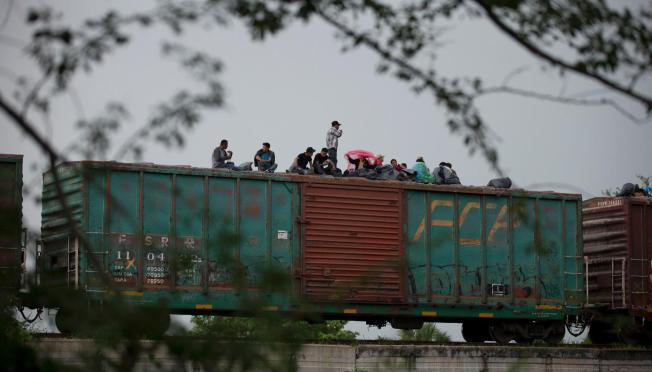
Mexico surpasses U.S. in number of Central Americans deported
  • Mexico detained 92,889 Central Americans versus the U.S.’s 70,226 “other than Mexican” migrants between October 2014 and April 2015, a dramatic change from the previous year.
  • Mexico’s new Southern Border Program has boosted federal police presence at its southern border and expedited the deportation process, leaving migrants in detention only long enough to have their nationality verified.
  • Human rights monitors are concerned by detention and processing methods, effect on smuggling, and lack of transparency about the U.S.’s involvement.

“What we have heard continuously in the past year is that migrants are being so rapidly deported that even some that might have wanted to request some type of protection, or who would have been eligible for some type of humanitarian visa because they had been victims of crime in Mexico, haven’t had that opportunity.”

Read the full Associated Press story at U.S. News & World Report.

(Image Credit: via U.S. News & World Report)

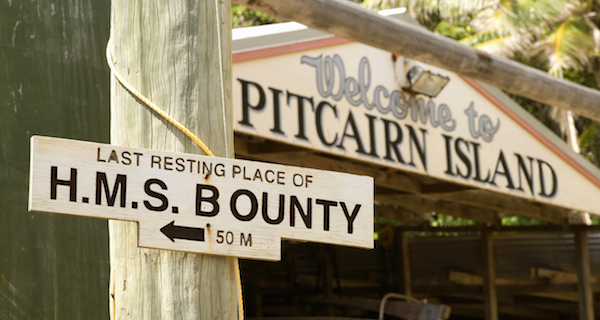
World’s smallest country legalizes same-sex marriage
  • The Pitcairn Islands, a British overseas territory, has opened up marriage rights to all of its 56 residents, regardless of sex-pairing.
  • The Pitcairns were colonized at the end of the 18th century by British naval mutineers and the Tahitians who accompanied them.
  • With all residents adherents to Seventh-Day Adventism, Pitcairn Islanders built a strictly conservative society that has only recently begun to loosen.

Read the full story at NewNowNext.

(Image Credit: via NewNowNext)

Kenyan atheist society threatens legal action against government for failure to allow its registration
  • The Atheists in Kenya Society’s chairman says that despite his organization’s fulfillment of the requirements for registration with the government, it was denied.
  • The chairman claims that the deputy responsible for the registration of societies justified the exclusion by pointing to the Preamble of the Kenyan Constitution’s declaration of the supremacy of God.
  • Should the Society again be rejected and the matter taken to court, it will follow the same tack as the National Gay and Lesbian Human Rights Commission, which won recognition in the spring.
“I visited their offices today and he told me that the Preamble of our Constitution recognises the supremacy of God. We reject this interpretation. The Bill of Rights fully protects Atheists and allows them to form an association.”
Read the full story at the Star.
(Image Credit: File photo of Milimani Law Courts, via The Star)
Namibia’s military looks to expand percentage of women among its ranks as it reaffirms its commitment to inclusiveness in conflict resolution
  • The Namibian Defence Force currently sees women representing 23% of its forces and 5% of its management, and the Defence Minister has signaled a desire to expand the proportion to 30% in the near future.
  • The country is looking to fortify its commitment to UN Resolution 1325, introduced in 2000 by Namibian cabinet member Netumbo Nandi-Ndaitwah to put women’s rights and inclusion in peace and security efforts at the forefront of international security and conflict resolution.
  • The remarks came during a seminar on gender mainstreaming in Namibia, which connected gains in women’s participation in conflict resolution to expanded opportunities in other sectors.
“When I introduced this important role women could play to the Security Council, it was completely rejected. They said women were not a security issue but a social issue. We persisted, though, and started lobbying and won the confidence of Unicef and other groups, which eventually strengthened our proposal that was finally adopted.”
Read the full story at the Namibian.
Zimbabwe Prosecutor-General says marriage and sex should be an option for young girls disengaged from school
  • As MPs and children’s rights advocates call for increased legal protections for girls under the age of 16, head government prosecutor Johannes Tomana indicated that girls disconnected from educational opportunities should not be kept from sex or marriage.
  • Zimbabwe’s age of consent is 16, and the country suffers from one of the highest child marriage rates in the world, with provinces seeing up to 50% of its minors married off.
  • Tomana also indicated agreement with community service sentences for sexual abusers, claiming that public embarrassment is sufficient punishment for the crime.

“We’ve nine-year-olds, 12-year-olds, 13-year-olds who’re actually not in school, who’re not doing anything for example. What are we saying to them? We say you can’t even do this [have sex], when the environment is not giving them alternative engagements? What are we talking about?”

Read the full story at the Herald.

(Image Credit: via the Herald)

Canada’s transportation security agency amends controversial policy on headgear following outcry from the Sikh community
  • The change rolls back the Canadian Air Transport Security Agency’s April implementation of a new policy that targeted religious headgear for mandatory additional screening at airports.
  • Because travelers wearing non-religious headgear were not subject to the same protocol because the headgear could be removed, the World Sikh Organization released a statement condemning the de facto discriminatory policy on behalf of Sikhs who had identified themselves as targets.
  • The organization met with CATSA, who admitted the policy had been established by the government’s transportation department without consulting faith groups.

“I am being considered a security threat every time I travel for work, even (though) I’m a NEXUS cardholder. CATSA’s policy goes above and beyond what the Transportation Security Administration does in the U.S., and I believe it’s targeting religious minorities such as turbaned Sikhs.”

Read the full story at thestar.com.

(Image Credit: Nicholas Keung/Toronto Star)

As German state expands its Holocaust education programs, the inclusion of Muslim Germans stokes debate
  • Bavaria has proposed that all 8th and 9th graders visit a former Nazi concentration camp or the Munich center on Nazi war crimes.
  • One lawmaker from the Christian Social Union, the conservative party in power in the state, has suggested that some Muslim students would need to be exempt from the requirement.
  • Muslim leaders and academics in Germany have indicated that Holocaust education is increasingly accepted in Muslim German communities, with most contentious debates centered instead on how to address discussion and education of the Israeli-Palestinian conflict.

“You notice among the students that they say, ‘We stand for talking about Jewish history, and the crimes that were committed, but why don’t we talk about the Palestinians? Where is the justice here?’”

More on this story at The New York Times.

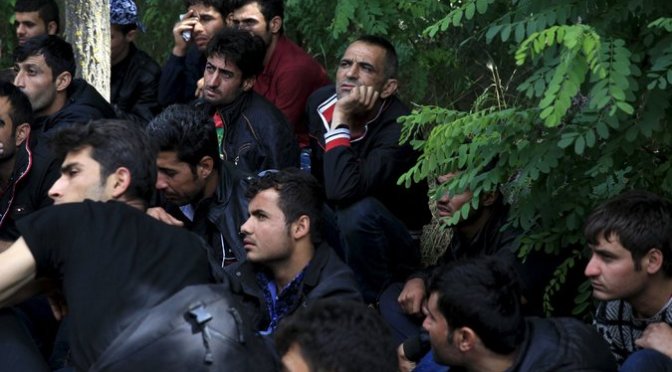
Hungary’s plan to erect border fence draws international condemnation
  • On Wednesday, the Eastern European country announced a proposal to build a 13-foot-high fence along its 109-mile border with Serbia to deter illegal immigration.
  • Hungary received 7% of all EU asylum applications in 2014, and its prime minister has been outspoken in his anti-immigration line.
  • On a continent with a particular sensitivity to walls due to its history, Hungary’s proposal has caused suspicion of the government’s running afoul of its international obligations and isolating prospective EU member Serbia.

“We have only just torn down walls in Europe; we should not be putting them up.”

More on this story at The New York Times.

(Image Credit: Bernadett Szabo/Reuters, via The New York Times)

Redesigned U.S. $10 bill to feature woman historical figure and new tactility
  • The currency redesign will be the first to include a female figure on a major U.S. bill denomination.
  • The Treasury Secretary has called on the public to offer its opinions on who should grace the bill using the hashtag #TheNew10, with the only stipulations being that the figure not be alive and should represent American democracy.
  • The redesigned bill will debut in 2020 and will also be the first to include tactile features so as to be distinguishable to blind people.

“We have only made changes to the faces on our currency a few times since bills were first put into circulation, and I’m proud that the new 10 will be the first bill in more than a century to feature the portrait of a woman.”

More on this story at CNN.