Tag Archives: Law & Politics

Female politicians in Tanzania set their eyesights on country’s top political seats
  • The Tanzania Women Cross Party works to train women in political skills and campaign strategies ahead of October’s elections to avoid overlook and sexual manipulation by political party leadership.
  • This election cycle is seeing women step forward for the presidency for the first time, including former UN Deputy Secretary-General Asha-Rose Migiro.
  • Tanzania has a 30% parliamentary quota in place for women, but because it sets aside seats to be filled by party nominations after the election, women are now pushing to be candidates for direct election by constituents.

“There’s no democracy in the political parties. Female candidates are often ignored in the nomination process and that’s why we need to train them to reverse that unfair trend.”

More on this story at the Thomson Reuters Foundation.

Bulgaria’s highly administered border with Turkey provides stark contrast to Mediterranean migration situation
  • The country has spent €300 million fortifying the border over the last 8 years, including the construction of a razor-wire fence along its 270-km (165-mi) length.
  • Bulgaria has one of the highest rates of asylum-granting in the EU, having granted more than 5,000 of 11,000 applicants refugee status.
  • Conditions in refugee camps have improved in the last couple of years, but Bulgaria faces pressures from both European governments and human rights organizations to at once tighten and ease its policing and intelligence practices at the border.

“Don’t link those fleeing terror with those who would like to create it. …States can protect refugees, and address security concerns too, by screening and registering them early on.”

More on this story at BBC.

(Image Credit: BBC)

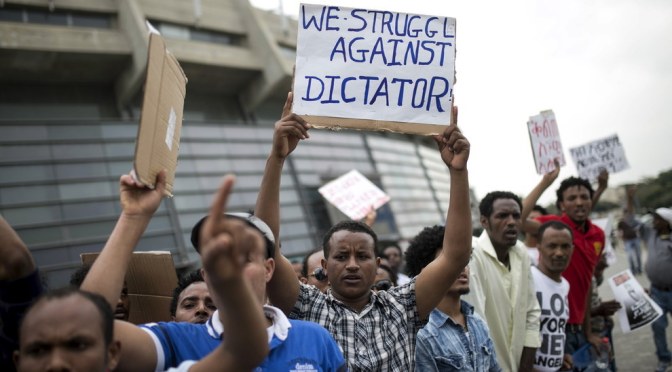
Making up the second largest group of refugees in Europe, Eritreans flee an authoritarian regime and military conscription
  • Eritreans accounted for a fifth of refugees making the trans-Mediterranean voyage from Africa to Europe last year, becoming the largest group in Italy.
  • The government of Eritrean President Isaias Afewerki has held uninterrupted power since the country gained its independence from Ethiopia in 1993, with reports of torture, forced disappearance, and mass surveillance practices.
  • Eritreans are forced into low-paid, indefinite military service, which the government says is due to ongoing conflicts with Ethiopia, leading many to leave to avoid conscription.

“It’s too hard to live in Eritrea because there are a lot of things they can do to you. …You can be in the military service for unlimited years, or in prison, and you don’t have a chance to raise your voice, to change the president.”

More on this story at BuzzFeed.

(Image Credit: Baz Ratner/Reuters, via BuzzFeed)

Taipei becomes second Taiwanese city to recognize same-sex partnerships
  • The registration is the gateway for partners to represent each other in hospital, court, and police institutions in the Taiwanese capital.
  • Couples still lack inheritance rights and identification via household registration and ID cards.
  • Kaohsiung became the first city in Taiwan to recognize same-sex partnerships in May.

More on this story at Gay Star News.

(Image Credit: Facebook photo, via Gay Star News)

U.S. healthcare plans’ failure to ensure full coverage of maternity care leaves many women and families bearing full brunt of hospitalization costs
  • While the Affordable Care Act declares maternity and newborn care essential health benefits, employer plans continue to sidestep labor and newborn costs, which accounts for over 80% of pregnancy and childbirth costs.
  • Because the ACA allows for children to remain on their parents’ plans until the age of 26, the government has clarified that dependent children can have their prenatal care covered; labor and delivery, however, remain vulnerable.
  • There is an ongoing suit filed through the Health and Human Services’ Office of Civil Rights alleging sex discrimination in employer healthcare coverage.

“Pregnancy discrimination is per se sex discrimination.”

More on this story at NPR.

(Image Credit: iStockphoto, via NPR)

Advocates and sports federation officials express unease at Iran’s equivocation on easing of restrictions on women’s attendance at sports matches
  • With Tehran set to host a world league volleyball match, the FIVB, the sport’s international federation, says it is committed to ensuring open, inclusive participation globally, though it has indicated no countermeasures should the Iranian government refuse.
  • Last week, Iran’s VP for women and family affairs indicated that women’s attendance would be limited to family members of athletes in a select set of sports, considered by many to be capitulation to the country’s vocal conservatives.
  • British-Iranian Ghoncheh Ghavami was jailed for nearly five months for trying to attend a volleyball match, leading the FIVB to state that Iran would not be eligible to hold international championships until the ban was lifted.

“The situation has got worse in recent years and hardliners have become more extreme on this matter but on the positive side, more people are aware of our cause now than ever before.”

More on this story at The Guardian.

(Image Credit: Alexander Demianchuk/Reuters, via The Guardian)

As registration of Haitians in the Dominican Republic falls short of population numbers, the country looks to move forward with controversial deportations
  • A little under half of the more than 500,000 migrant workers in the Dominican Republic have begun the documentation process with the Wednesday deadline looming, leaving the Haitian community, which comprises 90% of migrant workers, vulnerable to deportation.
  • The situation comes as a result of the strict legal measures restricting citizenship and immigration that began with the stripping of the citizenship of Dominicans born to Haitian immigrants after 1929.
  • Immigrants who have submitted themselves for registration will have 45 more days to complete the process, while the rest will be subject to deportations that the law’s opposers say can only result from community targeting and racial profiling.

“The signals are clear. …The Dominican government is setting up logistics, placing vehicles and personnel to start the process of repatriation.”

More on this story at The New York Times.

(Image Credit: Tatiana Fernandez/Associated Press, via The New York Times)

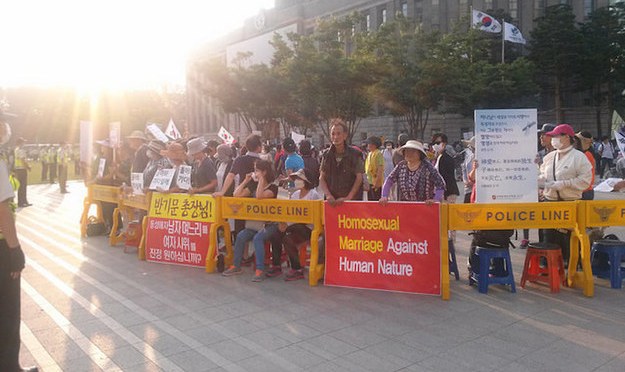
South Korean court rules LGBT march can proceed as planned following the police’s injunction against the event
  • Police had earlier denied the necessary permits to the Korean Queer Cultural Festival as a result of permit applications filed by conservative Christian activists to block the event.
  • Last year’s march saw conservative activists disrupting the parade through route blockage and protesting.
  • Organizers expect around 20,000 to participate in the march.

“This court’s decision in relation to the police’s unjust notice prohibiting assembly is important. … Within a democratic country, built on civil society, the guarantee that society can use their voice has a deep meaning.”

More on this story at BuzzFeed.

(Image Credit: Simon Williams-Im via Flickr, via BuzzFeed)

Ahead of Myanmar elections, concerns mount over extremist tactics among Buddhist nationalists as memories of recent violence persist
  • Hundreds were killed in 2012 and 2013 in clashes between Myanmar’s Buddhist majority and Muslim minority, particularly in the western state of Rakhine.
  • Politicians are leery of alienating Buddhist-majority constituents by condemning the violence, but face international pressure to speak up for ethnic and religious minorities.
  • Myanmar transitioned to semi-democratic rule in 2012, but with uneven rights to expression and anxiety over the upcoming elections, non-Buddhists (particularly Muslims) are fearful for their security.

More on this story at Reuters.

(Image Credit: Soe Zeya Tun/Reuters)

The African Union works to tackle continent-wide child marriage problem at its latest summit in Johannesburg
  • In sub-Saharan Africa, two in five girls are married off before adulthood, with the highest rate in Niger, where three in four are.
  • The AU plan requires the criminalization of child marriage and the development of prevention strategies.
  • The practice has held the continent back from reaching six of the eight Millennium Development Goals, including education and public health targets.

“It’s unacceptable that a continent as rich as Africa – with oil and diamonds, and with coltan that is found in everyone’s phone – can leave its people so poor that they feel they have no choice but to marry off their daughters.”

More on this story at Reuters.

Syrian refugees’ precarious living conditions in Lebanon threaten the community’s security
  • A recent fire that destroyed homes, shops, and community facilities in a Syrian refugee camp outside of al-Marj highlights the insecurity refugees face.
  • Because there are no formal refugee camps in Lebanon, Syrians are required to pay rent for accommodations, including those in the poorly constructed camps.
  • In addition, refugees face an increasingly unfriendly immigration system that requires declaration of intention at the border and forbids employment while levying fees and restricting access to social services.

“I used to work here as a baker, but now everything is gone – our shop, our salary, our papers. … We left Syria for this?”

More on this story at Deutsche Welle.

(Image Credit: via Deutsche Welle)

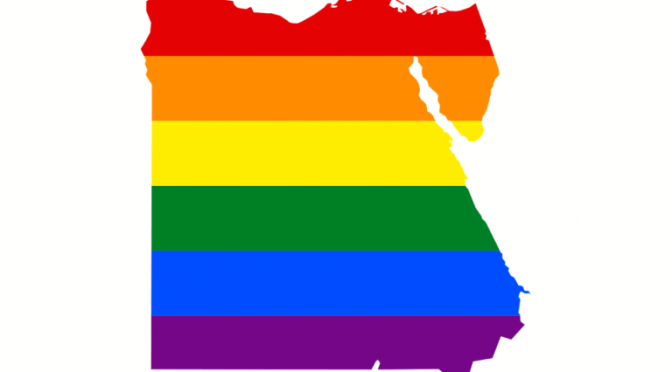
Transgender Egyptians face a difficult life in a society with few rights for its LGBT members
  • While homosexuality is universally condemned in Egypt, the transgender community has seen a glimmer of recognition through the government’s uneven acceptance of gender reassignment surgery for those diagnosed with “gender identity disorder” and approved by imams.
  • Even with that possibility, transgender individuals are subject to arrest, police and community violence, and employment exclusion, driving many into sex work to make a living.
  • Since the military coup in 2013, the trans community has faced deteriorating security as the government has enforced conservative, gender-rigid Islamic values in the citizenry.

“When I was five I knew I was different. … By 15, I was depressed. I thought I was a deviant according to Islam, that I was someone unacceptable to society.”

More on this story at GlobalPost.

(Image Credit: Wikimedia Commons)

Italy PM calls for EU asylum rule revision as his country struggles with migrant influx
  • PM Matteo Renzi has called for a change in the Dublin II regulation, which stipulates that refugees must apply for asylum in the country of entry, as neighboring states France and Austria tighten their border controls.
  • With Southern European states like Italy and Greece bearing the brunt of the historic trans-Mediterranean migration taking place, Renzi argues the regulation is standing in the way of other countries bearing their fair share of incoming refugees.
  • Renzi criticized the EU’s proposed refugee distribution plan that will relocate 24,000 from Italy and 16,000 from Greece to other countries in the European bloc.

“Migration is a serious issue and – let’s be frank – the answers that Europe is giving are insufficient. Relocating only 24,000 people is almost a provocation.”

More on this story at Deutsche Welle.

(Image Credit: via Deutsche Welle)

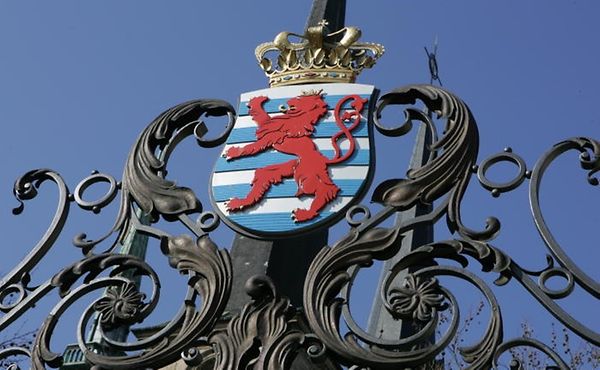
Luxembourg citizenship reform moves slowly through policy channels as policymakers continue retooling requirements
  • Proposals put forth in Parliament include automatic citizenship rights for Luxembourger youth turning 18 who have resided in the country for at least five years, lowered residency requirements for non-nationals from seven to five years, and the abolition of language testing for non-nationals in residence for at least 20 years.
  • Despite being announced in 2014, the Justice Ministry’s proposals have yet to be made public or completed.
  • A recent poll indicates that the Luxembourgish public is not in favor of the eased pathways to citizenship.

More on this story at the Luxembourg Wort.

(Image Credit: Anouk Antony/Luxembourg Wort)

U.K. PM David Cameron proposes new restrictions on non-EU skilled-worker immigration
  • With non-EU migration to the U.K. having increased to 290,000 in 2014, Cameron has proposed increasing the base salary threshold, further restricting eligible job functions and industries, and a “skills levy” on companies hiring non-nations to be put towards domestic apprenticeships.
  • Net migration stands at 318,000 and Cameron’s government hopes to get it below 100,000.
  • Some in the business community have complained that the government’s anti-immigration stance hurts the country’s global competitiveness and economic growth.

“We understand the public’s concerns around immigration, but limiting highly skilled workers from coming to the UK is not the answer. They bring their skills and ideas to this country, pay their taxes here and boost growth. We need to keep up-skilling our population, but at the same time as attracting the best and brightest global talent.”

More on this story at BBC.

(Image Credit: BBC)