Tag Archives: South America

Argentina News | LGBT

Argentina lifts ban on blood donations from LGBT individuals
  • After more than a decade of petitioning, LGBT advocates saw another major rights victory in the country as the Ministry of National Health ended its ban on LGBT blood donation.
  • The change specifically targets the pre-donation medical history questionnaire that singled out LGBT individuals for discrimination through questions about gender identity and sexual history.
  • Health officials hope the development will assist in promoting awareness of voluntary donation in an effort to increase its pool of blood donors.

“El cambio de paradigma de grupos de riesgo por el de prácticas de riesgo vuelve a posicionar a la Argentina a la vanguardia mundial en materia de igualdad y no discriminación”

Translation: “The paradigm change from at-risk groups to at-risk practices again positions Argentina in the global vanguard in matters of equality and non-discrimination.”

Read the full story at La Nación (in Spanish).

(Image Credit: via La Nación)
Bolivia News | Indigenous

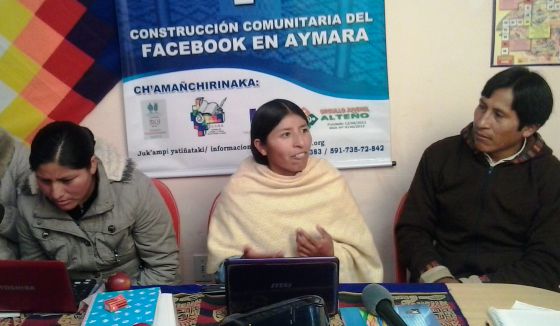
Bolivian volunteers translate Facebook into endangered language to help preserve indigenous culture
  • A group of 15-20 volunteers organized the work through Jaqi Aru, an El Alto-based virtual community dedicated to promoting the use of Aymara, Bolivia’s second most widely spoken indigenous language.
  • Facebook requires that at least 24,000 words be translated in order for a language to be added to the options for public use, which the group says it has achieved.
  • Aymara is included in UNESCO’s list of the world’s most endangered languages, leading Jaqi Aru to promote its presence and use through Internet destinations like Wikipedia and social media.

“Si no trabajamos hoy por nuestra lengua y cultura, será tarde recordar mañana lo que somos y siempre viviremos inseguros de nuestra identidad”

Translation: “If we don’t work for our language and culture today, tomorrow it will be too late to remember what we are and we will always live unsure of our identity.”

Read the full story at El País (in Spanish).

Brazil News | Refugees

Brazilian president welcomes refugees as asylum process is expedited
  • President Dilma Rousseff reiterated Brazil’s openness to taking in refugees to support international efforts to provide haven to the millions of refugees pouring out of Asia and Africa.
  • In addition to granting 90-day tourist visas to asylum seekers awaiting their application results, the government approved a new program to simplify the asylum application process.
  • Brazil has led Latin America in providing asylum to Syrian refugees, having welcomed 1,740 into the country.

Read the full story at teleSUR.

Venezuela News | Syrian Refugees

Venezuelan president offers to take in 20,000 Syrian refugees
  • President Nicolás Maduro indicated that the country is ready to take in the refugees to help cope with the global migration crisis.
  • Maduro has previously expressed support for Syrian President Bashar al-Assad, whose conflict with rebel forces has driven much of the flight from the country.

“How many more Arabs must die before a great human conscience of peace is awakened? … I want 20,000 Syrians to come to our Venezuelan fatherland, to share this land of peace, of Christ, of (independence hero Simon) Bolivar, and to help with the development of this magical land.”

Read the full story at Reuters.

Latin America & the Caribbean Feature | Afro-Latinas

The Summer of the Afro-Latina

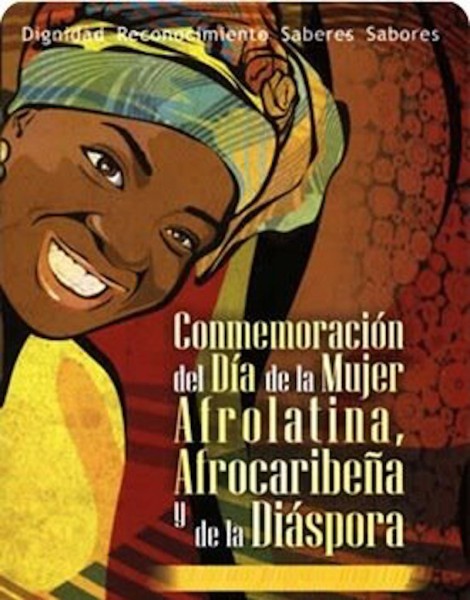
Image Credit: planeta-afro.org, via Global Voices

Summer 2015 saw a flurry of activities as Afro-Latina advocates and organizations united in forums and campaigns addressing the racial, ethnic, and gender discrimination experienced by women of African descent throughout Latin America. Events including the Afro-descendant Women Leaders of America Summit and advocates including bloggers, Descato Feminista (Feminist Contempt), Teatro en Sepia (Theater in Sepia), and the Red de Mujeres Afro-Latinoamericanas Afro-Caribeña y de la Diáspora (Network of Afro-Latin American and Afro-Caribbean Women of the Diaspora) focused on issues including gender-based violence, domestic labor, and political representation. Global Voices explores the busy summer for Afro-Latina advocacy.

View the feature at Global Voices.

ClimateWatch: Latin America & The Caribbean

ClimateWatch periodically analyzes the security climates of the world’s regions, focusing on conditions and developments affecting the most vulnerable identity communities while highlighting meaningful political and social steps towards security and integration. This week’s Latin American & Caribbean report summarizes developments in identity security from late July through mid-August.

Continue reading ClimateWatch: Latin America & The Caribbean

Ecuador News | Indigenous Ecuadorians

Indigenous Ecuadorians march against government
  • Indigenous leaders led a march from an Amazonian province towards Quito against President Rafael Correa’s regime.
  • They argued that government policies are dispossessing them of land and resource rights and economic security.
  • Demonstrators connected indigenous struggles to broader inequalities marginalizing the poor and the general citizenry.

Watch the AFP report on YouTube.

Chile News | Women

Chilean government advances bill to modify ban on abortions
  • The Chamber of Deputies’ health commission voted 8-5 in favor of proposals to create exceptions to the country’s total ban on abortions in cases of rape, maternal life endangerment, and the inviability of the fetus.
  • The bill will now be voted on article by article before moving to the full chamber, where it faces stiff opposition from lawmakers and Catholic Church interests.
  • Since Augusto Pinochet implemented the ban in 1989, women have faced up to five years in prison for aborting a fetus in one of only seven countries in the world with a total ban on abortions.

“The vote reflects the opinion of a majority in Chile, which considers that its time to assume the reality of the more than 30,000 illegal abortions in the country every year.”

Read the full story at Bloomberg.

(Image Credit: Martin Bernetti/AFP/Getty Images, via Bloomberg)

Brazil News | Journalists

Provincial journalist covering government corruption murdered in Brazil, at least the 4th this year
  • Gleydson Carvalho became the 16th journalist reported killed since 2011 after gunmen stormed his radio program in Camocim, Ceará.
  • According to the Committee to Protect Journalists, 65% of those murdered had been covering government corruption, with government officials suspected of responsibility in 52% of cases.
  • The targeted killings have taken place outside of Brazil’s major cities, where fewer law enforcement resources have led to stalled cases.

Read the full story at The New York Times.

Ecuador News | HIV

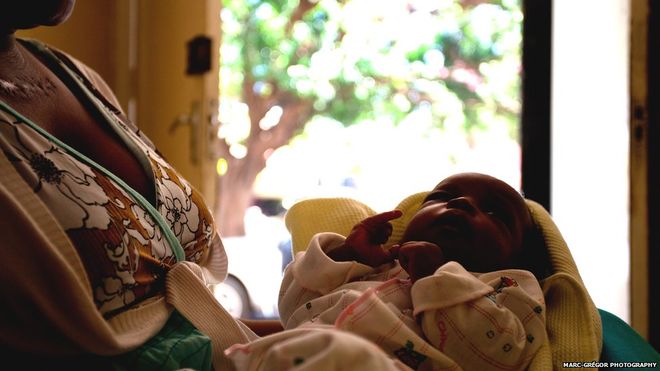
Treatment program in Ecuador saves newborns of HIV-positive mothers from infection
  • In Ecuador, a program driven by the government, Ecuador’s largest maternal hospital, the VIHDA foundation, and Duke University provides antiretroviral medication to newborns of HIV-positive mothers right after birth, significantly reducing their chances of contracting the virus.
  • At least 1,000 babies have remained virus-free thanks to the program, when they would otherwise face a 45% chance of infection during pregnancy, delivery, or breastfeeding.
  • When their status is known, infected mothers receive treatment throughout their pregnancy, but new programs around the world are pushing for ways to quickly reach women who don’t have prenatal appointments during the limited deterrence window.

“I don’t care if my career as a teacher was ruined by this illness. Today I am happy to see my children healthy and studying.”

Read the full story at the BBC.

(Image Credit: Marc-Grégor Photography, via the BBC)

Venezuela News | Dissidents

Fourth opposition politician in last month banned from office in Venezuela
  • Former state governor Pablo Perez has been disqualified from holding office for 10 years by the comptroller’s office in what government critics say is a crackdown on political opposition ahead of Venezuela’s upcoming elections.
  • A former legislator and two ex-mayors have also been banned as the country has descended into economic turmoil, weakening support for President Nicolas Maduro.
  • Demonstrations protesting the bans and calling for free elections have been planned, though President Maduro has used violence in those protests as grounds for banning politicians from running.

Read the full story at Reuters.

(Image Credit: Isaac Urrutia/Reuters)

Paraguay News | LGBT

Paraguayan LGBT activist becomes first to attend meeting with Pope Francis
  • Simón Cazal, executive director of advocacy organization Somosgay, was invited to attend the event that saw representatives of 1,600 organizations to see the Pope in Asunción.
  • He became the first professional advocate to meet publicly with the Pope, who has previously visited LGBT prisoners and had private meetings.
  • Cazal reported that the Pope spoke of dignity for all, in line with similar pronouncements he has made with regard to diversity in the Church.

“The local church insisted on talking about the family and other conservative issues. … He distanced himself from this discourse and highlighted diversity in its place. … The pope’s speech was very productive.”

Read the full story at the Washington Blade.

(Image Credit: Jeon Han, courtesy Wikimedia Commons; via the Washington Blade)

Caribbean News | Afro-Latinas

Inaugural Latin American Afrodescendent Women Leaders’ Summit brings Afro-Latina leaders together to address community security
  • The summit convened in Managua, Nicaragua, bringing leaders together to address such issues as black women’s rights and protections, health, education, the environment, poverty reduction, and public services access.
  • Organizers aimed to use the discussions to adopt a shared political platform for Afro-Latinas throughout Latin America to combat the disproportionate impact of poverty and other socioeconomic barriers on black women.
  • Afro-Latinos make up between 20 and 30% of the population in Latin America, with complex histories of colonization, slavery, and migration making identification uneven.

Read the full story at teleSUR.

(Image Credit: Network of Afroamerican, Afrocaribbean, and Diasporic Women; via teleSUR)

Venezuelan youth and young adults look to emigrate as their country’s economic crisis deepens
  • One in four Venezuelans between the age of 15 and 29 have indicated a desire to leave the country, with 29% hoping to move to the U.S., 18% to Spain, and 9% to Colombia.
  • Skyrocketing inflation has made renting an apartment or buying a car next to impossible.
  • The government has created programs to address the lack of mobility, but skeptics observing the current political situation expect to find better prospects elsewhere.

“Recovery is going to take years, no matter who is governing. At the end all the politicians are alike.”

Read the full story at Fox News Latino.

Brazil’s legislators eye controversial measure to lower the age of criminal majority from 18 to 16
  • The National Congress will vote this month on the legal status change as the country faces sky-high homicide rates, particularly in the state of Ceara, which sees 76.8 per 100,000 people murdered.
  • In Ceara (whose capital, Fortaleza, has been named the eighth most violent city in the world), adolescents commit 31% of violent crimes.
  • Under current law, Brazilian minors face a maximum three-year detention at “educational centers” for rehabilitation, which President Dilma Rousseff’s government would like to increase to 10 years rather than lower the age of majority.

“The solution is not to send them to adult prison. … This will give them a certificate in crime.”

More on this Washington Post story at the Guardian.

(Image Credit: Aurora Photos/Alamy, via the Guardian)