Tag Archives: Women

Pakistan Feature | Women & Girls

The Endless Labors of Pakistan’s Debt-Bound Women

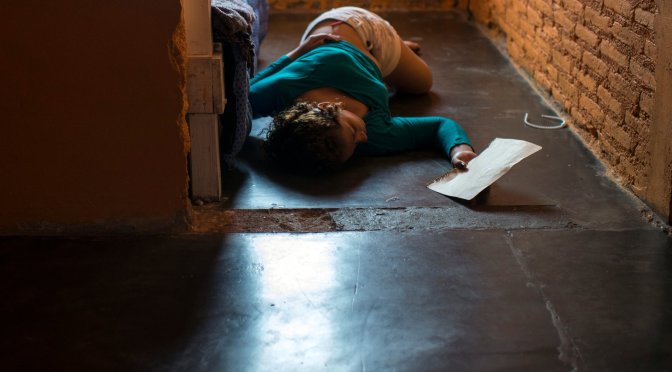
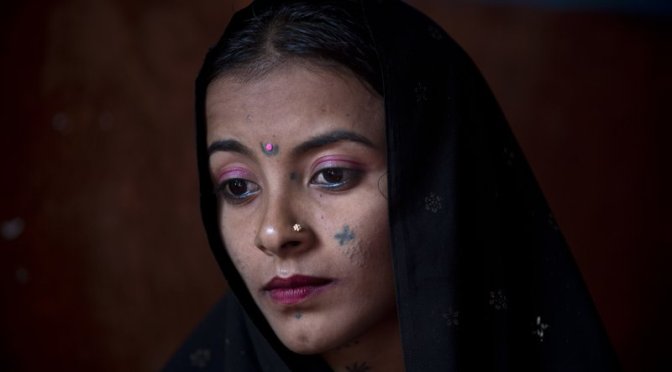
A form of indentured servitude persists in the vast fields of Pakistan’s poorest regions, where families labor on lands to pay off debts whose balance never seems to decrease. But while men may find their “payments” limited to hard labor, women and girls find themselves vulnerable not only to physical labor, but to domestic, sexual, and even marital labor forced under conditions of extreme duress.  Religious minorities are particularly vulnerable, with an estimated 1,000 Hindu and Christian girls trafficked as a result of these debts, sold off to predatory landowners and forced to convert to Islam. The Associated Press examines the conditions faced by the more than 2 million Pakistanis living in what human rights organizations have called modern-day slavery and the particular indignities to which women and girls are subjected.

Read:
A Pakistani girl is snatched away, payment for a family debt” (The Associated Press)

(Image Credit: B.K. Bangash/AP)

Africa Feature | Women

The Resilience of Africa’s Top Female Football Players

Facing nonexistent funding, social suspicion, and expectations of continued domestic obligations, many female football players across the African continent have endured challenges far greater than their male counterparts for the love of the game. Where men’s teams have been able to rely on state support and a long history of social sanctioning, women’s teams have had to resort to informal networks and social media to drum up the support necessary to enable them to compete, all while facing sanctioning of the opposite sort: underinvestment, disparagement, and insults about their gender and sexuality. The Guardian profiled a number of the competitors in this year’s Women’s Africa Cup of Nations, revealing the divide in opportunity for women and men and burgeoning signs of progress in the continent’s most popular sport.

Read:
Skilled, determined and broke: Africa’s female football pioneers” (The Guardian)

(Image Credit: Andy Clark/AFP/Getty Images, via The Guardian)

Lebanon News | Women

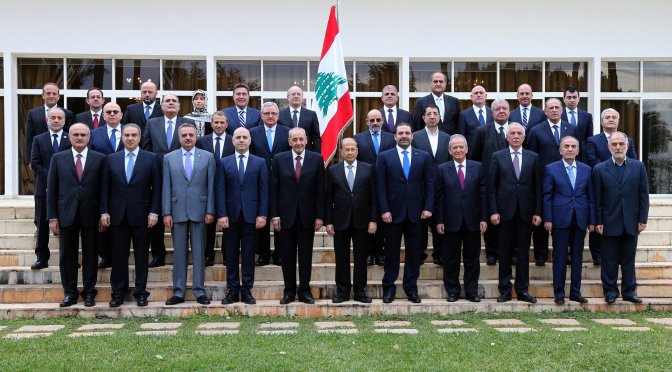
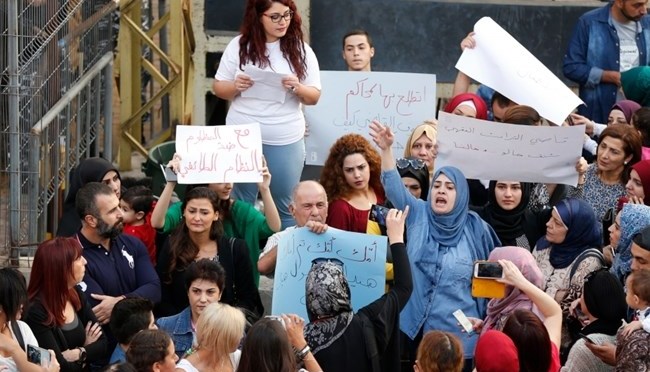
Appointment of man as Lebanon’s first women’s affairs minister sparks outrage
  • The appointment of Jean Ogasapian to the new post in Prime Minister Saad Al-Hariri’s newly formed government drew widespread condemnation from women’s rights leaders and organizations, a further injury on top of the appointment of only one woman to the 30-member government.
  • The stakes are high as advocates work to combat high levels of domestic violence and discriminatory citizenship laws that deny women the power to pass citizenship on to their children upon marrying non-citizens.
  • Social media derision has given way to calls for protests against an appointment viewed as illegitimate and in line with the establishment of a cabinet built through nepotism and loyalism rather than competence.

Read more:
Lebanon protests urged after man picked as first women’s affairs minister” (The Guardian)
Lebanon appoints man as first ever women’s affairs minister” (The Independent)
Lebanon’s first minister for women is a man” (The Washington Post)

(Image Credit: Handout/Reuters, via The Guardian)

U.S. News | Women

Ohio governor signs abortion ban into law
  • The bill criminalizes abortion procedures after 20 weeks of gestation (currently 145 out of the nearly 21,000 abortions performed in Ohio), including because of rape, incest, or severe fetal anomalies.
  • Governor John Kasich vetoed a second controversial bill known as the “Heartbeat Bill” that would have banned abortion procedures as soon as a fetal pulse is detected, which occurs around six weeks of pregnancy (or around two weeks after a woman is able to determine her pregnancy status).
  • The bills emerged as anti-abortion activists have been emboldened by the election of Donald Trump, signaling what they believe will be a new era in abortion politics given the precariousness of the current Supreme Court makeup.

Read more:
Gov. John Kasich vetoes Heartbeat Bill, signs 20-week abortion ban” (The Columbus Dispatch)
Kasich vetoes ‘heartbeat bill,’ signs less restrictive abortion ban” (Cincinnati.com)

Related reads:
Ohio’s governor is weighing 2 abortion bans. Nobody’s talking about the one he might actually sign.” (Vox)

Germany News | Muslim Women

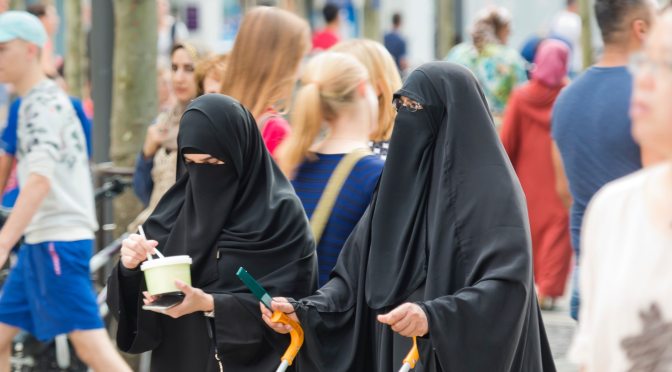
Chancellor Merkel endorses partial ban on Islamic veils in Germany
  • Merkel’s announcement is the first public show of support for her party’s call for a ban on full-face veils in public spaces, a proposal Muslim women leaders have pointed out as unnecessary and inflammatory in a nation that already creates strong social pressure not to wear religious veils.
  • The Christian Democratic Union (CDU) has proposed barring veils including the burqa and the niqab from public spaces including courts and educational institutions and during events such as traffic stops and police checks.
  • Merkel, who recently announced a run for a fourth term, has increasingly stressed “integration” and “law and order” amidst rising anti-immigrant, anti-Muslim, and nationalist sentiments in the country.

Read more:
Angela Merkel endorses party’s call for partial ban on burqa and niqab” (The Guardian)
Angela Merkel Calls for Ban on Full-Face Veils in Germany” (The New York Times)
Burqa bans: As Angela Merkel supports prohibition, survey shows how Muslim-majority countries feel about veils” (The Independent)

Related reads:
What’s That You’re Wearing? A Guide to Muslim Veils” (The New York Times, May 2016)

(Image Credit: Michael Gottschalk/Photothek via Getty Images, via The Guardian)

The Netherlands News | Muslim Women

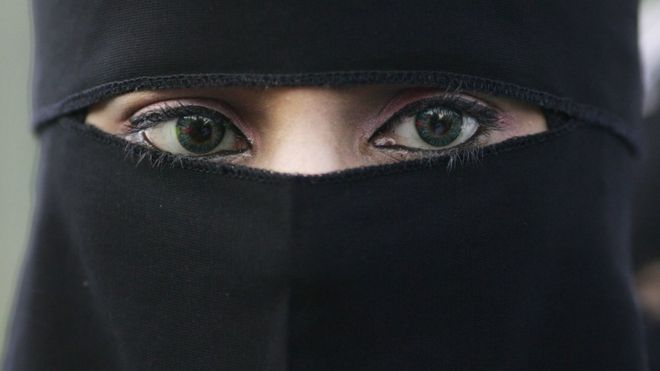
Partial ban on public dress in Islamic veils clears hurdle in the Netherlands
  • The Dutch lower house approved legislation that would ban the wearing of “face-covering clothing” including the burqa and the niqab, sending the bill to the Senate for final approval.
  • The ban, which would impose a more than €400 fine on offenders, would apply to public spaces including educational institutions, healthcare centers, public transportation, and government buildings.
  • Although data indicates only a few hundred women wear the veils, the legislation comes as a part of a wave of European legislation targeting traditional Islamic wear, including in France and Belgium.

Read more:
Dutch parliament paves way for approval of partial Islamic veil ban” (AP via The Guardian)
Burka ban backed by Dutch MPs for public places” (BBC)
Dutch parliament approves partial burqa ban in public places” (The Independent)

(Image Credit: Getty Images, via BBC)

Brazil News & Resource | Women

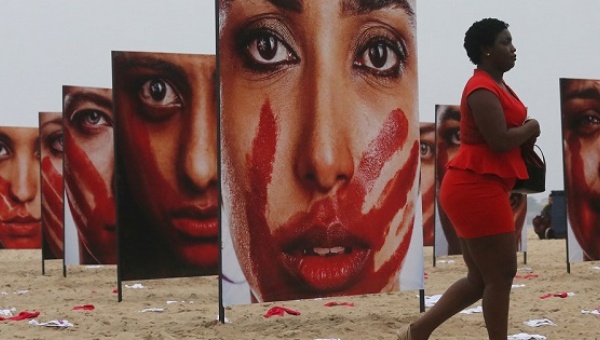
The Patricia Galvao Institute launches database cataloging gender violence in Brazil
  • Dossiê Feminicído (Femicide Dossier) debuted as a resource for women, educators, advocates, researchers, and others interested in learning more about femicide and other forms of gender-based violence in the country.
  • The platform also provides information about resources, services, rights, and policy for and affecting women confronting violence in their communities.
  • Recent data indicates an average of 13 women are killed in Brazil each day, making the country one of the most dangerous in the world for women.

View:
Dossiê Feminicído

Read more:
Brazilian Women Ramp up Fight Against Femicide with Open Data” (teleSUR English)

(Image Credit: Reuters, via teleSUR English)

Central America Feature | Women & Girls

Young Central American Women’s Fight to Flee

The situation for girls and young women in the “Northern Triangle” of Guatemala, El Salvador, and Honduras has perhaps never been more dire. The persistence of organized crime, with its emphasis on patriarchy and the subjugation of women, has forced many women and girls from their homes, fueling a migration crisis in Mexico and the U.S. From education disruption to sexual slavery, young women have found their prospects circumscribed by a culture of entitlement, intimidation, and violence that severely limits women’s agency in the region. The Guardian investigates the conditions young women face in the region and

Read:
‘It’s a crime to be young and pretty’: girls flee predatory Central America gangs” (The Guardian)

Additional:
Central America’s rampant violence fuels an invisible refugee crisis” (The Guardian)

(Image Credit: via The Guardian)

South Korea Feature | Women

Fearing the Decline of South Korea’s First Female President

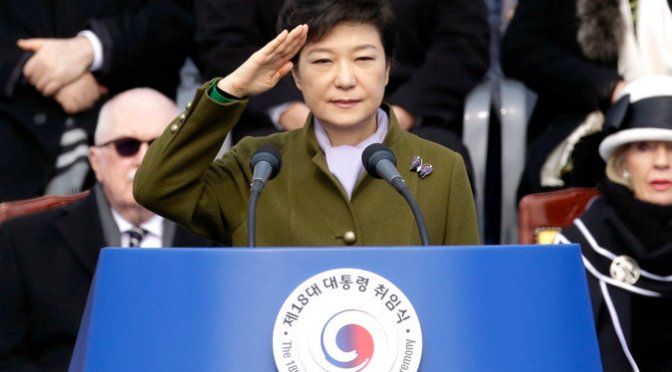
The widening scandal President Park Geun-hye, South Korea’s first female president, has become embroiled in has created an environment some women and gender equality advocates worry will poison the prospects for future female presidential aspirants. Ongoing revelations of Park’s connection to her friend Choi Soon-sil’s alleged use of state power to extort businesses has led to mass demonstrations and increasing calls for her resignation from men and women alike. Some Korean women have expressed concern about the failure of her presidency being unfairly generalized to cast doubt on the abilities of female executives as a whole, and as advocates have drawn attention to data showing increased gender inequality across key metrics since Park took office in 2012, some advocates have sought to separate Park’s historic achievement from the effects of her presidency. The New York Times examines the complicated gender dynamics of anti-Park sentiment and fears of its impact on the future of gender equality in politics and beyond.

Read:
Gender Colors Outrage Over Scandal Involving South Korea’s President” (The New York Times)

Additional:
Anti-Park protests flare up across the country; 600,000 people gathered in Seoul” (The Korea Times)

(Image Credit: Lee Jin-man/Associated Press, via The New York Times)

Lebanon Feature | Women

The Enduring Civil Inequality of Lebanese Women

Lebanon’s complex civil status laws have given broad leeway for religious courts to adjudicate civil matters according to theological law, leaving a tangled relationship between church (or mosque) and state in disputes like divorce and child custody. Fatima Ali Hamzeh’s fight to retain custody of her three-year-old son after her husband married another woman while refusing to divorce her has revealed how the intertwined legal systems intersect to create significant disadvantages for women in what is considered to be one of the Middle East’s most progressive states. Global Voices highlights Hamzeh’s story and the women’s rights movement that has rallied around her to combat gender-based legal inequality in Lebanon.

Read:
A Mother’s Fight for Her Son Exposes Lebanon’s Institutionalized Sexism” (Global Voices)

Additional:
Hamzeh custody case draws Berri’s attention” (The Daily Star)

(Image Credit: via The Daily Star)

Turkey News | Girls

Outrage erupts over proposed bill in Turkey to clear adults married to minors of sexual abuse charges
  • The bill, approved after an initial reading and set for a second vote, would allow for the indefinite suspension of sentencing for sex “without force, threat, or any other restriction on consent” if the perpetrator marries the victim.
  • Women’s rights, children’s rights, and other advocates were swift to condemn the proposed bill, which they argue effectively condones statutory rape and child marriage.
  • Child marriage is illegal in Turkey, but non-civil religious marriages proliferate, particularly in the southeast of the country.

Read more:
Turkish ruling party sparks uproar with sexual abuse bill” (Reuters)
Turkish bill to clear men of child sex assault if they marry their victims” (AFP via The Guardian)
Turkey: Thousands protest against proposed child sex law” (BBC)

(Image Credit: Sedat Suna/EPA, via The Guardian)

ClimateWatch: U.S.

ClimateWatch
The U.S. in the Era of Trump

Source: euronews YouTube

The conclusion of an election that saw an historic clash over the values of diversity, inclusion, and the meaning of “America” has brought with it a surge in uncertainty for minority and other historically disadvantaged communities in the U.S. The damage was extensive: the nearly year and a half of campaigning saw ethnic and religious minorities disparaged, immigrants targeted, women (including his opponent) subjected to misogynistic abuse, the mainstream press caught in the crosshairs of an anti-media campaign, and rhetorical and symbolic resonances in speeches and advertising that drew white supremacists and other far-right extremists out of the woodwork.

In what ways has Trump’s election reshaped the social and political climate for vulnerable American populations, including women, Latinos, black people, immigrants, LGBTQ people, and people with disabilities? How is the post-election retreat from data showing racial resentment as the highest predictor of Trump support endangering reality-based solutions for vulnerable communities, politicians, and analysts? And how has his rise to power connected to and amplified similar right-wing, ethno-nationalist politics globally?

Whether and how American conservatives and the Republican Party—now set to hold power in all three branches of government—are able to manage a resurgent coalition of ethno-nationalist voters as well as the capacity for progressive and Democratic activists to create social, political, and legal structures to protect vulnerable communities will determine what life in Trump’s America will look like for the at-risk. This ClimateWatch rounds up a number of key news items, analyses, and commentaries providing insight on what has happened and what could be on the horizon. Continue reading ClimateWatch: U.S.

Myanmar News | Rohingya Women

Women report mass rapes and looting by military as violence against Rohingya explodes in northwest Myanmar
  • Locals from U Shey Kya village allege that soldiers stormed their homes, committed mass rape, stole valuables, and burned homes, accusations dismissed as “illogical” and “propaganda” by governmental spokespeople.
  • The raids in northern Rakhine State follow coordinated attacks by an emergent group of Rohingya militants on multiple border patrol posts, leading to nine police officers’ and five soldiers’ deaths.
  • Many homes in the village were left with only women after men evacuated from fear of being indiscriminately identified as insurgents, with many fearing disregard of recently imposed political constraints on the Burmese military.

Read more:
Exclusive: Rohingya women say Myanmar soldiers raped them amid crackdown on militants” (Reuters)
Dozens of rapes reported in northern Rakhine State” (The Myanmar Times)
Calls Grow for Access to Western Myanmar in Face of Military Lockdown” (The New York Times)

(Image Credit: Ye Aung Thu/Agence France-Presse/Getty Images, via The New York Times)

Poland News | Women

Plans for near-total abortion ban fail following massive protests in Poland
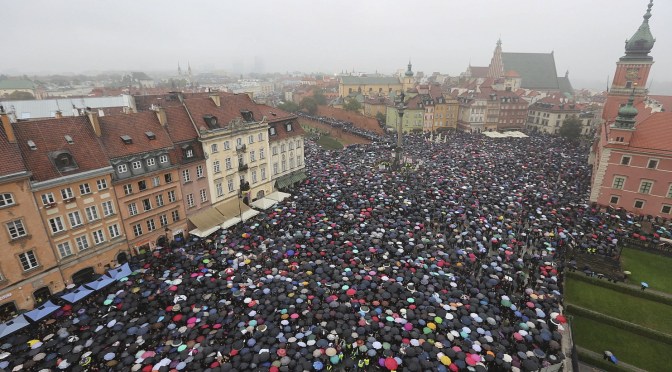
  • The measure was defeated 352-58 after as many as 100,000 women dressed in black took to the streets across the country for “Black Monday” protests.
  • Pushed by the conservative Law and Justice party (PIS) and the Catholic church, the proposed law would have limited legal abortion to instances where the woman’s life was in danger, with women and doctors both facing imprisonment for conducting abortions.
  • Poland currently has some of the strictest limitations on women’s reproductive rights in Europe, with abortion allowed only in cases of rape, incest, danger to the woman’s health, or identification of serious fetal abnormality.

Read more:
Poland’s parliament rejects near-total ban on abortion after protests” (The Guardian)
Black Monday: Polish women strike against abortion ban” (BBC)
After mass protests, Poland won’t back total abortion ban” (AP via The Washington Post)

(mage Credit: Czarek Sokolowski/Associated Press, via The Washington Post)

India News | Women

Indian state strengthens property rights for slum-dwelling women
  • Women living in slums in the state of Maharashtra will now hold ownership rights equal to men thanks to a new land title plan.
  • The plan comes as the government seeks to regularize slums in the state, giving families land titles with joint ownership between marital partners.
  • Though the development has been lauded, advocates warn that women continue to struggle to exercise equal rights once gained, with lack of education and intimidation perpetuating gender-based legal inequalities.

Read more:
India’s Maharashtra state to give women slum dwellers joint ownership rights” (The Thomson Reuters Foundation)

(Image Credit: Danish Siddiqui/Reuters)