China Feature | Women

The Literary Empowerment of Chinese Women

Following the high-profile detention of activists in China last year that prompted international condemnation, the state of feminism and gender equality in the reclusive country has come into the national and international spotlight. Though ambivalent about the label “feminist,” women have taken up issues such as pay equity, domestic violence, and family care while confronting traditionalist conceptions of women’s role in Chinese society. The New York Times features one front in the push for gender equality: bookstores, where Chinese women of diverse backgrounds congregate to connect with historical, philosophical, spiritual, and self-help texts under a government that keeps a tight grip on the country’s publishing industry.

Read more:
Chinese Feminism’s Long March Takes Two Paths at Bookstores” (The New York Times)

Additional reading:
Chinese Activists Probe Colleges Over Sexist Job Adverts” (Radio Free Asia)
Soul-searching in China as bystanders ignore woman being attacked in hotel” (The Guardian)
Police Remove Bail Conditions on 5 Chinese Feminists Detained Last Year” (The New York Times)

(Image Credit: Gilles Sabrie/The New York Times)
Latvia News | Muslim Women

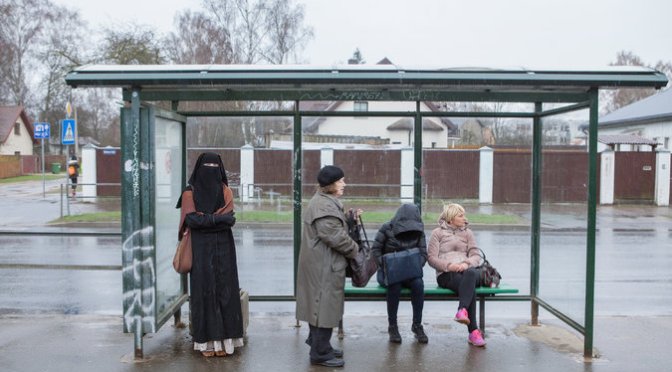
Latvian ministry plans proposal to ban niqab despite paucity of affected individuals
  • The Ministry of Justice is crafting legislation to ban the niqab, though only a handful of women among the country’s estimated 1,000 practicing Muslims wear the full-body veil.
  • The proposed legislation is a part of Latvia’s widespread anti-immigration reaction to the surge of migration to Europe, framed as a preventative measure as the country prepares to take in 776 refugees over two years (of whom only six have arrived).
  • The legislation does not criminalize the wearing of hijab, but Latvian Muslims have reported public discrimination and vocal prejudice despite the absence of explicitly discriminatory laws.

Read more:
Latvia Wants to Ban Face Veils, for All 3 Women Who Wear Them” (The New York Times)
Latvia mulls face veil ban – but only 3 women wear them” (Al Arabiya)
Latvia wants to become the third country in Europe to ban the face veil” (Al Bawaba)

(Image Credit: Reinis Hofmanis/The New York Times)

Southern Europe & North Africa News | Migrants & Refugees

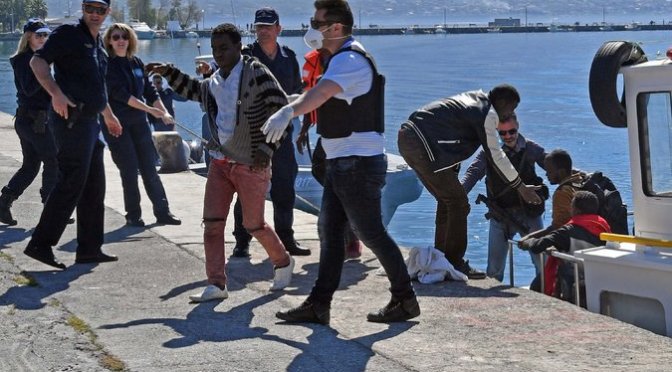
As many as 500 may have died in migrant boat sinking in Mediterranean
  • The U.N. refugee agency indicated as many as 500 may have died after a boat carrying mostly African migrants and refugees capsized between Libya and Italy, according to interviews with 41 survivors.
  • If verified, the incident would be the largest migrant tragedy on record since the April 2015 sinking that killed more than 800 migrants.
  • Smugglers have returned to dangerous trans-Mediterranean routes between Libya and Italy following a recent deal between the E.U. and Turkey to stem migration in the eastern Mediterranean.

Read more:
Survivors report massive loss of life in latest Mediterranean Sea tragedy” (U.N. High Commissioner for Refugees press release)
Hundreds feared dead in migrant shipwreck off Libya” (The Guardian)
500 May Have Died in Sinking of Migrant Boat in Mediterranean, U.N. Says” (The New York Times)

(Image Credit: Nikitas Kotsiaris/EPA, via The New York Times)

South Africa News | Youth

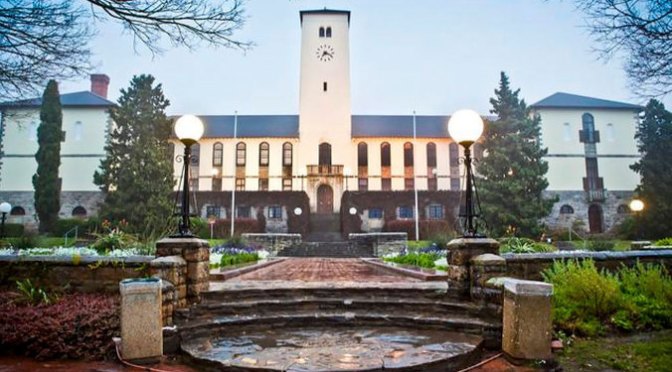
Hundreds of protesters clash with police at campus rape protests in southeast South Africa
  • Police used rubber bullets, stun guns, and pepper spray to disperse hundreds of protesters at Rhodes University in Grahamstown.
  • The protests erupted after the names of 11 alleged perpetrators of sexual violence were circulated on campus and via social media.
  • Demonstrators disrupted lectures and organized the #RUReferenceList and #Chapter212 campaigns to call for a reform of the campus sexual assault policies and trauma services, leading to an indefinite shutdown of academic activity.

Read more:
Protesters demand reform following release of #RUReferenceList” (Mail & Guardian)
South Africa police fire rubber bullets to disperse protesters at Rhodes University” (Reuters)
Academic activities disrupted at Rhodes University” (SABC News)

(Image Credit: Sophie Smith/Mail & Guardian)

Kenya Feature | Mental Illness

The Struggle to Treat Mental Illness in Kenya

Healthcare in Kenya has struggled to reach the portion of the country’s population afflicted with mental illness, particularly those in rural communities. With around one psychiatrist for every 500,000 people in the country, families struggle to find professional support services, and services that do exist are overtaxed and underresourced. Rather than seek medical help, religiously devout communities often turn to faith healers to treat what are commonly accepted as spiritual rather than medical diseases.

People with mental illness find their conditions compounded by poverty and diseases that go unidentified and untreated, facing significant HIV infection rates and vulnerability. Recent efforts by Kenya-based mental health advocacy organizations and foreign investments in the country’s mental health services have created hope for broader treatment and enfranchisement of the community in Kenya, which, like many developing countries, shoulders some of the highest mental health burdens in the world.

Read more:
The taboo of mental illness in Kenya” (Al Jazeera)
Mental Health Care Still a Challenge in Rural Kenya” (Voice of America)
11mn Kenyans suffer mental disorder – WHO” (Capital News)
Double-edged stigma for people with mental illness and HIV” (Key Correspondents)
Kenya benefits from $6.1 million fund for mental health” (Standard Digital)
Fighting the ‘funk:’ How one Kenyan battles her mental health problems by helping others” (Public Radio International)

Resources:
Africa Mental Health Foundation

(Image Credit: Osaman Mohamed Osaman/Al Jazeera)

Kazakhstan Feature | Men

Kazakhstan’s Unfolding Mental Health Crisis

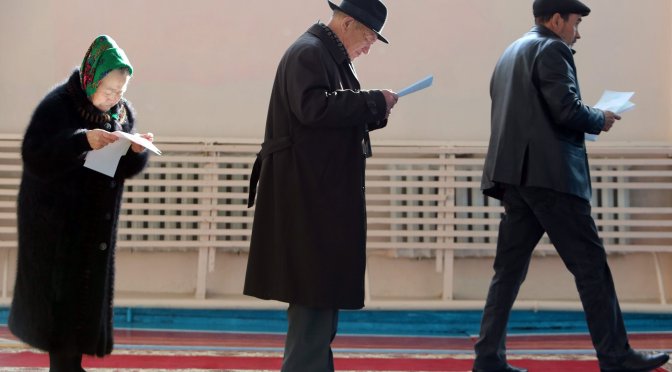
An economic downturn in Kazakhstan has led to deteriorating mental health conditions for a population of men struggling to find work and support their families in a heavily patriarchal society. Mental health professionals have reported significant increases in the number of male clients, though numbers of those afflicted with mental illnesses like depression and anxiety are believed to be significantly underreported given cultural attitudes that deter men from seeking professional help. An IWPR report highlights some of the factors compounding Kazakh men’s social, economic, and psychological alienation and attempts to provide assistance to the community.

Read more:
Kazakhstan’s mental health crisis: ‘as men we can’t seek help’” (Institute for War & Peace Reporting, via The Guardian)

(Image Credit: Igor Kovalenko/EPA, via The Guardian)

Canada News | First Nations

Rash of suicide attempts leads to emergency declaration in Ontario First Nations community
  • Soon after the Attawapiskat First Nation’s council had declared a state of emergency following months of suicides and suicide attempts, 16 members of the northern Ontario First Nation attempted to take their lives.
  • Since last fall, the community has seen more than 100 suicide attempts among its population of 2,000, with victims ranging in age from 11 to 71.
  • Poor standards of living, limited healthcare access, and the legacies of brutal policies against First Nations have contributed to high indigenous suicide rates, with suicide/self-harm the leading cause of death among indigenous people under the age of 44.

Read more:
How the Attawapiskat suicide crisis unfolded” (The Toronto Star)
First Nations community grappling with suicide crisis: ‘We’re crying out for help’” (The Guardian)
5 more Attawapiskat youth attempt suicide in ‘spiralling situation’” (CBC News)

(Image Credit: Chris Wattie/Reuters, via The Toronto Star)

Bangladesh News | LGBT

Four LGBT activists detained in Dhaka after attempting to join new year festivities
  • The four members of Roopbaan, a Bangladeshi LGBT rights group, were arrested for attempting to join Bengali New Year processions under suspicion of illegal assembly.
  • The four were released after their families arrived to retrieve them, when police reportedly told their families they were gay.
  • Roopbaan had attempted to arrange a “rainbow rally” weeks earlier but police had denied permission after fundamentalists issued threats of violence.

Read more:
Bangladesh: Police Detain LGBT Members at Pahela Boishakh Rally” (BenarNews)
Boishakh ‘rainbow rally’ cancelled” (Dhaka Tribune)
Four gay activists freed in Bangladesh” (Firstpost)

(Image Credit: AFP via BenarNews)

Myanmar News | Youth Activists

New Myanmar government pardons almost 200 imprisoned activists

  • Among the 113 released so far were 69 student activists, many of whom had been charged and convicted following major student protests in March 2015.
  • Aung San Suu Kyi, who led the National League for Democracy (NLD) party to victory, had herself been under house arrest for 15 years of the military’s rule.
  • Of the remaining 345 facing political charges, 298 are on bail and 47 on remand in jail.

Read more:
New Myanmar government frees scores of jailed activists” (Reuters)
Myanmar Court Drops Charges Against Student Detainees” (Radio Free Asia)
Myanmar drops charges against nearly 200 political activists” (The Guardian)

(Image Credit: Soe Zeya Tun/Reuters)

U.K. News | Middle & Working Classes

Scotland works to correct massive land ownership inequality through pro-community initiatives
  • The Land Reform Bill of 2015 promotes community ownership and settlement in Scotland’s rural regions, establishing a new land registry and the Scottish Land Fund to help community groups purchase land.
  • A 2014 government report found that half of Scotland’s privately held land is owned by 0.008% of the population.
  • Scotland’s land inequality has been driven by aristocratic inheritance, violent land hoarding in the 1800s, and massive contemporary real estate investments by the wealthy.

Read more:
Scotland moves against wealthy gentry dominating land” (Reuters)
‘New dawn’ as MSPs approve land reform proposals” (BBC)
New £10m community buy-out fund revealed as MSPs debate land reform” (Scottish Housing News)
A new dawn for land reform in Scotland?” (The Guardian)

(Image Credit: Murdo MacLeod/The Guardian)

Arabian Peninsula News | Lebanese Immigrants

Lebanese immigrants in the Gulf fear deportation as GCC-Lebanon relations deteriorate
  • Relations between Lebanon and the Gulf Cooperation Council have deteriorated after Lebanon refused to condemn attacks on a Saudi ambassador in Iran.
  • Sunni Gulf countries have targeted those viewed as sympathetic or connected to Shiite group Hezbollah in Lebanon, though Lebanese immigrants fear what constitutes “sympathy” or “connection” may be broad and arbitrary.
  • To date, Bahrain and Kuwait have deported Lebanese on the basis of Hezbollah sympathy, and Lebanese in other Gulf countries fear their visa-renewal process.

Read more:
Lebanese expats fearful as Gulf expels dozens accused of Hezbollah links” (Reuters)
Bahrain sends home Lebanese citizens” (The National)
Saudi Arabia’s bitter Lebanese divorce” (Reuters)

(Image Credit: Jonathan Ernst/Reuters)

Ireland News | LGBT & HIV

HIV testing in Ireland expands into gay bars
  • The Panti Bar, run by LGBT and poz activist Panti Bliss (drag persona of Rory O’Neill), is set to begin offering 30-second HIV tests to patrons.
  • HIV infection rates rose 160% in Ireland between 2005 and 2015, including a record high of 182 new cases in 2014.
  • With trained counselors on site and the ability to register positive individuals with Ireland’s treatment and counseling program, the Panti Bar will be the first expansion of HIV testing out of clinical settings in Ireland, with similar programs to follow in Cork, Limerick, and other parts of Dublin.

Read more:
Dublin drag queen turns pub into HIV-Aids testing centre” (The Guardian)
Rory O’Neill on living with HIV: ‘Most gay guys don’t understand how far things have changed and how different it is’” (Independent.ie)

Colombia News | LGBT

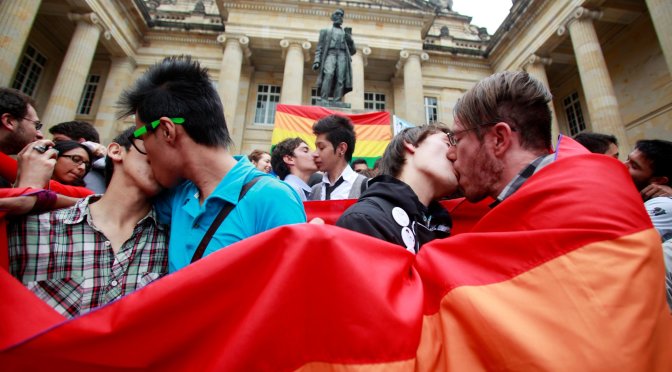
Colombia’s Constitutional Court opens door to marriage equality in 6-3 ruling
  • The Court voted against a proposal to establish marriage as between “one man and one woman” and declared that public employees could not refuse to perform same-sex weddings.
  • Colombian couples won their first partnership rights in 2007 and, in 2015, adoption without full marriage rights, which the Court had ordered the legislature to enact by 2013 in a 2011 ruling.
  • Colombia will join Argentina, Brazil, Uruguay, and parts of Mexico in permitting marriage for same-sex couples in Latin America.

Read more:
Colombia’s highest court paves way for marriage equality in surprise ruling” (The Guardian)
El matrimonio igualitario gana espacio en América Latina” (teleSUR, in Spanish)
Una década de lucha de los LGBT por la igualdad” (El Espectador, in Spanish)

(Image Credit: John Vizcaino/Reuters, via The Guardian)

Bangladesh News | Secular Writers

Protests planned after secular Bangladeshi blogger killed by suspected Islamist militants in Dhaka
  • Nazimuddin Samad, a law student at a Dhaka university, was attacked at night by a group of machete-wielding men while returning home from class.
  • An online activist group described Samad as “a loud voice against all injustice and also a great supporter of secularism,” and students at Jagannath University have called for demonstrations in protest of his murder.
  • The murder follows six similar killings in 2015 and attacks on foreign nationals in Bangladesh.

Read more:
JnU student killed in suspected militant attack” (Dhaka Tribune)
Liberal Bangladeshi blogger killed by machete-wielding attackers” (Reuters)
Strike at Jagannath University on Sunday to protest Nazim murder” (bdnews24.com)

(Image Credit: via Dhaka Tribune)

Israel & Palestine News | Palestinians & Bedouins

Israel triples rate of demolition of Palestinian and Bedouin structures in the West Bank
  • Since the beginning of 2016, the average monthly demolition rate has increased to 165 a month, a dramatic increase from the 50-per-month of 2012-2015.
  • The coordinator of Israel’s activities in the West Bank indicated the increased rate is an attempt to get through the 11,000 outstanding demolition orders.
  • Palestinian and Bedouin structures are deemed illegal in the West Bank if built without difficult-to-get permits, in a designated (but often seldom-used) firing range, or in violation of colonial-era planning and zoning restrictions.

Read more:
With demolitions, Israel tightens squeeze on West Bank Palestinians” (Reuters)
UNRWA Condemns Ongoing Israeli Demolitions of Palestinian Homes” (teleSUR English)
35 Palestinians left homeless due to massive demolitions by the IOF, Wednesday” (Palestine News Network)

(Image Credit: Abed Omar Qusini/Reuters)