Category Archives: Age

Brazil’s legislators eye controversial measure to lower the age of criminal majority from 18 to 16
  • The National Congress will vote this month on the legal status change as the country faces sky-high homicide rates, particularly in the state of Ceara, which sees 76.8 per 100,000 people murdered.
  • In Ceara (whose capital, Fortaleza, has been named the eighth most violent city in the world), adolescents commit 31% of violent crimes.
  • Under current law, Brazilian minors face a maximum three-year detention at “educational centers” for rehabilitation, which President Dilma Rousseff’s government would like to increase to 10 years rather than lower the age of majority.

“The solution is not to send them to adult prison. … This will give them a certificate in crime.”

More on this Washington Post story at the Guardian.

(Image Credit: Aurora Photos/Alamy, via the Guardian)

Mexico drops burdensome requirements for children coming from abroad attempting to enroll in schools
  • The Education Department announced that migrant students will no longer have to provide government-certified, translated transcripts from their original schools in order to enroll officially.
  • Previously, families faced costs that climbed into the hundreds of dollars in order to obtain apostilles and government-approved translations.
  • According to one NGO, there are an estimated 307,000 foreign-born students studying in Mexican schools, with the population of Mexico-born returning migrant children potentially as large or larger.

“Our task is to guarantee equal access to educational services … for migrants, who are an extremely vulnerable sector of the population. … Our goal is to make sure that access, retention and promotion in the educational system is based only on children’s academic performance.”

Read the full story at Fox News Latino.

(Image Credit: Getty Images, via Fox News)

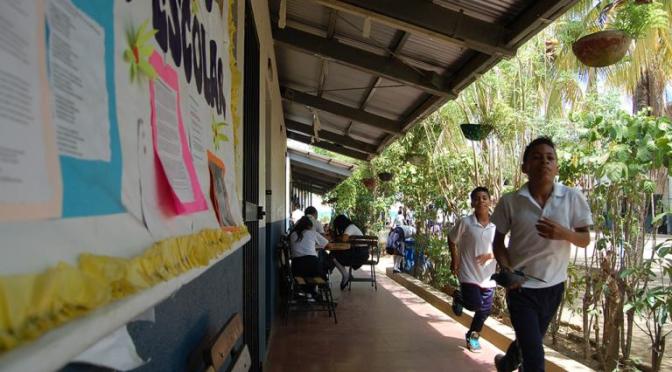
Venezuelan students join jailed opposition leader in partial hunger strike
  • Leopoldo Lopez’s protest against the detention of opposition activists and for the announcement of a date for parliamentary elections began four weeks ago.
  • Students and other activists have begun their hunger strikes in public places to call attention to the increasing dismantlement of civil liberties and the worsening economic situation under President Nicolas Maduro.
  • The protests follow last year’s much larger demonstrations involving thousands of youth in public sit-ins.

“We want Venezuelans to understand there are young people ready to give their lives for liberty, democracy and sovereignty.”

Read the full story at Reuters.

(Image Credit: Jorge Dan Lopez/Reuters)

Zimbabwe Prosecutor-General says marriage and sex should be an option for young girls disengaged from school
  • As MPs and children’s rights advocates call for increased legal protections for girls under the age of 16, head government prosecutor Johannes Tomana indicated that girls disconnected from educational opportunities should not be kept from sex or marriage.
  • Zimbabwe’s age of consent is 16, and the country suffers from one of the highest child marriage rates in the world, with provinces seeing up to 50% of its minors married off.
  • Tomana also indicated agreement with community service sentences for sexual abusers, claiming that public embarrassment is sufficient punishment for the crime.

“We’ve nine-year-olds, 12-year-olds, 13-year-olds who’re actually not in school, who’re not doing anything for example. What are we saying to them? We say you can’t even do this [have sex], when the environment is not giving them alternative engagements? What are we talking about?”

Read the full story at the Herald.

(Image Credit: via the Herald)

The African Union works to tackle continent-wide child marriage problem at its latest summit in Johannesburg
  • In sub-Saharan Africa, two in five girls are married off before adulthood, with the highest rate in Niger, where three in four are.
  • The AU plan requires the criminalization of child marriage and the development of prevention strategies.
  • The practice has held the continent back from reaching six of the eight Millennium Development Goals, including education and public health targets.

“It’s unacceptable that a continent as rich as Africa – with oil and diamonds, and with coltan that is found in everyone’s phone – can leave its people so poor that they feel they have no choice but to marry off their daughters.”

More on this story at Reuters.

Luxembourg citizenship reform moves slowly through policy channels as policymakers continue retooling requirements
  • Proposals put forth in Parliament include automatic citizenship rights for Luxembourger youth turning 18 who have resided in the country for at least five years, lowered residency requirements for non-nationals from seven to five years, and the abolition of language testing for non-nationals in residence for at least 20 years.
  • Despite being announced in 2014, the Justice Ministry’s proposals have yet to be made public or completed.
  • A recent poll indicates that the Luxembourgish public is not in favor of the eased pathways to citizenship.

More on this story at the Luxembourg Wort.

(Image Credit: Anouk Antony/Luxembourg Wort)

Nicaragua faces growing crisis as teens commit suicide at rates twice that of the rest of Latin America
  • 23.7 per 100,000 teens commit suicide in the country, keeping school authorities on constant alert for signs of depression and suicide ideation.
  • Mental health services are limited as 75% of Nicaraguans lack access to them and patients admitted after having attempted suicide cannot be forced to remain under observation without their consent.
  • Researchers and medical practitioners speculate on a number of potential causes, including broken homes, natural disasters, and post-conflict psychological effects.

“In my generation, there was ambition and heroism. … Now, there is only lack of opportunity, loss of hope, and a sensation of impotence. They see no other way.”

More on this story at GlobalPost.

Ethnic minority youth in the U.S. face high levels of disconnection from school and work, according to new report
  • The Measure of America study finds that while youth disconnection rates have fallen in the post-recession period, African-American and Native American youth lead disconnection rates at 21.6% and 20.3%, respectively, with Latinos following at 16.3%; levels are lowest among Asian Americans (7.9%) and whites (11.3%).
  • Disconnection often occurs among youth in struggling families who lack the resources or connection to resources that provide educational and economic opportunity.
  • Residential segregation exacerbates disconnection likelihood as minority-concentrated neighborhoods often see divestment in services and resources, including schools.

“This time of life is hugely important to what kind of life you live as an adult. … Disconnection really stunts your development and leads to a future of limited horizons and unrealized potential, and that has a very high cost on the individual and on society.”

More on this story at NBC News.

Pope Francis establishes new department investigating child abuse cover-ups within the Catholic Church
  • The Pope approved the proposals increasing bishop accountability submitted by Cardinal Sean O’Malley, head of the special advisory commission convened to investigate sexual abuse by Church leaders.
  • The unit will be housed within the Congregation for the Doctrine of the Faith, which defends the Church against heresy.
  • The new measures follow increased international calls for policy changes in the Vatican’s approach to the sexual abuse of minors, including the UN Committee on the Rights of the Child and the UN Committee Against Torture.

More on this story at Deutsche Welle.

(Image Credit: Deutsche Welle)

Trans-ideological coalition works to reform truancy laws in Texas.
  • The alliance of government officials, policy analysts, and organizational leaders is pushing back against the more than 100,000 criminal charges brought against truant minors.
  • Convicted youth–disproportionately black and Latino–face fines and detention.
  • As Governor Greg Abbott prepares to take action on a reform proposal, leaders call for the redirection of resources towards prevention and intervention services.

“If Reggie was not in school, not the judge, not the school resource officer — Coach White got on the phone to find out why he wasn’t in school…If your truancy prevention ever gets to the courts, I look at that more as a system breakdown.”

More on this story at BuzzFeed.

Immigrant children in New York school find cultural bridge and new friends through soccer.
  • Immigrant students at the School for International Studies report their extracurricular soccer program as a key channel for them to develop language, social, and cultural skills.
  • One U.S.-born student shares how he took up Arabic to learn how to better communicate with his teammates on the field.
  • New York City has a population of more than 150,000 English language-learners in its school system.

“Any game, I make friends. When we play basketball, I make friends, like, you play with your friends. You make new friends any ways.”

More on this story at BBC.

#MyFriend campaign shows interfaith friendships in Myanmar, currently an international spectacle because of its persecution of Rohingya Muslims.
  • Hate speech and harassment online have created hostile conditions for many religious minorities in Myanmar.
  • Launched in April, the selfie Facebook campaign hopes to provide a counternarrative to prevailing discriminatory attitudes.

More on this story at Global Voices.

(Image Credit: Facebook photo, via Global Voices)

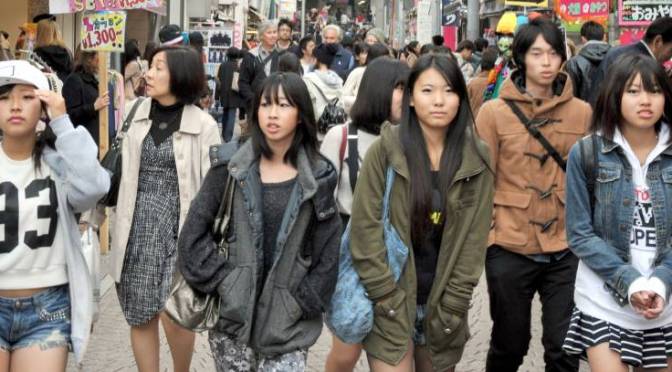
As Japan expects to lower the voting age from 20 to 18 this month, Japanese youth are ambivalent about the impact.
  • The Lower House has passed the measure, signaling the start of a legislative change that would be the first in 70 years to alter the minimum voting age and would enfranchise 2.4 million 18- and 19-year-olds.
  • While some Japanese teens welcome the empowerment in a country that often prioritizes senior rights, others express apathy, resonating with the record-low 32.58% voter turnout among twentysomething voters in the last election.
  • One civics expert calls for educational reforms to prepare the newly enfranchised populace for the decision-making and engagement process voting entails.

“I hope the lowered voting age will encourage more young people to pay attention to politics and make efforts to get their messages across. Only then can Japan turn into a real democracy.”

More on this story at The Japan Times.

(Image Credit: The Japan Times)