New legislation effectively bars Islam from official status in Slovakia for foreseeable future
Legislation from the Slovak National Party (SNS) passed through Parliament increasing the number of adherents required for state recognition from 20,000 to 50,000 in the Catholic-majority country.
Official status allows for religious communities to run their own schools and receive subsidies from the state.
There are only between 2,000 and 5,000 Muslims currently in the country, but anti-immigrant sentiment in the country has ratcheted fears of a massive overrun by immigrants from Muslim-majority countries.
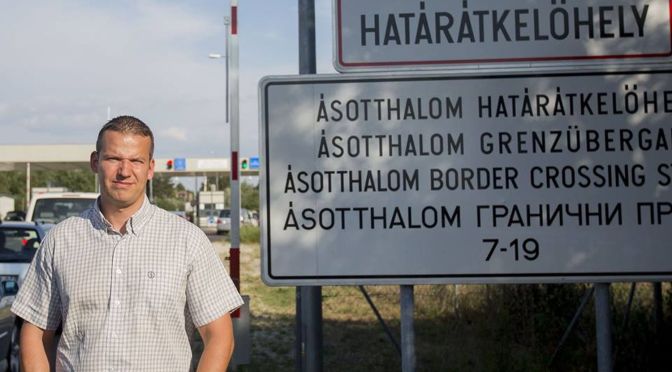
Hungarian city council adopts mayor’s proposal to ban Islamic and pro-LGBT expression
The ban encompasses the construction of mosques or other places of worship in the town of Ásotthalom that “undermine” the Catholic Church as well as forms of devotional expression including face- and hair-coverings and the call to prayer.
The ordinance also bans “public propaganda” depicting marriage as anything but the union of a man and a woman across all media forms.
The mayor of the town, site of a fence along the Hungarian-Serbian border, defended the ordinance as protection against the two “pagans” of migration and liberalism, but the Hungarian Islamic Community (MIK) was quick to denounce it as xenophobic.
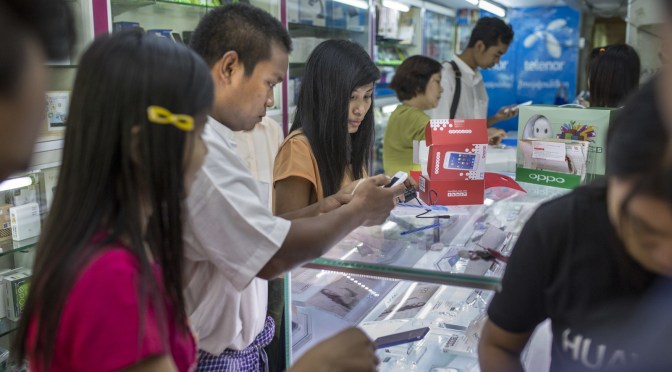
The Radical Intolerance of Fake News in Myanmar’s Internet Debut
The debate over fake news and disinformation took center stage in the post-election analysis in the U.S. Facebook in particular has come to stand as an avatar of disinformation tactics, with the rapid spread of factually incorrect stories on the social media platform having contributed, some analysts argue, to the outcome of the election. On the other side of the planet, Myanmar has seen its own struggles with digital information culture as it has begun rapidly digitizing in the wake of its transition to civic government in 2015. As conflict between Muslims and Buddhists in the majority-Buddhist nation has deepened in recent months, false and sensationalist stories masquerading as news have contributed to anti-Muslim sentiment in the country, further inflaming tensions.BuzzFeed News examines how Myanmar is integrating online information culture into both civic and everyday life as its complicated relationship to diversity, inclusion, and free expression is being challenged in countries with longer histories of online engagement.
Pro-diversity mass demonstration takes place in Jakarta
Known as the Bhineka Tunggal Ika (“Unity in Diversity”) Parade, the event brought hundreds of pro-diversity demonstrators out dressed in red and white (the national colors) and traditional dress to support ethnic and religious unity in the country.
The peaceful event was a response to growing concerns about the influence of fundamentalist Islamic leaders in the Muslim-majority country.
Recently, hundreds of thousands protested in a call for Jakarta’s governor, an ethnic Chinese Christian, to be charged with blasphemy, and an attack on a church in Samarinda left three children injured and one dead.
Hundreds of Rohingya flee Myanmar for Bangladesh as violence spreads
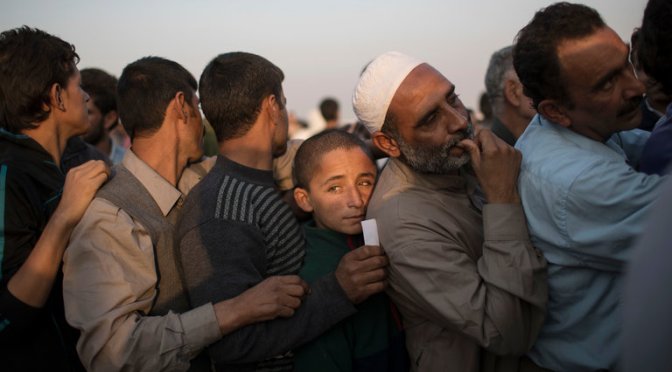
Clashes between government forces and militants have left at least 130 dead and sent hundreds of Rohingya Muslims fleeing across the border into Bangladesh.
Some reports indicated those attempting to cross the border were gunned down or had their boats pushed away.
The district at the border has been locked down by Burmese soldiers, cutting off aid agencies and independent observers as reports of mass rape and looting have trickled out.
New joint Jewish-Muslim council arises to combat growing religious tensions in U.S.
The American Jewish Committee and the Islamic Society of North America announced the formation of the Muslim-Jewish Advisory Council.
The Council will advocate on behalf of religious minorities on issues of concern, including anti-Semitism, Islamophobia, immigration, and civil rights policy.
Co-chaired by Stanley Bergman and Farooq Kathwari, the 31-person Council includes religious, business, and academic leaders from across the political spectrum.
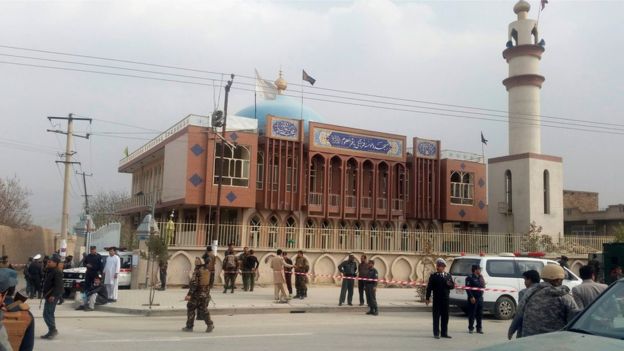
More than 50 killed after bombing at Sufi shrine in Pakistan
The attack took place in the Khuzdar district of Baluchistan province, killing at least 52, wounding more than 100, and trapping an unknown number of others.
Security forces believe a suicide attacker carried out the massacre as hundreds were in the shrine for daily devotional activities.
The attack was the latest in a series targeting Sufis, members of a minority Islamic sect that has been the target of a number of attacks from extremist Sunni groups.
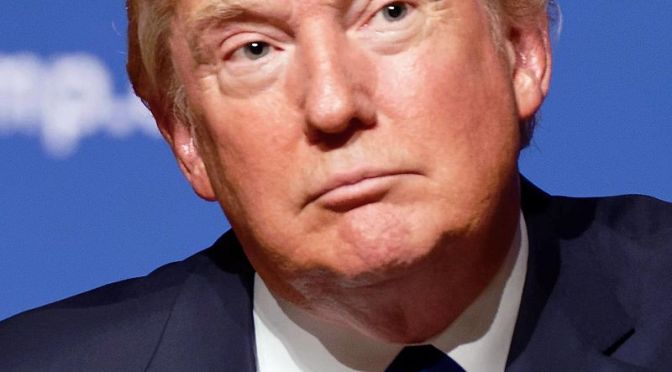
The conclusion of an election that saw an historic clash over the values of diversity, inclusion, and the meaning of “America” has brought with it a surge in uncertainty for minority and other historically disadvantaged communities in the U.S. The damage was extensive: the nearly year and a half of campaigning saw ethnic and religious minorities disparaged, immigrants targeted, women (including his opponent) subjected to misogynistic abuse, the mainstream press caught in the crosshairs of an anti-media campaign, and rhetorical and symbolic resonances in speeches and advertising that drew white supremacists and other far-right extremists out of the woodwork.
In what ways has Trump’s election reshaped the social and political climate for vulnerable American populations, including women, Latinos, black people, immigrants, LGBTQ people, and people with disabilities? How is the post-election retreat from data showing racial resentment as the highest predictor of Trump support endangering reality-based solutions for vulnerable communities, politicians, and analysts? And how has his rise to power connected to and amplified similar right-wing, ethno-nationalist politics globally?
Whether and how American conservatives and the Republican Party—now set to hold power in all three branches of government—are able to manage a resurgent coalition of ethno-nationalist voters as well as the capacity for progressive and Democratic activists to create social, political, and legal structures to protect vulnerable communities will determine what life in Trump’s America will look like for the at-risk. This ClimateWatch rounds up a number of key news items, analyses, and commentaries providing insight on what has happened and what could be on the horizon. Continue reading ClimateWatch: U.S.→
As the battle rages between the Islamic State and a coalition of forces led by the Iraqi government for control of the northern Iraqi city of Mosul, many of the ethnic and religious minorities who called it home for generations fear the city will never again be the tolerant, culturally rich home it once was. Sunnis, Shiites, Yazidis, Christians, Kurds, Arabs, and others all coexisted in the vibrant cultural landscape of a city with both historical and contemporary significance, but the 2003 American-led invasion of Iraq and the recent occupation of Mosul by the Islamic State have all but decimated the minority communities that called the city home. The New York Times takes a look at the city’s decline, the uncertainty of its future, and the stories of those who once flourished in a cosmopolitan city known for its diversity and tolerance.
Women report mass rapes and looting by military as violence against Rohingya explodes in northwest Myanmar
Locals from U Shey Kya village allege that soldiers stormed their homes, committed mass rape, stole valuables, and burned homes, accusations dismissed as “illogical” and “propaganda” by governmental spokespeople.
The raids in northern Rakhine State follow coordinated attacks by an emergent group of Rohingya militants on multiple border patrol posts, leading to nine police officers’ and five soldiers’ deaths.
Many homes in the village were left with only women after men evacuated from fear of being indiscriminately identified as insurgents, with many fearing disregard of recently imposed political constraints on the Burmese military.
Assailants face hate crime charges following attack on Sikh man in California
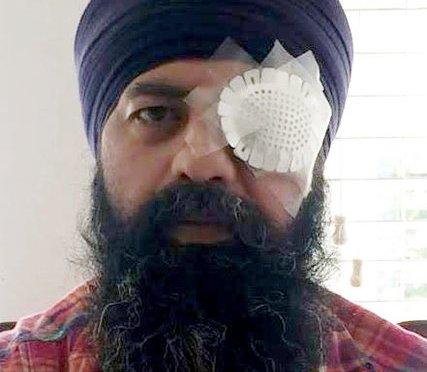
The attackers had thrown beer cans at Maan Singh Khalsa‘s car in Richmond, California, and then physically attacked him, including knocking off his turban, forcing his head down, and cutting more than 10 inches of his hair.
Unshorn hair is a religious mandate for observant Sikhs, and the specific targeting of his hair led to the hate crime designation.
The attack follows years of similar targeting of Sikhs in the U.S., with many mistaken for Muslims and subject to violence because of their religious wear.
Muslims of Somali descent targeted in Kansas bomb plot
Three men were arrested on charges of domestic terrorism after a plot to bomb an apartment complex in Garden City, Kansas housing a large number of immigrant Somali Muslims.
The conspirators went by the name “The Crusaders” and had come under surveillance during an eight-month investigation by the FBI.
The failed plot comes amidst a wave of anti-Muslim attacks in the U.S., with 2015 and 2016 having had the highest number on record.
Uyghur activist wins prestigious human rights award
Chinese scholar Ilham Tohti, famed as a moderate bridge between Uyghur and Han Chinese cultures, was awarded the Martin Ennals Award, a human rights prize awarded by a jury including representatives from organizations such as Amnesty International.
Tohti is a prominent advocate for Uyghur rights and visibility, including drawing attention to the oppression of Uyghurs by the Chinese government in Xinjiang.
The Chinese government sentenced Tohti to life in prison in 2014, accusing him of ties to terrorism and promoting dissidence in the country.






 Outlas