Bhutanese journalist faces charges of defamation following social media share
Namgay Zam, an independent journalist, has been accused of defaming a prominent Bhutanese businessman after sharing a critical post on Facebook.
The post targeted a property dispute involving the businessman, and the author, Dr. Shacha Wangmo, was charged with libel and petty misdemeanor.
If convicted, Zam faces a fine of up to 2.59 million Bhutanese ngultrum—around $38,500, or 10 times the average salary of a journalist—or up to three years in prison.
Outrage erupts over proposed bill in Turkey to clear adults married to minors of sexual abuse charges
The bill, approved after an initial reading and set for a second vote, would allow for the indefinite suspension of sentencing for sex “without force, threat, or any other restriction on consent” if the perpetrator marries the victim.
Women’s rights, children’s rights, and other advocates were swift to condemn the proposed bill, which they argue effectively condones statutory rape and child marriage.
Child marriage is illegal in Turkey, but non-civil religious marriages proliferate, particularly in the southeast of the country.
Central and East African refugee crisis expands as hundreds of thousands of Burundians flee country
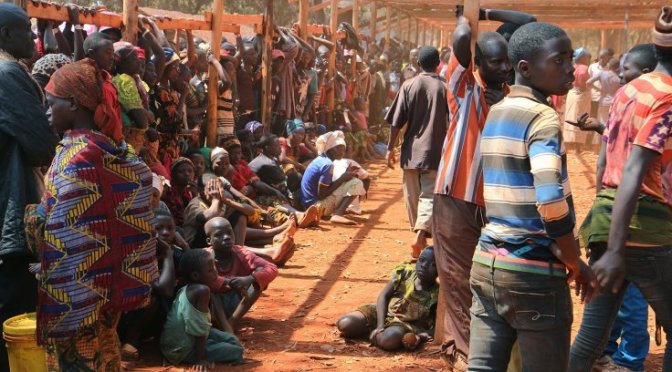
Médecins Sans Frontières (Doctors Without Borders) reported that almost 325,000 Burundians have fled political violence in their country following the president’s decision to seek a third term.
Almost 250,000 have crossed into neighboring Tanzania, where poor conditions in underresourced, overcrowded camps—including the threat of malaria—have compounded refugees’ insecurity.
Refugees report having suffered harassment, hunger, and poor prospects as the country has fractured following the disputed July 2015 reelection of President Pierre Nkurunziza.
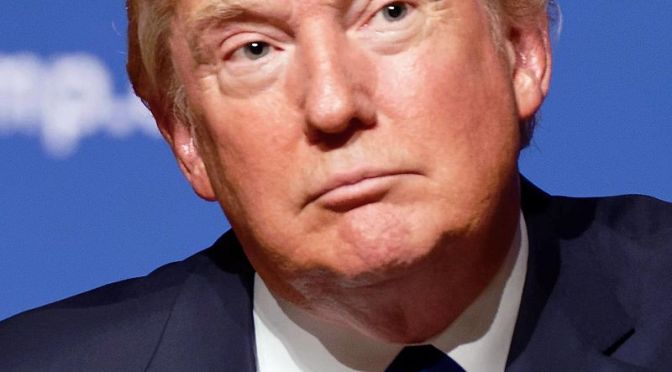
The conclusion of an election that saw an historic clash over the values of diversity, inclusion, and the meaning of “America” has brought with it a surge in uncertainty for minority and other historically disadvantaged communities in the U.S. The damage was extensive: the nearly year and a half of campaigning saw ethnic and religious minorities disparaged, immigrants targeted, women (including his opponent) subjected to misogynistic abuse, the mainstream press caught in the crosshairs of an anti-media campaign, and rhetorical and symbolic resonances in speeches and advertising that drew white supremacists and other far-right extremists out of the woodwork.
In what ways has Trump’s election reshaped the social and political climate for vulnerable American populations, including women, Latinos, black people, immigrants, LGBTQ people, and people with disabilities? How is the post-election retreat from data showing racial resentment as the highest predictor of Trump support endangering reality-based solutions for vulnerable communities, politicians, and analysts? And how has his rise to power connected to and amplified similar right-wing, ethno-nationalist politics globally?
Whether and how American conservatives and the Republican Party—now set to hold power in all three branches of government—are able to manage a resurgent coalition of ethno-nationalist voters as well as the capacity for progressive and Democratic activists to create social, political, and legal structures to protect vulnerable communities will determine what life in Trump’s America will look like for the at-risk. This ClimateWatch rounds up a number of key news items, analyses, and commentaries providing insight on what has happened and what could be on the horizon. Continue reading ClimateWatch: U.S.→
Clashes erupt as newly elected pro-democracy officials in Hong Kong ousted by Beijing
As many as 10 newly elected members to Hong Kong’s Legislative Council may lose their seats as the Chinese government has declared that improperly declared oaths of office disqualify them from office.
The Chinese parliament passed a resolution removing two newly elected Hong Kong officials for inserting a slur against China and a pledge to the “Hong Kong nation” in their oaths.
Thousands of protesters (including a large contingent of lawyers) took to the street, in demonstration against the government’s stance, clashing with police and denouncing increased intervention from Beijing into semi-autonomous Hong Kong’s affairs.
Mexican congressional committee rejects proposal to extend marriage rights to same-sex couples
President Enrique Peña Nieto’s office had asked for an amendment to the constitution to allow couples to marry irrespective of gender or sexual orientation.
The constitutional committee voted 19-8 (with one abstention) against allowing the proposal to proceed.
While same-sex marriage is permitted in several Mexican states and a judicial ruling declared marriage bans unconstitutional, the executive proposal was an attempt to secure marriage rights nationwide.
Shelterless migrants arrive on streets of Paris, leading to denunciation by French president
More than 6,000 migrants and refugees seeking to enter the U.K. from France have been funneled into shelters and streets around France following the forced evacuation of the “Jungle” camp in Calais.
Paris security officials estimate an increase in the number of unsheltered asylum-seekers from around 1,500 to 2,000-2,500 in just a few days.
Hundreds of tents and cardboard flooring mark attempts by migrants to shelter themselves from the cold as Paris’s shelter supply—fewer than 1,000 beds—has been far outstripped by demand in the French capital.
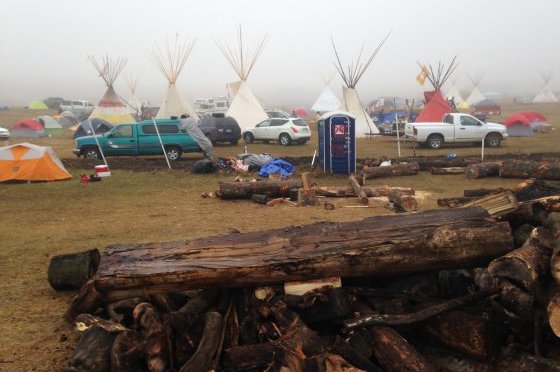
Though having only recently had the spotlight of the national media trained on them, the Dakota Access Pipeline protests have been a months-long clash between, on the one hand, Standing Rock Sioux tribe members, indigenous and non-indigenous allies, and environmental activists, and, on the other, proponents of the nearly 1,200-mile long oil pipeline from western North Dakota to southern Illinois. Indigenous protesters have made recourse to both litigation and direct action in an attempt to halt construction on a pipeline slated to come within a half-mile of the Standing Rock Sioux reservation. The protests have drawn both state and federal intervention, with the National Guard having been brought to protest sites, violent clashes between police and protesters, a legal tango between the Obama administration and district court judges, and increasing pressure on the U.S. presidential candidates to take a stand on the issue.
At issue is what activists say has been a failure on the government’s part to engage Native communities, conduct a thorough environmental and cultural impact assessment ahead of the pipeline’s construction, confront tribe members’ concerns about the potential for water contamination, and adhere to laws regarding the preservation of sacred cultural sites. The approach of the bitter North Dakotan winter has punctuated current protests with a question mark as activists and advocates seek to perpetuate the recently gained media momentum and mobilize public opinion—and, by extension, political pressure—against the pipeline’s construction.
End of special immigration protections diminishes hopes of Haitians looking to cross into U.S. from Mexico
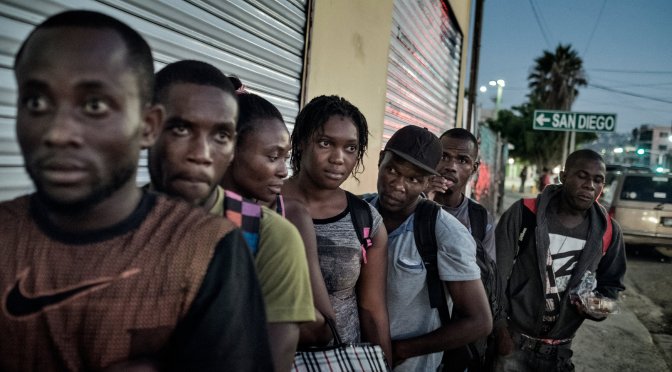
Thousands of Haitians have become trapped in Mexico as an ongoing migration crisis has been exacerbated by the recent destruction wrought by Hurricane Matthew in their home country.
The U.S. recently ended special protections for Haitian migrants in the country in place since the 2010 earthquake that killed more than 200,000, though activists have begun pressuring the government to renew them in light of the most recent natural disaster.
Monitors estimate as many as 40,000—many coming from an economically distraught Brazil—may be en route throughout the Americas as they pay upwards of thousands of dollars to pass through the most legally treacherous parts.
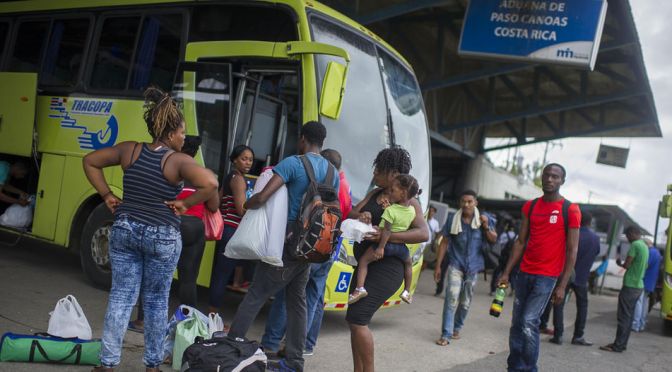
Haitian migrants in Costa Rica seeking passage to U.S. pose as West African to avoid deportation
The ongoing migration bottleneck in Costa Rica continues to pile up, with 100 to 150 new arrivals each day adding to the 2,500 already stranded in the overwhelmed country.
The majority of undocumented migrants are Haitian, many coming from Brazil with some posing as West African in an attempt to avoid deportation, deprioritized for those from distant countries because of the high cost.
Haitians point to ongoing economic destitution in their home country, poor prospects in host countries like Brazil and Ecuador, and what they perceive as a double standard of preferential treatment for certain migrants as motivation for migrating and the tactical deception.
Killing of Indigenous man stokes racial tensions in Saskatchewan
Colten Boushie, a 22-year-old man belonging to the Red Pheasant First Nation, was shot and killed by a farmer while driving with four friends on private property near Glenside.
The shooter was arrested and charged with second-degree homicide, but First Nation leaders have accused the Royal Canadian Mounted Police (RCMP) of releasing a prejudicial press release to bias public opinion against the victim.
A torrent of racist social media comments led the Saskatchewan premier to issue a warning that laws would be enforced to prosecute online hate speech.
Iran arrests British-Iranian dual national as crackdown continues
An Iranian prosecutor indicated through state media that an Iranian-British dual national had been arrested for links to British intelligence services.
The official indicated that the arrest was a part of an ongoing crackdown against Western “infiltration,” which has ramped up in the wake of the Iran nuclear deal.
The arrest is at least the seventh of such dual nationals—whose non-Iranian citizenship the Iranian government does not recognize—arrested in the last year.
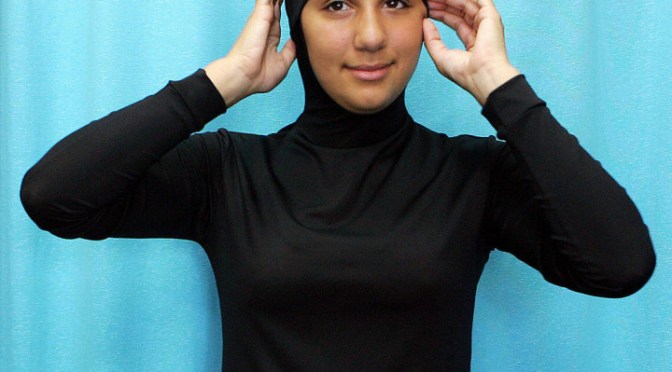
Cannes and Villeneuve-Loubet mayors ban burkinis on public beaches
Cannes Mayor David Lisnard said the hooded full-body swimsuits “create risks of disrupting public order,” with another municipal official elaborating that such garments display “allegiance to terrorist movements.”
The measure falls in line with the French government’s antagonism of public displays of religious affiliation, which have discriminated against observant Muslims—particularly women—in the country.
Following in Cannes’ footsteps, Mayor Lionnel Luca banned burkinis in the coastal town of Villeneuve-Loubet, stating such garments aren’t “hygienic” or in line with the ideological principle of laïcité, or enforced public secularism.
In the wake of the attack that left more than 80 dead during Bastille Day festivities in Nice, French Muslims have expressed fears of scapegoating for the violent crime and others that have erupted over the last two years in France. An attack that left a Catholic priest dead in Saint-Etienne-du-Rouvray further inflamed tensions in the country as the nation responded to its fifth terrorist attack in 2016. Fearing the ongoing state of emergency and retaliatory attacks against their communities, many French Muslims, who have been among the victims of these attacks, have made large public condemnations of the attackers and expressed solidarity with non-Muslim French neighbors and the counterterrorism efforts. Observers and commentators have offered analysis on what the recent attacks mean for Muslim relations in France and how the country can move forward as the country battles inequality at home and threats from abroad.
Police violently break up protest against Mugabe government in Harare as anger swells
Peaceful protesters and journalists were attacked with batons during a demonstration against President Robert Mugabe’s handling of the economy in Zimbabwe.
Protesters have been rallying against the government’s economic policies, with ire having ballooned over proposals to introduce local bank notes into the economy.
Mugabe’s ZANU-PF party also expelled nine senior leaders, including four war veterans linked to a statement denouncing him.






 Outlas