Tag Archives: 3: Moderate/Neutral

U.S. News | Minorities

U.S. Supreme Court rules in favor of broad interpretability of Fair Housing Act
  • The 5-4 ruling allows for lawsuits to be filed claiming “disparate impact” of housing policies and practices on minorities–a statistical measure–rather than simply explicit discrimination, which can be difficult to prove as organizations and individuals are rarely obvious in their discriminatory practices.
  • The case involved an organization that supports integrated housing, often involving lower-income minority families attempting to use housing vouchers to move to the suburbs; the group claimed that because a disproportionate number of the low-income tax credits that require that landlords accept the vouchers had been given to landlords in minority neighborhoods, the practice was making it difficult for families to move to white-majority suburbs.
  • However, the ruling did not go so far as to say such practices would be proven to generate disparate impact, only that “disparate impact” was a justifiable legal claim.

“Much progress remains to be made in our nation’s continuing struggle against racial isolation. … The court acknowledges the Fair Housing Act’s continuing role in moving the nation toward a more integrated society.”

Read the full story at the New York Times.

France News | Black & Arab

Paris appeals court finds discriminatory police tactics violated minorities’ rights, reversing lower court’s decision
  • The court ruled that in five of the 13 cases on appeal, police carried out discriminatory “stop-and-frisk” ID checks that resulted in no legal action against the individuals, all of Arab or African descent.
  • In addition to awarding damages to the plaintiffs, the ruling also requires police to record and distribute the objective grounds on which stops are initiated, as the ID checks have been difficult to file complaints over because they have not been recorded.
  • Of concern to legal and community observers is that the other eight cases were found to be legal because the checks took place in areas where behavior deemed suspicious by police is more likely to indicate illegal activity, i.e. in socioeconomically disadvantaged neighborhoods.

“We struck at the heart of the system by attacking the state. … This is a big victory for our clients. But it’s also a big victory for everyone, notably young people, black or North African, who each day are controlled (by police) mainly because of the color of their skin.”

Read the full story from AP at Yahoo! News.

(Image Credit: Francois Mori/AP, via Yahoo! News)

Czech Republic Research | GLB

Nearly half of Czechs support same-sex marriage in their country
  • According to a new poll from the Public Opinion Research Centre (CVVM), 49% of Czechs support the legalization of same-sex marriage, while 47% oppose it.
  • 75% support the establishment of some form of legal recognition for same-sex couples.
  • Despite the support for same-sex marriage, 49% still remain opposed to same-sex couples adopting children, although the 44% in support is an increase from 19% a decade ago.

Read the full story at PinkNews.

Alabama News | Racial Symbolism

Alabama governor orders Confederate flags removed from capitol grounds
  • After checking for legal impediments to such a decision, Governor Robert Bentley had the four flags removed, including the iconic battle flag as well as the first, second, and third national flags of the Confederacy.
  • Bentley ordered the removal to preempt a length debate as the state grapples with contentious budget legislation.
  • The first official capital of the Confederacy, Montgomery had the three additional flags installed after a governor tried to remove the battle flag from the grounds in the early ’90s.

Read the full story at NPR.

(Image Credit: Martin Swant/AP, via NPR)

Canada News | Muslim Women

Quebec premier defends proposed legislation banning face-covering attire for certain civic employees and toughening consequences for hate speech
  • Premier Philippe Couillard indicated that the legislation under consideration by Quebec lawmakers would ban face coverings on public servants in roles requiring face-to-face engagement with the public.
  • The draft legislation is a narrower version of the previous government’s proposal to ban the wearing of religious symbols by all public servants.
  • The current draft of the hate speech law creates a Human Rights Tribunal, which would oversee investigations and punitive actions for individuals inciting violence against vulnerable groups.

“The role of the government is to draw a line in the sand. … This issue of face covering for me has very little to do with religion, and a lot to do about the image of women, the status of women in our society. Showing your face is the essence of communication.”

Read the full story at the New York Times.

(Image Credit: Mary Altaffer/Associated Press, via the New York Times)

U.A.E. News | Visitors

UAE hoteliers advise hotel guests to align themselves with local sartorial standards during Ramadan
  • At their hotels’ iftars, the fast-breaking dinners held at sunset, hotel managers have said that they will turn away inappropriately dressed patrons, including those in beachwear and tight-fitting clothing.
  • Managers and security organizations encourage guests to dress modestly, covering shoulders and legs as they move through communal spaces.

“Ramadan is a time of devoutness, modesty and moderation. … Refrain from wearing revealing clothing out of respect to those observing Ramadan. This is particularly important when visiting malls, hotels and restaurants or iftar tents in the evening. As a general rule, clothing that is sheer, too short, low-cut or tightfitting should be avoided, particularly shorts, miniskirts and sleeveless tops.”

Read the full story at The National.

(Image Credit: Delores Johnson/The National)

Across U.S. Southern states, Charleston massacre gives fresh momentum to calls for removal of Confederate imagery from public sites and symbols
  • South Carolina Gov. Nikki Haley has called for the removal of the Confederate flag from state grounds.
  • After a 2001 referendum that saw resounding support for retaining the design of the flag, Mississippi legislators are again pushing for the removal of the “stars and bars” portion of the state’s flag.
  • In Austin, a push to remove a statue of the President of the Confederacy from the University of Texas campus continues, while in Baltimore, city officials hope to rename Robert E. Lee Park.

“We should have been having this conversation a long time ago in the South … because now with every instance of violence you keep seeing the same symbol — the symbol on our state flag.”

Read the full story at BuzzFeed.

(Image Credit: Rogelio V. Solis/AP, via BuzzFeed)

Egyptian women convene in “stand” against political detentions and bans on assembly
  • At the same location in Cairo where 23 opposition activists were arrested for protesting last year, dozens of women gathered in demonstration against the detentions.
  • The “stand,” a form of nonviolent protest, took place for an hour outside of the presidential palace despite prohibitions on unsanctioned assembly.
  • While police confronted journalists and attempted to block the protest from view, the women held up images of the detained, with messages calling for their release.

Read the full story at the New York Times.

(Image Credit: Omar Kamel/Twitter photo, via the New York Times)

Thousands of refugees return to Syria from Turkey after Syrian Kurds oust the Islamic State from border town
  • Tight border security at Turkey’s border with Syria has limited crossings, but the victory in Tel Abyad allowed for a gate reopening permitting more than 2,000 refugees to return.
  • More than 23,000 Syrians had entered Turkey earlier in the month, according to Turkish officials.
  • The Kurdish YPG militia has encouraged the returns, guaranteeing safety in the towns they have recaptured.

Read the full story at Reuters.

Pope Francis apologizes to Waldensian Protestants for historical persecution by the Catholic Church
  • During the first-ever visit by a Pope to a Waldesnian church, the Pope asked for forgiveness for the persecution of the sect that included a papal order of extermination in the late 15th century and the execution of 1,700 Waldensians in the 17th century.
  • The Waldensians now number roughly 30,000 worldwide, located mostly in Italy and Latin America.
  • The outreach comes ahead of the 500th anniversary of the start of the Protestant Reformation in 2017, for which the various sects of Christianity have yet to announce any joint plans.

“On behalf of the Catholic Church, I ask forgiveness for the un-Christian and even inhumane positions and actions taken against you historically. … In the name of the Lord Jesus Christ, forgive us!”

Read the full story at Reuters.

(Image Credit: Alessandro Garofalo/Reuters)

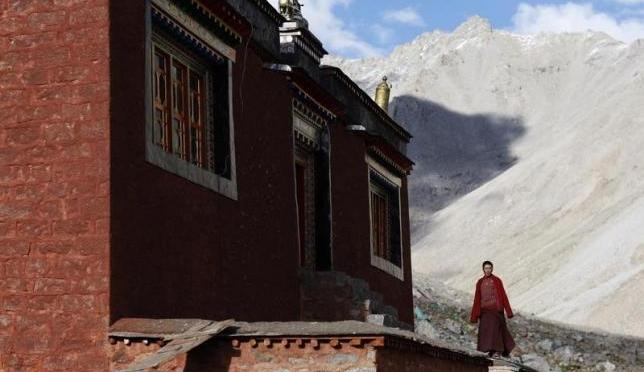
China opens new path to Tibet holy site for Indian pilgrims
  • The new land passage offers a route from India through the Himalayas to Mount Kailash.
  • In addition to its geographic isolation, Kailash has remained out of reach for Hindu and Buddhist pilgrims due to China’s tight visa restrictions on travel to Tibet.
  • The opening comes as China and India work to improve relations and remove obstacles–including ongoing border disputes–to improved economic and political ties.

Read the full story at Reuters.

(Image Credit: Jacky Chen/Reuters)

Canada’s transportation security agency amends controversial policy on headgear following outcry from the Sikh community
  • The change rolls back the Canadian Air Transport Security Agency’s April implementation of a new policy that targeted religious headgear for mandatory additional screening at airports.
  • Because travelers wearing non-religious headgear were not subject to the same protocol because the headgear could be removed, the World Sikh Organization released a statement condemning the de facto discriminatory policy on behalf of Sikhs who had identified themselves as targets.
  • The organization met with CATSA, who admitted the policy had been established by the government’s transportation department without consulting faith groups.

“I am being considered a security threat every time I travel for work, even (though) I’m a NEXUS cardholder. CATSA’s policy goes above and beyond what the Transportation Security Administration does in the U.S., and I believe it’s targeting religious minorities such as turbaned Sikhs.”

Read the full story at thestar.com.

(Image Credit: Nicholas Keung/Toronto Star)

As German state expands its Holocaust education programs, the inclusion of Muslim Germans stokes debate
  • Bavaria has proposed that all 8th and 9th graders visit a former Nazi concentration camp or the Munich center on Nazi war crimes.
  • One lawmaker from the Christian Social Union, the conservative party in power in the state, has suggested that some Muslim students would need to be exempt from the requirement.
  • Muslim leaders and academics in Germany have indicated that Holocaust education is increasingly accepted in Muslim German communities, with most contentious debates centered instead on how to address discussion and education of the Israeli-Palestinian conflict.

“You notice among the students that they say, ‘We stand for talking about Jewish history, and the crimes that were committed, but why don’t we talk about the Palestinians? Where is the justice here?’”

More on this story at The New York Times.

Bulgaria’s highly administered border with Turkey provides stark contrast to Mediterranean migration situation
  • The country has spent €300 million fortifying the border over the last 8 years, including the construction of a razor-wire fence along its 270-km (165-mi) length.
  • Bulgaria has one of the highest rates of asylum-granting in the EU, having granted more than 5,000 of 11,000 applicants refugee status.
  • Conditions in refugee camps have improved in the last couple of years, but Bulgaria faces pressures from both European governments and human rights organizations to at once tighten and ease its policing and intelligence practices at the border.

“Don’t link those fleeing terror with those who would like to create it. …States can protect refugees, and address security concerns too, by screening and registering them early on.”

More on this story at BBC.

(Image Credit: BBC)

Although same-sex marriage is not recognized in Northern Ireland, the Belfast City Council votes in support of changing the law.
  • Councillors vote 38-13 in favor of legalization.
  • Though the vote doesn’t have any legal effects, supporters hope it will help spur the Northern Ireland Assembly to become the last country in the British Isles to legalize the union.
  • Homosexuality was decriminalized in Northern Ireland in 1982, a decade before the Republic of Ireland, where same-sex marriage is now legal.

More on this story at Belfast Telegraph.