Travel bans trap Egyptian activists in “giant prison”
Two prominent human rights advocates—Aida Seif al-Dawla and Azza Soliman—recently discovered they were barred from traveling in and out of Egypt as President Abdel Fattah al-Sisi continues targeting civil society and human rights organizations.
Human rights monitors report that 217 people have been subject to travel bans between 2014 and 2016, 115 of whom are critics of the Sisi-led government.
Activists and journalists reported being met with deferral or radio silence when inquiring about the cause or origin of their bans, with the government denying a crackdown.
Hungarian city council adopts mayor’s proposal to ban Islamic and pro-LGBT expression
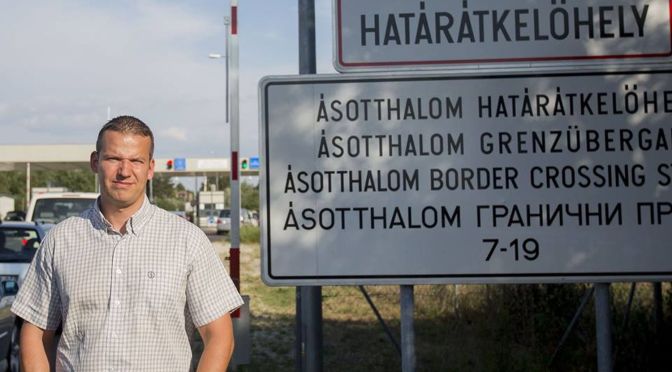
The ban encompasses the construction of mosques or other places of worship in the town of Ásotthalom that “undermine” the Catholic Church as well as forms of devotional expression including face- and hair-coverings and the call to prayer.
The ordinance also bans “public propaganda” depicting marriage as anything but the union of a man and a woman across all media forms.
The mayor of the town, site of a fence along the Hungarian-Serbian border, defended the ordinance as protection against the two “pagans” of migration and liberalism, but the Hungarian Islamic Community (MIK) was quick to denounce it as xenophobic.
More than 100 arrested during anti-Black Pete protest in the Netherlands
Despite a day-long ban, demonstrators took to a holiday festival in Maassluis to protest the ongoing national reverence for Zwarte Piet (Black Pete), a controversial figure black Dutch and allies say perpetuates racist stereotypes.
The figure has been under fire for years as its status as a national holiday tradition has been called into question for its ties to the Netherlands’ racist colonial history, including by the U.N.
Adding to the controversy is the frequency with which Black Pete is performed by white people in blackface in parades and other celebratory events.
Popular Malaysian political cartoonist detained for work critical of PM
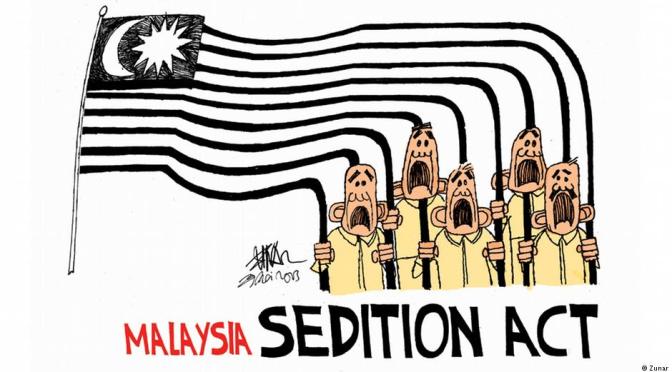
Zulkiflee Anwar Ulhaque, also known as Zunar, faces charges for cartoons allegedly insulting scandal-embroiled Prime Minister Najib Razak, the latest in a series of sedition charges he faces.
Zunar’s work has satirized Najib’s lavish lifestyle and the scandal involving the alleged diversion of hundreds of millions of dollars from a Malaysian development fund into the PM’s personal bank account, which has led to Najib’s use of a colonial-era sedition law to quell critics’ dissent.
The detention came after the disruption of Zunar’s exhibition at the George Town Literary Festival, where Penang Umno Youth members stormed the festival and demanded the removal of his work.
Tensions escalate in North Dakota as protesters and police clash in Dakota Access Pipeline protests
Protesters reported police wielding tear gas and water cannons in the 23-degree weather after claiming the protests had dissolved into a “riot,” heightening already pronounced concerns about hypothermia in the below-freezing conditions.
Reports indicated that more than 150 were injured and at least seven hospitalized as a result of the confrontation.
More than 400 activists have been arrested since the standoff began over the ongoing dispute over the construction of the Dakota Access Pipeline near the Standing Rock Sioux reservation.
The Radical Intolerance of Fake News in Myanmar’s Internet Debut
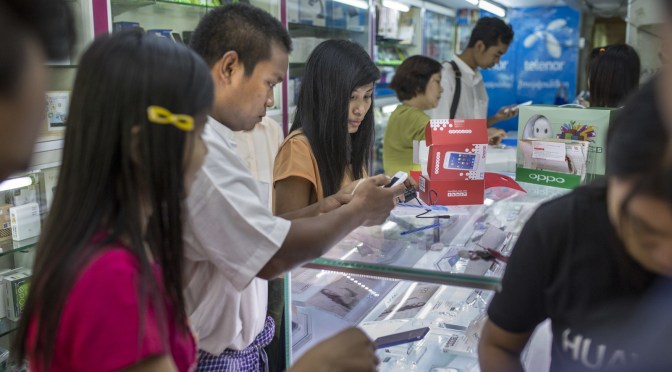
The debate over fake news and disinformation took center stage in the post-election analysis in the U.S. Facebook in particular has come to stand as an avatar of disinformation tactics, with the rapid spread of factually incorrect stories on the social media platform having contributed, some analysts argue, to the outcome of the election. On the other side of the planet, Myanmar has seen its own struggles with digital information culture as it has begun rapidly digitizing in the wake of its transition to civic government in 2015. As conflict between Muslims and Buddhists in the majority-Buddhist nation has deepened in recent months, false and sensationalist stories masquerading as news have contributed to anti-Muslim sentiment in the country, further inflaming tensions.BuzzFeed News examines how Myanmar is integrating online information culture into both civic and everyday life as its complicated relationship to diversity, inclusion, and free expression is being challenged in countries with longer histories of online engagement.
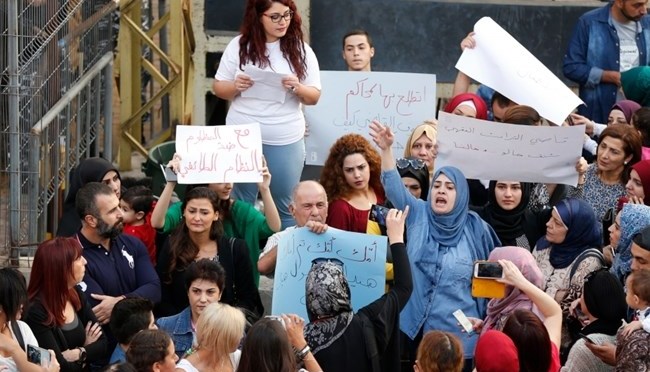
Lebanon’s complex civil status laws have given broad leeway for religious courts to adjudicate civil matters according to theological law, leaving a tangled relationship between church (or mosque) and state in disputes like divorce and child custody. Fatima Ali Hamzeh’s fight to retain custody of her three-year-old son after her husband married another woman while refusing to divorce her has revealed how the intertwined legal systems intersect to create significant disadvantages for women in what is considered to be one of the Middle East’s most progressive states. Global Voices highlights Hamzeh’s story and the women’s rights movement that has rallied around her to combat gender-based legal inequality in Lebanon.
Bhutanese journalist faces charges of defamation following social media share
Namgay Zam, an independent journalist, has been accused of defaming a prominent Bhutanese businessman after sharing a critical post on Facebook.
The post targeted a property dispute involving the businessman, and the author, Dr. Shacha Wangmo, was charged with libel and petty misdemeanor.
If convicted, Zam faces a fine of up to 2.59 million Bhutanese ngultrum—around $38,500, or 10 times the average salary of a journalist—or up to three years in prison.
New joint Jewish-Muslim council arises to combat growing religious tensions in U.S.
The American Jewish Committee and the Islamic Society of North America announced the formation of the Muslim-Jewish Advisory Council.
The Council will advocate on behalf of religious minorities on issues of concern, including anti-Semitism, Islamophobia, immigration, and civil rights policy.
Co-chaired by Stanley Bergman and Farooq Kathwari, the 31-person Council includes religious, business, and academic leaders from across the political spectrum.
Mauritanian clerics push for application of death penalty for blogger convicted of apostasy
Mohamed Ould Cheikh Ould Mkhaitir was convicted in 2014 over a blog post discussing Mauritania’s racial stratification and the history of racial discrimination in Islam.
The Forum of Imams and Ulemas recently issued a fatwa calling for Mkhaitir’s execution in line with absolutist laws regarding heresy in Islam.
If carried out, Mkhaitir’s execution would be the first in the country since 1987, prompting international human rights organizations including Amnesty International and Reporters Without Borders to advocate for his pardon.
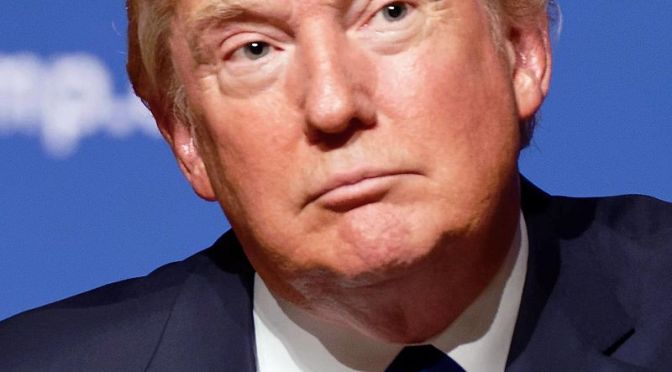
The conclusion of an election that saw an historic clash over the values of diversity, inclusion, and the meaning of “America” has brought with it a surge in uncertainty for minority and other historically disadvantaged communities in the U.S. The damage was extensive: the nearly year and a half of campaigning saw ethnic and religious minorities disparaged, immigrants targeted, women (including his opponent) subjected to misogynistic abuse, the mainstream press caught in the crosshairs of an anti-media campaign, and rhetorical and symbolic resonances in speeches and advertising that drew white supremacists and other far-right extremists out of the woodwork.
In what ways has Trump’s election reshaped the social and political climate for vulnerable American populations, including women, Latinos, black people, immigrants, LGBTQ people, and people with disabilities? How is the post-election retreat from data showing racial resentment as the highest predictor of Trump support endangering reality-based solutions for vulnerable communities, politicians, and analysts? And how has his rise to power connected to and amplified similar right-wing, ethno-nationalist politics globally?
Whether and how American conservatives and the Republican Party—now set to hold power in all three branches of government—are able to manage a resurgent coalition of ethno-nationalist voters as well as the capacity for progressive and Democratic activists to create social, political, and legal structures to protect vulnerable communities will determine what life in Trump’s America will look like for the at-risk. This ClimateWatch rounds up a number of key news items, analyses, and commentaries providing insight on what has happened and what could be on the horizon. Continue reading ClimateWatch: U.S.→
Clashes erupt as newly elected pro-democracy officials in Hong Kong ousted by Beijing
As many as 10 newly elected members to Hong Kong’s Legislative Council may lose their seats as the Chinese government has declared that improperly declared oaths of office disqualify them from office.
The Chinese parliament passed a resolution removing two newly elected Hong Kong officials for inserting a slur against China and a pledge to the “Hong Kong nation” in their oaths.
Thousands of protesters (including a large contingent of lawyers) took to the street, in demonstration against the government’s stance, clashing with police and denouncing increased intervention from Beijing into semi-autonomous Hong Kong’s affairs.
Vietnamese government detains blogger following post listing deaths under police custody
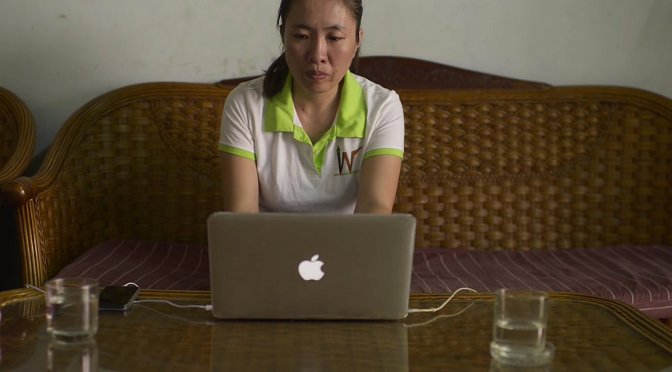
Blogger Nguyen Ngoc Nhu Quynh (“Me Nam,” or “Mother Mushroom”) was arrested on charges of propagandizing against the state, which carries a sentence of up to 12 years in prison.
Quynh’s posts included a report on more than 30 civilians who had died in police custody, which roiled a government largely intolerant of criticism.
She had previously been arrested in 2009 for receiving funding from Viet Tan, an activist group based in California.
Indian court grants women access to famous Islamic tomb in Mumbai
The Bombay High Court ruled that trustees of the Haji Ali tomb could not ban women from entering the tomb, though the decision was stayed in anticipation of an appeal to the Supreme Court.
Although India’s constitution protects religious groups’ rights to manage their own affairs, the Court invoked an exception for matters that are not “an essential and integral part of the religion.”
The ruling follows a similar one earlier in the year allowing Hindu women access to temples in the state of Maharashtra.
French court overturns ban on burkinis in Villeneuve-Loubet
The State Council, the highest administrative court in the country, ruled the ban on the religiously inspired bathing suit constituted a violation of civil liberties, including freedom of movement and religious freedom.
The decision opens the door to challenges to similar bans in at least 30 other municipalities.
The bans have roiled political tensions in the aftermath of IS-coordinated and -inspired attacks in the country, with government officials and civil liberties advocates clashing over the limits of the national security apparatus.








 Outlas