ILGA-Europe recently released its annual report on the state of LGBT rights and security across the Europe. Covering developments in individual countries and transnational institutions from 2015, the report notes increasing legal protections for gender minorities and family and partnership rights for sexual minorities in Southern and Western Europe as well as ongoing political exclusion, persecution, and violence in Eastern Europe and Eurasia. Here are some of the highlights:
Malta
Rated the most progressive European country, Malta’s groundbreaking law prohibiting surgical intervention into a person’s sex characteristics without consent and inclusive education policies for trans, intersex, and other gender minorities were cited as distinctive policies.
Finland, France, Greece, Ireland
Other countries with significant judicial or policy victories regarding the rights of gender minorities.
Ireland, Luxembourg
Countries extending marriage rights to same-sex couples
Cyprus, Greece
Countries extending civil partnership rights to same-sex couples
Austria, Portugal
Countries extending adoption rights to same-sex couples
One of the few truly global holidays, International Workers’ Day (May Day) is both a worldwide celebration of the working classes as well as a day to draw attention to ongoing insecurities workers around the world face. May Day has historically had a twofold purpose: a day for workers to voice their concerns over contentious labor policies and for governments to reaffirm their commitments to workers’ rights and just labor practices. At times little more than public relations campaigns and at others violent clashes between governments and workers, global May Day events have highlighted the diverse relationships between labor, employers, and government around the world. Here are the highlights of May Day 2016 in more than 30 countries:
Asia Pacific
Bike rallies were held in Pune as Indian PM Narendra Modi saluted workers on Antarrashtriya Shramik Diwas, a public holiday. Pakistan‘s major labor unions convened in Lahore to speak out against poor working conditions, violations of international labor conventions, and ongoing privatization in the country. As Bangladeshi officials addressed labor relations and welfare reforms amidst a day of union-organized programming, in Kathmandu, Nepali workers marched while awaiting the ratification of the Labour Act, which guarantees greater social security for workers. Across the Indian Ocean, Australian union leader singled out penalty rate protection and tax reform as major Labour Day issues, with the date of the holiday having been a point of contention as well.
In cities across France, tens of thousands marched in protest against proposed labor reforms that would loosen the country’s controversial employment and job security policies. Jeremy Corbyn became the first U.K. Labour party leader to attend a May Day rally in a half-century when he spoke to a crowd of thousands in London, reaffirming solidarity against anti-immigrant sentiment and addressing anti-Semitism accusations that have plagued his party recently. Spain saw thousands across its cities gather, many protesting ongoing austerity measures. An estimated 800,000 gathered in Rome‘s San Giovanni Square, with this year’s event dedicated to slain Italian student Giulio Regeni.
Some 2,000 convened in rain-soaked Zagreb to hear labor leaders protest the increased retirement age and ongoing poverty in Croatia. Moscow hosted a mass demonstration in the city’s Red Square estimated in size from the tens of thousands to 100,000, while thousands gathered in Istanbul’s Bakirköy district under a heavy police presence in the wake of urban suicide attacks and ongoing violence across Turkey.
The Americas
From New York to Los Angeles, demonstrations in the U.S. highlighted widening economic inequality in the country and an election season marred by racist, xenophobic, and Islamophobic sentiment. While most protests took place without incident, a peaceful march turned violent in Seattle, leading to five injured officers and nine arrests. A similar outbreak in Montreal led to one injury and 10 arrests.
In Latin America, Brazil‘s embattled president and Workers’ Party leader Dilma Roussef rallied alongside hundreds of thousands across the country as her impeachment proceedings continue and workers fear the inauguration of her center-right vice president. Cuba‘s May Day parade continued the national tradition of expressing support for the Castro regime rather than directly celebrating labor or expressing concerns over labor conditions. In Argentina, President Mauricio Macro backed employers and touted labor proposals that had spurred mass demonstrations only days before. Elsewhere in the region, minimum wage increases were announced in Venezuela and Bolivia and a march took place in Santiago as Chilean President Michelle Bachelet announced a review of her labor reforms after the Supreme Court rejected a key provision granting exclusive negotiating rights to unions.
Middle East & Africa
Police in Egyptblocked hundreds of workers from assembling in a Cairo office as labor leaders and international organizations called for the government to decriminalize independent union organization. In Israel, more than 5,000 youth marched in Tel Aviv, while a Palestinian trade union renewed its call for the establishment of a minimum wage and the dismantlement of the Gaza blockade. A government-sponsored event in Dubai reportedly drew nearly 200 workers, though labor practices in the UAE continue to draw international scrutiny.
South of the Sahara, events popped up across South Africa as politicians sought to address the country’s high unemployment rate and appeal to workers ahead of August elections. In Nigeria, President Mohammadu Buhari spoke to thousands of workers in Abuja, touting his anti-corruption campaign. A Mozambique labor leader addressed a crowd in Maputo about the debts of state-owned companies and the need for wage and workplace reform. As the decline of oil prices has created economic hardship throughout Angola, the country’s two labor unions marched to draw attention to deteriorating worker conditions and the need for infrastructure maintenance. Workers in Ghana protested the privatization of the management of the state-owned Electric Company of Ghana, while the government insisted the company was still run by the state. Meanwhile, Ethiopia sidestepped Sunday commemorations altogether by moving May Day to May 3, when labor leaders plan to highlight ongoing struggles to organize Ethiopian workers.
A rise in anti-Semitic sentiment and attacks in France has left many French Jews in fear of their future in the country. As the U.K. debates its European Union status, French Jews have leveraged the free mobility that comes with E.U. membership to cross the English Channel and build a new life in London. Thousands of Jewish families have reportedly fled France for the U.K., now the second-most popular destination for French Jews after Israel, according to the Jewish Agency. Better economic opportunities have amplified immigration to London, where rabbis have reported significant increases in the numbers of French Jews in their synagogues and Jewish schools. The New York Times and BBC investigate the causes of the exodus and how the largely Sephardic French Jews have been integrated into London’s predominantly Ashkenazi Jewish community and multicultural society as a whole.
Finding Healthcare Justice for Aging Holocaust Survivors
With the youngest among them now in their 70s, Holocaust survivors are facing late-in-life issues compounded by the traumas from the policies of targeted persecution just over seven decades ago. Dementia has returned some to the nightmares of their youth, while social isolation, physical ailments, and other mental health issues stemming from the violence of the period have left many with high care needs as they age.
In the U.S., home to more than 100,000 survivors (most Jewish), politicians have begun calling on the German government to do more for victims, arguing that current caps on assistance leave many survivors struggling. While reparations have expanded since the 1951 establishment of the Claims Conference, questions over who shoulders the burden for late-in-life care have yet to be resolved. The increasing needs that come with aging have reignited debates about Germany’s obligations to those its government systematically disenfranchised, impoverished, and subjected to physical and mental anguish that outlived the liberation of the final concentration camp.
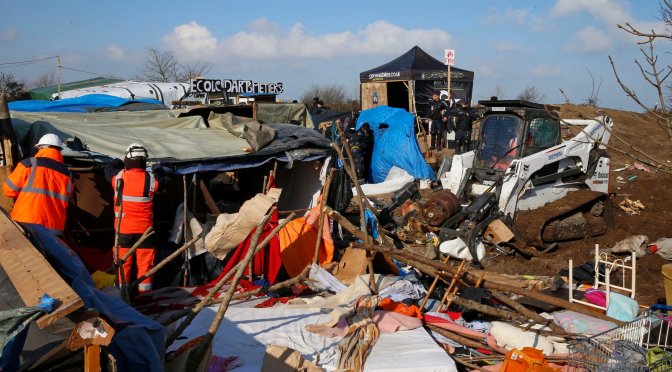
U.K. faces refugee surge as France continues Calais camp dismantlement
France has begun evicting an estimated 3,500 refugees from the makeshift camp outside of Calais, one of the most prominent symbols of refugee marginalization across Western Europe.
U.K. border officials have discovered refugees coming from France in trucks as part of a surge in those attempting to reach the U.K., including an increase in unaccompanied minors.
Refugees pay high prices graded by their means to smugglers, who face comparatively lax screenings of their trucks.
France opens blood donation to gay men with qualifications
Fulfilling a campaign promise of President François Hollande, the French health ministry announced it will relax the 1983 law banning gay men from donating blood.
Men who have abstained from sex with other men for at least 12 months will be allowed to donate blood, while men who have not had sex with men or have had sex in the context of a monogamous relationship for four months can donate plasma.
Rights groups cautiously praised the development, acknowledging the continued profiling of gay men through the ongoing restrictions, which will be reviewed in 2017.
France’s notorious housing estates–akin to housing projects in the U.S.–have long existed as symbols of an unintegrated France. Though President François Hollande has pledged to address the long-standing segregation that divides Paris’s poor banlieues from its more affluent city center, rampant unemployment, limited educational opportunities, crime, and stigmatization continue largely unchecked. The Guardian reflects on conditions in Paris’s most notorious estates a decade after riots forced what one banlieue mayor has called “social and territorial apartheid” into the national consciousness.
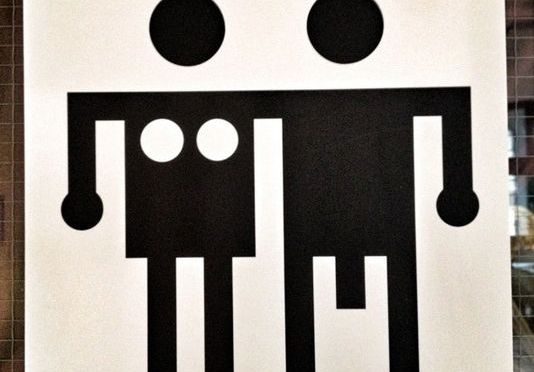
French court rules in favor of establishing third gender option for intersex individual
A French court has for the first time allowed for the establishment of a third gender option for an individual’s legal status, ruling in favor of a 64-year-old intersex individual to change their status from male to “neutral gender.”
The judge ruled that the gender assigned to the individual at birth was “pure fiction” and that the creation of a third option was not the recognition of a third gender, but of the impossibility of ascribing binary gender to individuals who present with both male and female sexual characteristics.
A 2011 legal memorandum outlined administrative guidelines for intersex newborns, allowing for a one- to two-year deferral of gender assignment on a newborn’s birth certificate if the child presents as intersex, while Europe’s main human rights authority recently spoke out against surgical gender assignment for intersex newborns.
French riot police use tear gas to evacuate and dismantle Calais refugee camps
French police raided and dismantled camps housing more than 400 refugees and migrants in the port city, calling the camps “illegal settlements.”
While France has announced plans to build a permanent camp next year, those currently in the area–including many attempting to make their way to Britain–have set up makeshift camps for shelter.
BuzzFeed News has included video of the police launching tear gas at individuals and their tents.
Jump-starting the Future for Unaccompanied Migrant Minors in France
A specialized department of the refugee advocacy and services organization France Terre Asile, the Centre d’accueil et d’orientation pour les mineurs isolés étrangers (Reception and Orientation Center for Unaccompanied Foreign Minors) provides meals, lodging, and education for unaccompanied youth of foreign origin aged 14 to 18 to facilitate adjustment and integration into French society. Agence France-Presse profiles a few of the youth and the work being done at the center.
European Commission announces €2.4 billion in funding support as transregional migration surge continues
The aid will be disbursed over six years, with the two countries most acutely affected to receive the largest share: €560 million for Italy and €473 million for Greece.
France will receive €27 million later in the month, and the U.K. already received €20 million in emergency aid in March.
France and the U.K. are expected to use the funding they have received to address the situation in Calais, the departure point for many migrants looking to cross into Britain.
The Guardian trains its cameras on daily life the Calais Jungle refugee camp, where all-consuming existential worries and attempts to cross the border into the U.K. live alongside basic activities like food preparation, grabbing a shower, playing soccer, and attending religious services. Among these everyday activities, the Guardian traces some of the personal stories that brought individuals to Calais.
Migrant situation in Calais deteriorates as French and British authorities bicker over responsibility
Reports indicate that more than 2,000 migrants have been taken from the Eurotunnel premises connecting France and the U.K. over the last few days, although a police union stated those numbers may be inflated due to migrants making multiple attempts.
One man was killed and another electrocuted during the surge in attempts, while 148 made it to the U.K. side and declared asylum.
While France demands more border and repatriation support from the U.K., around 5,000 migrants and refugees–mostly from Africa and the Middle East–have been living in poor conditions in camps around Calais.
“It was pandemonium. … They were pouring through holes in the fences and clinging on to the Eurotunnel trains.”
The court ruled that in five of the 13 cases on appeal, police carried out discriminatory “stop-and-frisk” ID checks that resulted in no legal action against the individuals, all of Arab or African descent.
In addition to awarding damages to the plaintiffs, the ruling also requires police to record and distribute the objective grounds on which stops are initiated, as the ID checks have been difficult to file complaints over because they have not been recorded.
Of concern to legal and community observers is that the other eight cases were found to be legal because the checks took place in areas where behavior deemed suspicious by police is more likely to indicate illegal activity, i.e. in socioeconomically disadvantaged neighborhoods.
“We struck at the heart of the system by attacking the state. … This is a big victory for our clients. But it’s also a big victory for everyone, notably young people, black or North African, who each day are controlled (by police) mainly because of the color of their skin.”








 Outlas