

Tag Archives: Land/Housing/Environmental Justice

ClimateWatch: U.S.

ClimateWatch
The U.S. in the Era of Trump

Source: euronews YouTube

The conclusion of an election that saw an historic clash over the values of diversity, inclusion, and the meaning of “America” has brought with it a surge in uncertainty for minority and other historically disadvantaged communities in the U.S. The damage was extensive: the nearly year and a half of campaigning saw ethnic and religious minorities disparaged, immigrants targeted, women (including his opponent) subjected to misogynistic abuse, the mainstream press caught in the crosshairs of an anti-media campaign, and rhetorical and symbolic resonances in speeches and advertising that drew white supremacists and other far-right extremists out of the woodwork.

In what ways has Trump’s election reshaped the social and political climate for vulnerable American populations, including women, Latinos, black people, immigrants, LGBTQ people, and people with disabilities? How is the post-election retreat from data showing racial resentment as the highest predictor of Trump support endangering reality-based solutions for vulnerable communities, politicians, and analysts? And how has his rise to power connected to and amplified similar right-wing, ethno-nationalist politics globally?

Whether and how American conservatives and the Republican Party—now set to hold power in all three branches of government—are able to manage a resurgent coalition of ethno-nationalist voters as well as the capacity for progressive and Democratic activists to create social, political, and legal structures to protect vulnerable communities will determine what life in Trump’s America will look like for the at-risk. This ClimateWatch rounds up a number of key news items, analyses, and commentaries providing insight on what has happened and what could be on the horizon. Continue reading ClimateWatch: U.S.
France News | Migrants & Refugees

Shelterless migrants arrive on streets of Paris, leading to denunciation by French president
  • More than 6,000 migrants and refugees seeking to enter the U.K. from France have been funneled into shelters and streets around France following the forced evacuation of the “Jungle” camp in Calais.
  • Paris security officials estimate an increase in the number of unsheltered asylum-seekers from around 1,500 to 2,000-2,500 in just a few days.
  • Hundreds of tents and cardboard flooring mark attempts by migrants to shelter themselves from the cold as Paris’s shelter supply—fewer than 1,000 beds—has been far outstripped by demand in the French capital.

Read more:
More migrants pitch tents on Paris streets as Calais camp shuts” (Reuters)
Migrants: à Paris, le campement de Stalingrad s’agrandit” (Radio France Internationale, in French)
French President Vows to Clear Paris Streets of Migrant Camp” (The New York Times)

U.S. Feature | Native Americans

The Dakota Access Pipeline Protests, from Land to Twitter

Source: Al Jazeera YouTube

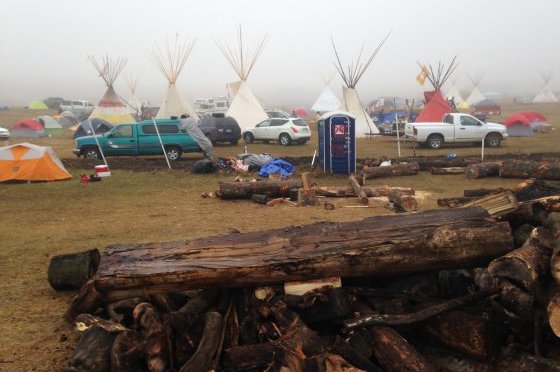
Though having only recently had the spotlight of the national media trained on them, the Dakota Access Pipeline protests have been a months-long clash between, on the one hand, Standing Rock Sioux tribe members, indigenous and non-indigenous allies, and environmental activists, and, on the other, proponents of the nearly 1,200-mile long oil pipeline from western North Dakota to southern Illinois. Indigenous protesters have made recourse to both litigation and direct action in an attempt to halt construction on a pipeline slated to come within a half-mile of the Standing Rock Sioux reservation. The protests have drawn both state and federal intervention, with the National Guard having been brought to protest sites, violent clashes between police and protesters, a legal tango between the Obama administration and district court judges, and increasing pressure on the U.S. presidential candidates to take a stand on the issue.

At issue is what activists say has been a failure on the government’s part to engage Native communities, conduct a thorough environmental and cultural impact assessment ahead of the pipeline’s construction, confront tribe members’ concerns about the potential for water contamination, and adhere to laws regarding the preservation of sacred cultural sites. The approach of the bitter North Dakotan winter has punctuated current protests with a question mark as activists and advocates seek to perpetuate the recently gained media momentum and mobilize public opinion—and, by extension, political pressure—against the pipeline’s construction.

Read:
A History of Native Americans Protesting the Dakota Access Pipeline(Mother Jones)
What to Know About the Dakota Access Pipeline Protests” (TIME)
The Standing Rock Sioux ‘know what they’re doing’ in North Dakota” (Public Radio International)

Additional:
Tension Between Police and Standing Rock Protesters Reaches Boiling Point” (The New York Times, October 2016)
Tribe Says Police Are Violating The Civil Rights Of Dakota Access Pipeline Opponents” (The Huffington Post, October 2016)
Dakota Pipeline Company Buys Ranch Near Sioux Protest Site, Records Show” (NBC News, September 2016)
The Legal Case for Blocking the Dakota Access Pipeline” (The Atlantic, September 2016)

(Image Credit: James MacPherson/AP, via TIME)

India News | Women

Indian state strengthens property rights for slum-dwelling women
  • Women living in slums in the state of Maharashtra will now hold ownership rights equal to men thanks to a new land title plan.
  • The plan comes as the government seeks to regularize slums in the state, giving families land titles with joint ownership between marital partners.
  • Though the development has been lauded, advocates warn that women continue to struggle to exercise equal rights once gained, with lack of education and intimidation perpetuating gender-based legal inequalities.

Read more:
India’s Maharashtra state to give women slum dwellers joint ownership rights” (The Thomson Reuters Foundation)

(Image Credit: Danish Siddiqui/Reuters)

U.S. Feature | Homeless Seniors

The Changing Face of American Homelessness

A bulge of homeless baby-boomers has been making its way through the nation’s aging pipeline, with more than 300,000 homeless people in the U.S. now over the age of 50. From the recessions and zero-tolerance drug policies of the ’70s and ’80s to contemporary wage stagnation and affordable housing shortages exacerbated by unchecked urban gentrification, many who came of age during the social tumult of the ’60s and ’70s have struggled to maintain their footing in the nation’s rapidly evolving cities. For many, chronic illness and disability have led to homelessness or struck as a result of it, prematurely introducing aging issues into an already vulnerable population. As a result, homeless seniors have found themselves at the center of an epidemic that is increasingly understood to intersect with other national problems, including weak safety nets for seniors, people with disabilities, and the poor.

As national conversations framed through the lens of personal responsibility, urban threat, and moral failings compound the shame many experience in precarious situations, the aging homeless community has found itself not only marginalized on the streets, but within the discourse of homelessness in general, framed as it too often is in terms of workforce reintegration and social re-engagement. With the elderly homeless population expected to more than double by 2050, The New York Times recently examined the structural problems facing the aging homeless population and challenges affecting the development of effective long-term solutions.

Read:
Old and on the Street: The Graying of America’s Homeless” (The New York Times)

Additional coverage:
Fast-aging homeless population may lead to public health crisis” (The San Francisco Chronicle, March 2016)
Solving The Growing Health Needs Of America’s Elderly Homeless” (ThinkProgress, February 2016)
‘We Shouldn’t Have To Live Like This’” (NPR, March 2013)

Reports:
Aging and Housing Instability: Homelessness among Older and Elderly Adults (National HCH Council, September 2013)
Homelessness Among Elderly Persons (National Coalition for the Homeless, September 2009)

Connect:
National Alliance to End Homelessness
National Coalition for the Homeless
National Health Care for the Homeless Council

(Image Credit: Monica Almeida/The New York Times)

ClimateWatch | The Philippines

ClimateWatch
The Philippines

The Philippine Congress recently confirmed Rodrigo Duterte as the 16th president of the Philippines, ushering in a new government fueled by populist disaffection and characterized by uncertainty. A lightning rod of controversy, the tough-talking former mayor of Davao City in the south of the country has supported vigilante justice in crime-riddled cities (including against those suffering from addiction), the reinstatement of capital punishment, and paternalistic policies on smoking, alcohol consumption, and youth curfews. His unfiltered style has been likened to U.S. Republican presidential nominee Donald Trump for both his casual misogyny and penchant for offensive jokes.

But Duterte, the Philippines’ oldest president, has also expressed support for minority representation and protections, backed by a record of gender and minority inclusiveness during his time as mayor. His election has already been celebrated for breaking political regionalism in the country: Duterte has become the first president from the historically marginalized island of Mindanao. Now having to scale his leadership from the local to the national level, he inherits a range of difficult issues impacting historically disadvantaged communities, including land and environmental rights for indigenous peoples, reproductive healthcare for women, and political autonomy for Muslim groups in the south.

With international observers and diplomats concerned by Duterte’s unpredictability, his record with and plans for vulnerable communities have been scrutinized as political analysts attempt to predict what the next era of Philippine politics will look like under his leadership. Here is an overview of recent local and international commentary on the impact of Duterte’s election:

Continue reading ClimateWatch | The Philippines

Argentina News | Indigenous Argentines

Argentina establishes special council as criticism of poor indigenous relations intensifies
  • Established by decree, the new council is designed to bring together indigenous and government leaders to tackle cultural and policy issues affecting indigenous communities.
  • Activists have longed called for integration into decision-making processes affecting their communities, including enforcement of constitutional land, language, judicial, and development rights.
  • A recent U.N. report called out the government’s record on land rights—including intimidation and judicial harassment—and called for increased indigenous representation in political and judicial bodies.

Read more:
Government Creates Special Council for Indigenous Affairs” (The Argentina Independent)
Decreto 672/2016: Consejo Consultivo y Participativo de los Pueblos Indígenas de la República Argentina. Creación.” (Ministry of Justice & Human Rights, in Spanish)
Argentina’s indigenous people face ‘appalling’ plight: U.N.” (The Thomson Reuters Foundation)

(Image Credit: Resistencia Qom, via The Argentina Independent)

Afghanistan News | Hazara

Hazara communities in Afghanistan protest changes to new electricity line route
  • Thousands from Hazara communities in the country are expected to protest after officials outlined a new route away from provinces with large Hazara populations for what they argue are technical and economic reasons.
  • The electricity project is a part of the Asian Development Bank’s plan to connect energy-rich Central Asia with the energy-deprived countries of the western subcontinent.
  • The resource row comes as the government has pledged increased protection for the Shiite Hazara minority, who have faced kidnapping and murder at the hands of militants in the Sunni-majority country.

Read more:
Afghan minority Hazaras plan protest over power line route” (Reuters)
Afghan Kidnappers Prey on Hazaras” (The New York Times, November 2015)
Hazara killings: Thousands protest in Afghanistan blaming militants for murder of seven villagers” (AFP/Reuters, via ABC, November 2015)

Global Feature | Women

Setting the Global Gender Equality Agenda

Since the dawn of the new century, the role of international institutions and cooperation in efforts to promote gender equality has grown as economies, migration, and environmental conditions have continued intertwining peoples around the world. The Thomson Reuters Foundation recently interviewed Phumzile Mlambo-Ngcuka, the head of U.N. Women, about efforts to coordinate global efforts to promote women’s rights and security.

Ahead of the upcoming Women Deliver conference set to bring together 5,000 attendees from 150 countries, Mlambo-Ngcuka discussed the challenges of securing long-term investments in gender equality worldwide and the ambitious new agenda set through the new Sustainable Development Goals for 2030. The redress of structural inequalities, ongoing gender-based vulnerabilities, and the continued generational and gender outreach work necessary for equality continue to drive new programs in U.N. Women even as the work is met with derision or indifference from global political and business leaders.

Read:
Head of U.N. Women says irking opponents comes with the battle for equality” (The Thomson Reuters Foundation)

Additional:
UN Women
Women Deliver
Transforming Our World: The 2030 Agenda for Sustainable Development
(U.N.)
How can the world improve the lives of women and girls by 2030?” (The Thomson Reuters Foundation)

(Image Credit: Ruben Sprich/Reuters)

Kazakhstan News | Citizens

Suspicion of land privatization policies erupts into rare protests across Kazakhstan
  • Despite the Kazakhstani government’s low tolerance for dissent, thousands rallied across the cities of Aqtobe, Semei, and Atyrau to protest proposed land privatization policies that will put 1.7 million hectares of public land up for auction beginning on July 1.
  • Kazakhstanis have expressed concern that land will be sold to foreigners (particularly the Chinese) or will end up in the hands of the elite, inflected by centuries of redrawn borders that have seen ethnic Kazakhs divided between Kazakhstan, Russia, and China.
  • Government officials have stated that the legislation only extends the foreign lease period cap from 10 to 25 years foreigners and have threatened to punish those who say otherwise.

Read more:
Kazakhstan’s land reform protests explained” (BBC)
Protesters In Kazakhstan Rally Against Land-Privatization Plan” (Radio Free Europe/Radio Liberty)
Land Sales Unearth Kazakhs’ Love For The Motherland” (Radio Free Europe/Radio Liberty)

(Image Credit: Sania Tolken/RFE-RL)

Peru Feature | Farmers

Big Victory for a Small Farmer in Peru

Peruvian Máxima Acuña de Chaupe may have seemed like an unlikely agent for the deterrence of a major international company’s mining project, but the 47-year-old farmer and mother of four was able to halt U.S.-based Newmont and Peru-based Buenaventura’s joint development of a mine on her 60-acre farm with the help of social media and international organizations. Despite physical violence, arson, lawsuits, and fines, Acuña fought to stop the expropriation of her land and stave off eviction attempts that began back in 2011. A recipient of the 2016 Goldman Environmental Prize, Acuña has brought global attention to ongoing rights battles as private development encroaches upon territory small, often poor farmers depend on for their livelihoods. The Guardian and El País have profiled Acuña and the centrality of international solidarity in efforts to protect land and environmental rights.

“No sé si la situación se calmará, voy a seguir defendiendo mi tierra, tengo fe y seguiré pidiendo justicia.”

Translation: “I don’t know if the situation will calm down, I’m going to keep defending my land, I have faith and will continue demanding justice.”

Read:
Peruvian farmer wins David-and-Goliath battle against US mining giant” (The Guardian)
La vuelta a la lucha de Máxima Acuña” (El País, in Spanish)

Additional:
Máxima Acuña: Goldman Environment recipient (The Goldman Environmental Prize)
Peru’s Goldman Prize Winner Maxima Acuña’s Life is in Danger” (teleSUR English)

(Image Credit: Goldman Environmental Prize, via The Guardian)

Brazil News | Farmers & Indigenous

Increasing violence plagues Brazilian land rights activists
  • After 50 died in 2015, at least six activists were killed in the first two months of 2016 as land rights groups report increased intimidation, criminalization, and violence committed against them.
  • Activists have sought reform to protect the at times conflicting land rights of small farmers and indigenous communities, particularly in rural states.
  • Brazil has some of the highest land-proprietary inequality in the world, with 1% of the population owning nearly 50% of the land and single families subject to payments from as many as tens of thousands of property owners thanks to a colonial-era law.

Read more:
Brazil land activists facing ‘increased intimidation’ with six killings in 2016” (The Thomson Reuters Foundation)
Indigenous Continue to Face Violence in Reclaiming Territory in Brazil” (Indian Country Today)
Journalist survives shooting at his home in northwestern Brazil” (Journalism in the Americas)

Additional reading:
For Brazil’s 1 Percenters, The Land Stays In The Family Forever” (NPR, August 2015)

U.K. News | Middle & Working Classes

Scotland works to correct massive land ownership inequality through pro-community initiatives
  • The Land Reform Bill of 2015 promotes community ownership and settlement in Scotland’s rural regions, establishing a new land registry and the Scottish Land Fund to help community groups purchase land.
  • A 2014 government report found that half of Scotland’s privately held land is owned by 0.008% of the population.
  • Scotland’s land inequality has been driven by aristocratic inheritance, violent land hoarding in the 1800s, and massive contemporary real estate investments by the wealthy.

Read more:
Scotland moves against wealthy gentry dominating land” (Reuters)
‘New dawn’ as MSPs approve land reform proposals” (BBC)
New £10m community buy-out fund revealed as MSPs debate land reform” (Scottish Housing News)
A new dawn for land reform in Scotland?” (The Guardian)

(Image Credit: Murdo MacLeod/The Guardian)

Israel & Palestine News | Palestinians & Bedouins

Israel triples rate of demolition of Palestinian and Bedouin structures in the West Bank
  • Since the beginning of 2016, the average monthly demolition rate has increased to 165 a month, a dramatic increase from the 50-per-month of 2012-2015.
  • The coordinator of Israel’s activities in the West Bank indicated the increased rate is an attempt to get through the 11,000 outstanding demolition orders.
  • Palestinian and Bedouin structures are deemed illegal in the West Bank if built without difficult-to-get permits, in a designated (but often seldom-used) firing range, or in violation of colonial-era planning and zoning restrictions.

Read more:
With demolitions, Israel tightens squeeze on West Bank Palestinians” (Reuters)
UNRWA Condemns Ongoing Israeli Demolitions of Palestinian Homes” (teleSUR English)
35 Palestinians left homeless due to massive demolitions by the IOF, Wednesday” (Palestine News Network)

(Image Credit: Abed Omar Qusini/Reuters)

Zimbabwe News | Black & White

Zimbabwe looks to black farmers to provide reparations to displaced white farmers
  • As the Zimbabwean government struggles to keep its economy afloat, it has toyed with shifting the burden of reparation to black farmers, who lease land from the government, through a compensation fund created through their rent payments.
  • White farmers were displaced as a part of a contentious indigenization program that saw massive land redistribution beginning in 2000, promoted as a corrective to the expropriation of land from black families under colonialism.
  • More than 6,000 farms remain for reparation assessment, with only 240 white farmers having begun to receive payment.

Read more:
We can’t pay: Zimbabwe farmers resist compensating evicted white landowners” (Reuters)
Zimbabwe May Ask Black Farmers to Help Repay Ousted Whites” (Bloomberg)
Zimbabwe begins talks to compensate evicted white farmers” (AfricaNews)

(Image Credit: via AfricaNews)