Tag Archives: Latin America & The Caribbean

Costa Rica News | LGB

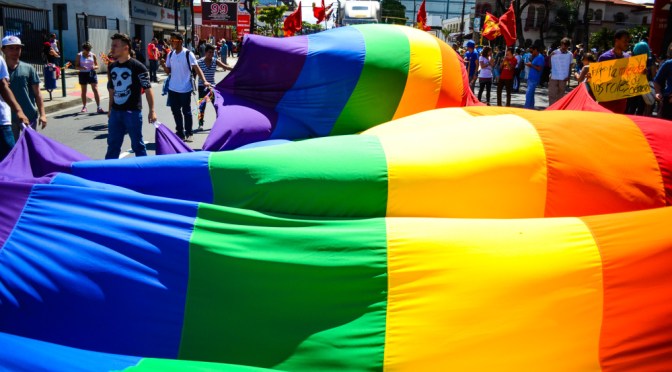
Costa Rican president submits bill to legalize same-sex common-law marriages
  • The bill would amend the Costa Rican family code to allow for cohabitating same-sex couples who have been partnered for at least three years to meet with a lawyer or judge to apply for a common-law marriage.
  • Under common law status, the unions would purportedly provide all of the legal protections of regular marriage, with the residency and duration requirements being the point of difference.
  • In June, a judge granted the first common-law marriage to a couple in Goicoechea after slow legislative progress following a 2006 Supreme Court ruling declaring the Constitution does not prohibit same-sex marriage.

Read the full story at the Tico Times.

(Image Credit: Alberto Font/The Tico Times)

Nicaragua Feature | Special-Needs Youth

Empowerment, One Step at a Time

Nicaraguan families with children with special needs including autism and physical disabilities have discovered in psicoballet (“psychoballet”) an empowering form of therapy focused on developing children’s confidence and physical and emotional control. TeleSUR explores the impact of the therapeutic model that has migrated to Nicaragua since its inception in Cuba in the 1970s.

https://www.youtube.com/watch?v=lV8ATa2B7RM

Watch the teleSUR feature on YouTube (in Spanish).

Mexico News | LGB

Mexico supreme court strikes down ban on same-sex adoption
  • The court ruled 9-1 that a 2013 law in the state of Campeche was unconstitutional following a filing by the state’s human rights commission.
  • Same-sex couples’ adoption rights have experienced less support than marriage equality in the country, with only 24% expressing favor versus 52% for marriage rights in a 2013 survey.
  • Adoption rights have been solidified in much of the country, with most of the opposition residing outside of the heartland.

“I see no problem for a child to be adopted in a society of co-existence, which has precisely this purpose. Are we going to prefer to have children in the street, which according to statistics exceed 100,000? We attend, of course, and perhaps with the same intensity or more, to the interests of the child.”

Read the full story at the International Business Times.

(Image Credit: Edgard Garrido/Reuters, via the International Business Times)

Ecuador News | Indigenous Ecuadorians

Indigenous Ecuadorians march against government
  • Indigenous leaders led a march from an Amazonian province towards Quito against President Rafael Correa’s regime.
  • They argued that government policies are dispossessing them of land and resource rights and economic security.
  • Demonstrators connected indigenous struggles to broader inequalities marginalizing the poor and the general citizenry.

Watch the AFP report on YouTube.

Chile News | Women

Chilean government advances bill to modify ban on abortions
  • The Chamber of Deputies’ health commission voted 8-5 in favor of proposals to create exceptions to the country’s total ban on abortions in cases of rape, maternal life endangerment, and the inviability of the fetus.
  • The bill will now be voted on article by article before moving to the full chamber, where it faces stiff opposition from lawmakers and Catholic Church interests.
  • Since Augusto Pinochet implemented the ban in 1989, women have faced up to five years in prison for aborting a fetus in one of only seven countries in the world with a total ban on abortions.

“The vote reflects the opinion of a majority in Chile, which considers that its time to assume the reality of the more than 30,000 illegal abortions in the country every year.”

Read the full story at Bloomberg.

(Image Credit: Martin Bernetti/AFP/Getty Images, via Bloomberg)

Mexico News | Journalists

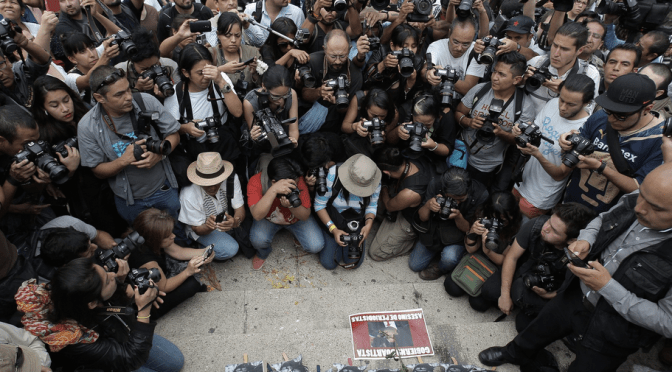
Protests follow murder of 7th journalist in Mexico this year
  • Several thousand gathered in Mexico City to protest the epidemic of journalist murders in the country, where photographer Ruben Espinosa was the latest victim.
  • Espinosa covered politics in Veracruz and spoke out against the harassment of journalists, but was found dead in a Mexico City apartment.
  • According to one media rights group, 41 journalists have been killed since 2010, with 13 having been killed in the state of Veracruz alone.

“I can’t put responsibility for his death on the government directly, but we can hold this government responsible for the climate of harassment and impunity that prevails in Veracruz.”

Read the full story at the New York Times.

(Image Credit: Alex Cruz/European Pressphoto Agency, via The New York Times)

Brazil News | Journalists

Provincial journalist covering government corruption murdered in Brazil, at least the 4th this year
  • Gleydson Carvalho became the 16th journalist reported killed since 2011 after gunmen stormed his radio program in Camocim, Ceará.
  • According to the Committee to Protect Journalists, 65% of those murdered had been covering government corruption, with government officials suspected of responsibility in 52% of cases.
  • The targeted killings have taken place outside of Brazil’s major cities, where fewer law enforcement resources have led to stalled cases.

Read the full story at The New York Times.

Jamaica News | LGBT

Jamaica holds its first LGBT Pride celebration
  • Held in Kingston, the week-long celebration includes a flashmob, art exhibit and performances, and a dance party in the Jamaican capital.
  • The festival received the support of Kingston’s mayor and Jamaica’s minister of justice despite the continued presence of anti-sodomy laws on the books.
  • Jamaica Pride is a major step forward for a country widely known for its pervasive homophobia, including violence against gays and lesbians and abject homelessness among out gay youth.

“I think we will look back on this and see it as a turning point because many persons thought that it would never actually happen.”

Read the full AP story at the Star Tribune.

The Americas News | Indigenous Americans

Research: One major migration from Siberia led to American settlement no more than 23,000 years ago
  • The results of two studies appeared in Science and Nature, with the first indicating there was a single migration that brought anatomically modern humans to the American continents.
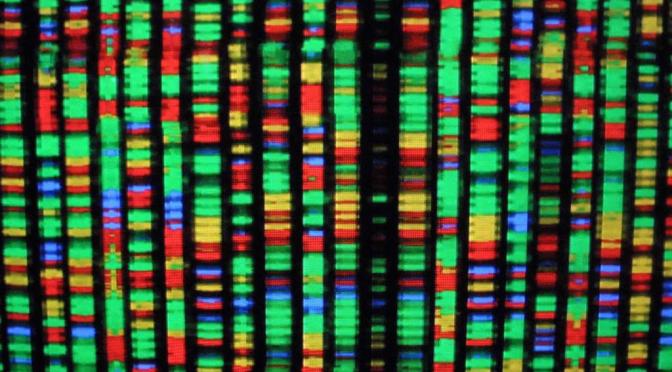
  • Researchers claim that the migrants inhabited the now-submerged area connecting Russia and Alaska until roughly 15,000 years ago, when ice melt led to population divergence as some migrated to the newly accessible American interior (American Indians) and others remained in the region (Native Alaskans).
  • The second study found closer ancestral connections of Amazonians to indigenous Australasians than to native Americans, spurring further questions about early American settlement.

Read the full AFP story at GlobalPost.

(Image Credit: Mario Tama/AFP/Getty Images, via GlobalPost)

Ecuador News | HIV

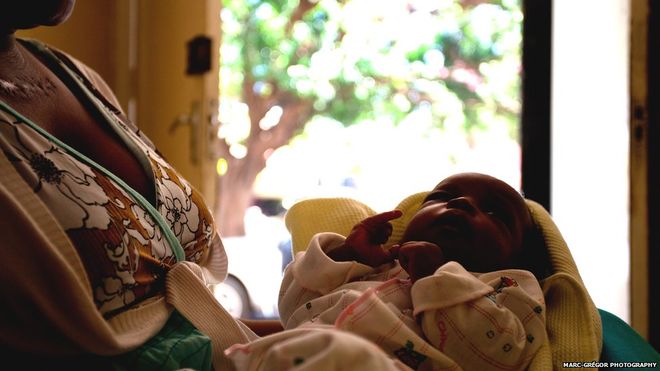
Treatment program in Ecuador saves newborns of HIV-positive mothers from infection
  • In Ecuador, a program driven by the government, Ecuador’s largest maternal hospital, the VIHDA foundation, and Duke University provides antiretroviral medication to newborns of HIV-positive mothers right after birth, significantly reducing their chances of contracting the virus.
  • At least 1,000 babies have remained virus-free thanks to the program, when they would otherwise face a 45% chance of infection during pregnancy, delivery, or breastfeeding.
  • When their status is known, infected mothers receive treatment throughout their pregnancy, but new programs around the world are pushing for ways to quickly reach women who don’t have prenatal appointments during the limited deterrence window.

“I don’t care if my career as a teacher was ruined by this illness. Today I am happy to see my children healthy and studying.”

Read the full story at the BBC.

(Image Credit: Marc-Grégor Photography, via the BBC)

Venezuela News | Dissidents

Fourth opposition politician in last month banned from office in Venezuela
  • Former state governor Pablo Perez has been disqualified from holding office for 10 years by the comptroller’s office in what government critics say is a crackdown on political opposition ahead of Venezuela’s upcoming elections.
  • A former legislator and two ex-mayors have also been banned as the country has descended into economic turmoil, weakening support for President Nicolas Maduro.
  • Demonstrations protesting the bans and calling for free elections have been planned, though President Maduro has used violence in those protests as grounds for banning politicians from running.

Read the full story at Reuters.

(Image Credit: Isaac Urrutia/Reuters)

Paraguay News | LGBT

Paraguayan LGBT activist becomes first to attend meeting with Pope Francis
  • Simón Cazal, executive director of advocacy organization Somosgay, was invited to attend the event that saw representatives of 1,600 organizations to see the Pope in Asunción.
  • He became the first professional advocate to meet publicly with the Pope, who has previously visited LGBT prisoners and had private meetings.
  • Cazal reported that the Pope spoke of dignity for all, in line with similar pronouncements he has made with regard to diversity in the Church.

“The local church insisted on talking about the family and other conservative issues. … He distanced himself from this discourse and highlighted diversity in its place. … The pope’s speech was very productive.”

Read the full story at the Washington Blade.

(Image Credit: Jeon Han, courtesy Wikimedia Commons; via the Washington Blade)

Mexico News | Women

High levels of femicide keep women’s security low in Central Mexico
  • For every 100 women murdered in Mexico’s 31 states between 2008 and 2013, 14 of them took place in Mexico State (Edomex).
  • The deaths occur in the context of an ongoing drug war that has seen more than 100,000 people killed or gone missing.
  • Despite bodies turning up regularly in rivers and sewers, state authorities are reluctant to cooperate with requests for exact figures and at times will bury individuals found without allowing families to see the bodies.

“We are never alone. We try to go in groups wherever we go.”

Read the full story at Channel NewsAsia.

(Image Credit: Omar Torres/AFP, via Channel NewsAsia)

Caribbean News | Afro-Latinas

Inaugural Latin American Afrodescendent Women Leaders’ Summit brings Afro-Latina leaders together to address community security
  • The summit convened in Managua, Nicaragua, bringing leaders together to address such issues as black women’s rights and protections, health, education, the environment, poverty reduction, and public services access.
  • Organizers aimed to use the discussions to adopt a shared political platform for Afro-Latinas throughout Latin America to combat the disproportionate impact of poverty and other socioeconomic barriers on black women.
  • Afro-Latinos make up between 20 and 30% of the population in Latin America, with complex histories of colonization, slavery, and migration making identification uneven.

Read the full story at teleSUR.

(Image Credit: Network of Afroamerican, Afrocaribbean, and Diasporic Women; via teleSUR)

Dominican Republic News | LGBT

Dominican Republic organization works with government and community to promote tourism and economic empowerment for LGBT community
  • The Center for Integrated Training and Research (COIN) has roots in the three-decade fight against AIDS in the Caribbean.
  • The organization now focuses on economic empowerment , through which it has worked with government and travel industry officials and offered community workshops through its program ProActividad.
  • Out U.S. Ambassador to the Dominican Republic James “Wally” Brewster and his husband have worked to support the country’s LGBT community despite opposition in the conservative, Catholic-predominant country.
“We are all looking for the same thing: To eliminate negative things in order for us to build something positive.”
Read the full story at the Washington Blade.
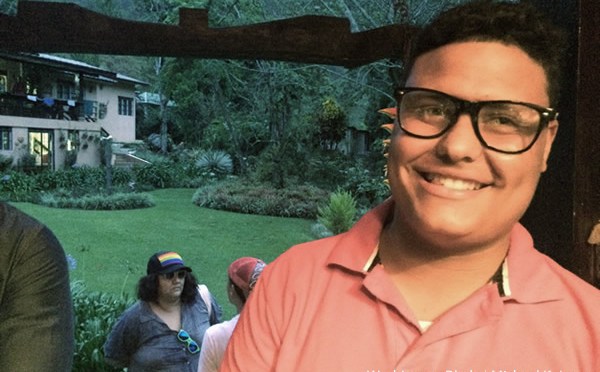
(Image Credit: Michael K. Lavers/Washington Blade)