Tag Archives: Sub-Saharan Africa

Senegal Feature | Chinese

The Mutual Tensions of Chinese-Senegalese Relations in Senegal

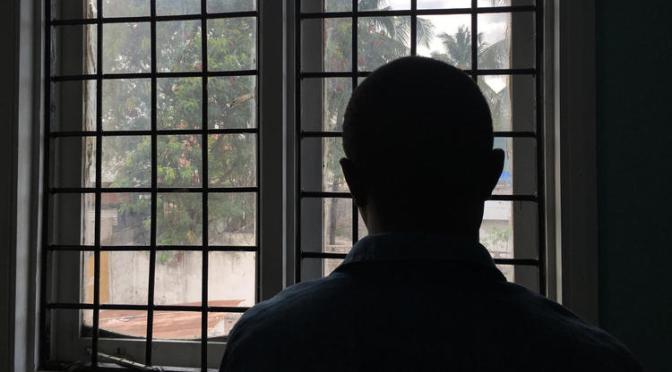
At 2,000-strong, the population of Chinese immigrants in Senegal has become a visible presence in major urban areas like Dakar, though immigrants remain largely cloistered within enclaves. With commercial potential driving immigration into the country, Chinese people in Senegal have depended on an uneasy relationship with native Senegalese, a microcosm of a broader burgeoning relationship between China and African countries built on uncertain economic hopes. The New York Times profiles the Chinese community in Dakar and the state of Chinese-Senegalese relations in the country.

Read

Chinese Merchants Thrive in Senegal, Where People ‘Needed Stuff’” (The New York Times | May 2017)

(Image Credit: Sergey Ponomarev/The New York Times)
Tanzania News | Indian

Tanzania president seizes passports of Indian workers for project delays
  • President John Magufuli ordered the seizure of the passports of employees of Overseas Infrastructure Alliance until the water project they are overseeing is complete.
  • The project, based in the southern town of Lindi, was originally set to be completed by March 2015.
  • The seizure comes as the president has aggressively pursued measures to cut wasteful spending and target corruption while courting foreign businesses.
Read

Tanzania’s Magufuli orders seizure of expatriate construction workers’ passports” (Reuters | March 2017)

South Africa News | Immigrants

New anti-immigrant wave rolls over South Africa, leading to violence and arrests
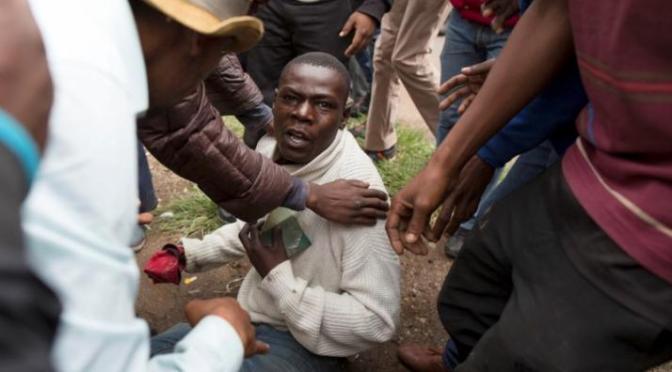
  • Pretoria stood at the center of a new wave of anti-immigrant sentiment in the country, where anti-immigrant protesters took part in marches and others looted at least 20 immigrants’ shops.
  • At least 136 people were arrested during a march after police used tear gas and other dispersal tactics.
  • Protesters have accused immigrants of bringing crime and sex work to South Africa as the nation experiences high levels of unemployment.
Read

South African police break up anti-immigrant protests” (Reuters | February 2017)
Pretoria brought to a standstill during anti-immigrant march” (News24 | February 2017)
20 shops belonging to immigrants looted in South Africa” (The Guardian (Nigeria) | February 2017)

(Image Credit: James Oatway/Reuters)

Africa Feature | Women

The Resilience of Africa’s Top Female Football Players

Facing nonexistent funding, social suspicion, and expectations of continued domestic obligations, many female football players across the African continent have endured challenges far greater than their male counterparts for the love of the game. Where men’s teams have been able to rely on state support and a long history of social sanctioning, women’s teams have had to resort to informal networks and social media to drum up the support necessary to enable them to compete, all while facing sanctioning of the opposite sort: underinvestment, disparagement, and insults about their gender and sexuality. The Guardian profiled a number of the competitors in this year’s Women’s Africa Cup of Nations, revealing the divide in opportunity for women and men and burgeoning signs of progress in the continent’s most popular sport.

Read:
Skilled, determined and broke: Africa’s female football pioneers” (The Guardian)

(Image Credit: Andy Clark/AFP/Getty Images, via The Guardian)

Cameroon News | Anglophones

Violent police response to protests by Anglophone Cameroonians leaves at least four dead
  • The killings took place when security forces fired live rounds in the air at a local market in Bamenda, the country’s second-largest Anglophone city.
  • Anglophone Cameroonians have demonstrated in recent weeks over perceptions of second-class status across issues including the dominant use of French in schools, police brutality, and unequal distribution and application of resources.
  • Cameroon’s bilingual administrative structure—a result of the colonial period when the country was split between Britain and France—has marginalized Anglophone Cameroonians, largely clustered in only two of the country’s ten administrative regions.

Read more:
Cameroon urged to investigate deaths amid anglophone protests” (The Guardian)
Bamenda protests: Mass arrests in Cameroon” (BBC)
Mass protests in Cameroon are exposing the fragility of its dual French-English system” (Quartz)

(Image Credit: Reuters, via The Guardian)

Madagascar Feature | Chinese & Malagasy

The Ambivalent Xenophobia in Chinese-Malagasy Relations

Source: AFP YouTube

The history of Chinese immigration in Madagascar is a complex tale that begins during the era of 19th-century French colonialism and continues into the contemporary era of globalization. Now entrepreneurs and investors rather than imported labor, the new generation of Chinese immigrants has concerned itself less with integration than with taking advantage of trade and investment opportunities in the island nation, at times to the detriment of the environment and local economic practices. Currently, more than 800 businesses have expanded the Chinese-national population to nearly 100,000, alarming many Malagasy and prompting accusations of politicians “selling off” the country. Over the last few years, international media have begun to examine the complicated relationship between xenophobia, economic exploitation, and fears of imperialism fueled by colonialism anxieties in a politically precarious country still wracked by poverty.

Read:
A Madagascar, la forte présence chinoise passe de plus en plus mal” (AFP, in French)

Additional:
Madagascar protests halt activity at Chinese gold mine” (News24, October 2016)
Madagascar’s Chinese Vanilla” (Al Jazeera, April 2015)
Who Knew? Madagascar Has Africa’s Third Largest Chinese Population” (ChinaFile, March 2015)
China’s rosewood craving cuts deep into Madagascar rainforests” (The Guardian, February 2015)
Influx of Chinese transforms the landscape of Madagascar” (The South China Morning Post, August 2013)
Chinese people in Madagascar (Wikipedia)

Tanzania News | HIV+ Queer Men

Tanzania suspends funding for HIV/AIDS programs supporting queer men as crackdown grows
  • The country’s health minister indicated the programs had been suspended “pending a review,” while programs supporting adolescent girls, drug users, and others will continue uninterrupted.
  • The government has accused some community-based and internationally funded programs of normalizing same-sex relationships as part of their outreach to queer men, some 25% of whom are living with HIV.
  • Though same-sex relations are punishable by up to 30 years in prison in the country, the government only recently broke its silence on the issue to condemn groups “promoting” homosexuality, with a number of officials having announced anti-LGBT campaigns.

Read more:
Tanzania suspends HIV/AIDS programs in new crackdown on gays” (The Washington Post)
Tanzania suspends some HIV programs for gay men, says health minister” (The Thomson Reuters Foundation)
‘Seeds of hate’ sown as Tanzania starts LGBT crackdown” (The Guardian, August 2016)

(Image Credit: Kevin Sieff/The Washington Post)

Central & East Africa | Burundians

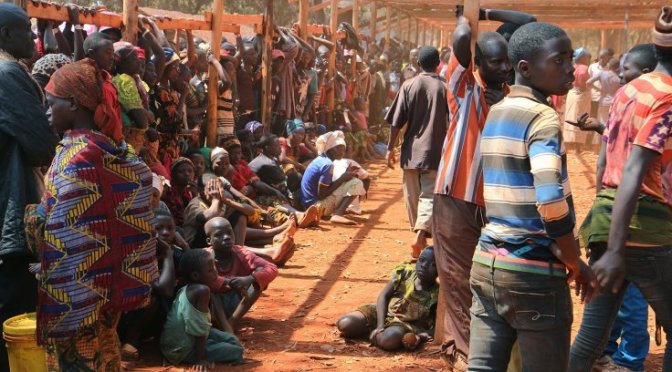
Central and East African refugee crisis expands as hundreds of thousands of Burundians flee country
  • Médecins Sans Frontières (Doctors Without Borders) reported that almost 325,000 Burundians have fled political violence in their country following the president’s decision to seek a third term.
  • Almost 250,000 have crossed into neighboring Tanzania, where poor conditions in underresourced, overcrowded camps—including the threat of malaria—have compounded refugees’ insecurity.
  • Refugees report having suffered harassment, hunger, and poor prospects as the country has fractured following the disputed July 2015 reelection of President Pierre Nkurunziza.

Read more:
Tanzania: Assistance Urgently Needed for Refugees” (Médecins Sans Frontières)
Burundi exodus driving major African refugee crisis – charity” (The Thomson Reuters Foundation)
Burundi will soon be one of ‘Africa’s biggest refugee crises’, says MSF” (International Business Times)

(Image Credit: Stephanie Aglietti/AFP/Getty Images, via International Business Times)

Mauritania News | Writers

Mauritanian clerics push for application of death penalty for blogger convicted of apostasy
  • Mohamed Ould Cheikh Ould Mkhaitir was convicted in 2014 over a blog post discussing Mauritania’s racial stratification and the history of racial discrimination in Islam.
  • The Forum of Imams and Ulemas recently issued a fatwa calling for Mkhaitir’s execution in line with absolutist laws regarding heresy in Islam.
  • If carried out, Mkhaitir’s execution would be the first in the country since 1987, prompting international human rights organizations including Amnesty International and Reporters Without Borders to advocate for his pardon.

Read more:
Mauritanian clerics urge for blogger’s death penalty to be applied” (Reuters)
Millions of people rallied to the support of Raif Badawi – who will care for a poor young man in Mauritania?” (The Independent, August 2015)
Death Sentence in Mauritania for Islam ‘Insult’” (Reuters via The New York Times, December 2014)

Uganda News | LGBT

Police raid Uganda Pride event, arrest more than a dozen
  • After attendees reported some 10 officers stormed the nightclub where the Mr. and Miss Pride pageant was being held in Kampala.
  • Reports of those arrested ranged from 15 to 25, including prominent Ugandan LGBT activist Frank Mugisha, and some witnesses reported that police beat some attendees and undressed trans participants.
  • The Pride march was postponed indefinitely after a senior government official threatened to bring a mob of opposition to protest the event.

Read more:
Ugandan police storm Gay Pride event, arrest at least 15 – activist” (Reuters)
Ugandan Police Storm Gay Pride Event, Arrest More than a Dozen People” (NBC News)
Uganda’s Pride Parade Has Been Cancelled” (BuzzFeed News)

Zimbabwe News | Political Dissidents

Police violently break up protest against Mugabe government in Harare as anger swells
  • Peaceful protesters and journalists were attacked with batons during a demonstration against President Robert Mugabe’s handling of the economy in Zimbabwe.
  • Protesters have been rallying against the government’s economic policies, with ire having ballooned over proposals to introduce local bank notes into the economy.
  • Mugabe’s ZANU-PF party also expelled nine senior leaders, including four war veterans linked to a statement denouncing him.

Read more:
Zimbabwe police use batons to break up anti-government protest” (Reuters)
Zimbabwe police violently break up anti-Mugabe protests” (Al Jazeera)
Zimbabwe’s Mugabe faces rising tide of protest” (AP via News24)

(Image Credit: Philimon Bulawayo/Reuters)

Zimbabwe News | Political Dissidents

Largest protests in years bubble up in Zimbabwe as anger over economy grows
  • Protests against government corruption, unpaid salaries, and a generally failing economy led to a general strike and street protests, prompting a government response that included violent attacks on and intimidation of citizens.
  • A prominent religious leader who called for the strike was arrested then released on technicality after having been charged with inciting public violence and later with conspiring to overthrow the government.
  • The protests have been the largest challenge in a decade to the rule of President Robert Mugabe, who has held power in the country since its independence from Britain in 1980.

Read more:
Zimbabweans suffer ‘savage’ police abuse as anti-Mugabe movement grows” (Reuters)
Zimbabwe shutdown: What is behind the protests?” (BBC)
Zimbabwe Court Frees Pastor Detained Over Protests Against Mugabe” (The New York Times)

(Image Credit: Philimon Bulawayo/Reuters)

Africa News | Africans

African Union prepares to launch common African passport
  • The A.U. is preparing to launch the e-Passport, a transnational passport opening up migration between the 54 constituent countries, at its upcoming summit in Kigali, Rwanda.
  • The e-Passport is expected to function similar to European Union citizenship, promoting mobility and increased economic integration across the African continent.
  • The passport will initially be available to heads of state and other diplomatic and foreign affairs representatives, with rollout to citizens expected to take place in 2018.

Read more:
African Union set to launch e-Passport at July Summit in Rwanda” (African Union press release)
The opposite of Brexit: African Union launches an all-Africa passport” (The Washington Post)
As EU fights over migrants, African Union takes steps to free movement of people” (CNBC)

Cote d’Ivoire News | Gay Men

Six gay men featured in U.S. embassy photo attacked in Cote d’Ivoire
  • After holding an event in Abidjan in solidarity with the victims of the mass shooting in an Orlando gay club and posted a picture, the U.S. embassy posted a photo featuring members of a local LGBTI advocacy group to its website.
  • Days later, two of the men were physically attacked and the others harassed in separate incidents as the photo was circulated through digital channels.
  • While private same-sex relations have never been criminalized in Cote d’Ivoire, public visibility has subjected many LGBTI Ivorians to harassment and violence.

Read more:
Gay men in Ivory Coast attacked for showing support to Orlando victims: rights group” (The Thomson Reuters Foundation)
Gay men attacked over photo posted by U.S. embassy” (AP via CBS News)
Orlando : des homosexuels menacés en Côte d’Ivoire pour avoir participé à un hommage” (Le Monde, in French)

Kenya News | Gay & Bisexual Men

Kenyan court upholds legality of anal examinations as evidence in homosexuality prosecution
  • The presiding judge dismissed a challenge to the state’s subjection of men accused of homosexuality to anal exams, widely decried in the medical community as unscientific and invasive.
  • The ruling comes as part of a case against two men charged with “unnatural acts,” “indecent acts between adults,” and “trafficking in obscene materials.”
  • Though being appealed by Kenya’s main LGBT advocacy group, anal exams can now be used as evidence of “unnatural acts,” whereas historically they were most often used in same-sex rape cases.

Read more:
Kenyan Court Upholds Anal Exams For Homosexuality Charges” (BuzzFeed News)
Two Kenyans in gay sex case lose bid to outlaw anal examinations” (Reuters)
Kenya court rules anal tests on ‘gay suspects’ legal” (AFP via Capital News)