Tag Archives: Sub-Saharan Africa

South Africa News | Hate Speech

South African woman slapped with $10,000 fine for racist remarks
  • The woman faced charges from the African National Congress (ANC) for comparing black South Africans to “wild monkeys” in a Facebook rant about beaches in the country.
  • The Umizito Equality Court ordered her to pay the 150,000-rand fine to charity within 60 days.
  • South African hate speech laws stem from constitutionally guaranteed protections against the incitement of hatred and the Promotion of Equality and Prevention of Unfair Discrimination Act of 2000.

Read more:
South African woman fined $10,000 for racist comments” (Reuters)
Racism: Penny Sparrow fined R150K, community service for Theunissen” (News24)
SA’s laws are set against hate speech” (Times Live, January 2016)

Additional:
The Promotion of Equality and Prevention of Unfair Discrimination Act of 2000

South Africa Research | Youth

Child Sexual Abuse in South Africa

Commissioned by the UBS Optimus Foundation, the Optimus Study is a first-of-its-kind national survey of the annual incidence and lifetime prevalence of child sexual abuse in South Africa, providing both a point-in-time and longitudinal perspective on South African child victimization. In the context of the study, sexual abuse is defined in both its contact and non-contact forms, including exposure (subjection to voyeurism, exhibitionism, and forced pornographic viewing), exploitation (involvement in sexual activities for pornography and/or prostitution), and contact (sexual assault and rape). With more than a third of schoolchildren reporting having experienced some form of sexual violence, the report offers a framework for addressing not only the high levels of abuse incidence, but also the negative outcomes associated with abuse including mental illness and lowered educational outcomes.

35.6%

Percentage of South African schoolchildren reporting having experienced some form of sexual abuse

36.8% (boys) / 33.9% (girls)

Percentage reporting having been sexually abused, by gender

15 (boys) / 14 (girls)

Average age of first incidence of sexual abuse

11.3%

Percentage who reported unwanted sexual touching by an adult

9.4%

Percentage who reported being made to do sexual things by another child or teen

11.7%

Percentage reporting being forced to have sex

12.9%

Percentage reporting exposure abuse

0% (boys) / 31.0% (girls)

Percentage who reported abuse by a familiar adult to police

~20%

Percentage experiencing trouble with schoolwork and/or school attendance in wake of abuse

2x (anxiety and depression) / 3x (PTSD symptoms)

Likelihood of those who experienced abuse to report symptoms of mental illness relative to young South Africans as a whole

Read:
Optimus Study South Africa: Technical Report (The Centre for Justice and Crime Prevention and the University of Cape Town)

Additional:
Perfect Storm of kids at risk: Why a third of SA’s children are sexually abused” (The Daily Maverick)
1 in 3 young South Africans sexually abused” (UBS Optimus Foundation press release, via Parent24)

Commissioning Organization: UBS Optimus Foundation

Eritrea Feature | Eritreans

25 Years of Independence and Suppression in Eritrea

As it celebrates the 25th anniversary of the overthrow of Ethiopian rule, Eritrea continues to hemorrhage citizens under one-party, anti-democratic rule. Indefinite military conscription, mobility restrictions, and the absence of civil liberties have greatly diminished prospects for Eritreans, driving youth from the country in droves and into trans-Mediterranean trafficking networks in which thousands have died. Some estimates put the emigration rate at 5,000 people per month, second only to Syrians in contributing to the swelling of the Mediterranean migration crisis in 2015.

The Eritrean government has been particularly unfriendly to journalists and other writers, who have faced high insecurity following the 2001 roundup of independent newspaper editors in a push by the Eritrean president to crack down on public dissent. In the diaspora, Eritreans have found themselves involuntarily bound to the government as attempts to access documents and send remittances has subjected them to taxes international monitors liken to extortion. Amidst independence celebrations, both native and diasporan Eritreans continue to work to organize an effective opposition against the presidential regime and bring about a democratic renaissance for the country’s disenfranchised citizenry.

Read:
Eritreans still denied freedom 25 years after independence” (The Guardian)
A quarter of a century after independence Eritreans still yearn for freedom” (The Conversation)
How to End the Eritrean Refugee Crisis” (The Nation, December 2015)
‘If we don’t give them a voice, no one will’: Eritrea’s forgotten journalists, still jailed after 14 years” (The Guardian, August 2015)
Outside Eritrea looking in: a diaspora that stands divided” (The Guardian, August 2015)
UN Inquiry reports gross human rights violations in Eritrea” (UNHCR, June 2015)

Watch:
25 years of independence in Eritrea: Thousands continue to flee repressive regime (France 24 English)
Eritrea: Delving into a Sealed-Off Country (Deutsche Welle, April 2015)

Follow:
Eritrea profile: Timeline (BBC)
2015 prison census: 199 journalists jailed worldwide (The Committee to Protect Journalists, December 2015)

Connect:
Eritrean Solidarity Movement for National Salvation (Simret)

(Image Credit: Boris Roessler/EPA, via The Guardian)

Seychelles News | LGBT

Seychelles overturns sodomy law in victory for LGBT rights
  • The Seychelles National Assembly voted in favor of abolishing a colonial-era law criminalizing sodomy, effectively legalizing same-sex relations in the archipelago nation.
  • Seychelles joins fellow African Union members São Tomé e Príncipe and Mozambique in recent pro-LGBT legal reform.
  • As in most countries around the world, the debate over decriminalization was dominated by religious concerns, with Catholics comprising 76% of the Seychellois population and Anglicans, the second largest religious community, comprising 6%.

Read more:
Seychelles parliament passes bill to decriminalize sodomy“(Seychelles News Agency)
Seychelles repeals colonial-era law banning gay sex” (PinkNews)
Tiny African victory: Seychelles repeals ban on gay sex” (Erasing 76 Crimes)

(Image Credit: Patrick Joubert/Seychelles News Agency)

East & Southern Africa Feature | People with Albinism

The Hunted Albinism Community of East and Southern Africa

People with albinism, a condition affecting body pigmentation and sunlight sensitivity, have faced ongoing persecution throughout East and Southern Africa, attacked and trafficked by those who believe their body parts hold magical powers. With albinism found to occur more frequently in certain African regions like East Africa than elsewhere in the world, the higher visibility has led to increased discrimination and prejudice. Children in particular have faced heightened vulnerability to kidnapping and violence, leading some families and governments to respond by segregating children with albinism into Temporary Holding Centers (THCs).

Recent years have seen increased attention to the insecurity of the albinism community in countries like Mozambique, Malawi, and Tanzania. Police have worked to crack down on kidnapping and murders while civil organizations have cropped up to provide education, resources, and support to the community. Nevertheless, ongoing black markets and trafficking networks have endangered the community in ways observers worry may be irreversible without aggressive government and community interventions.

Read more:
Mozambique: 50 arrested over albino murders” (StarAfrica, May 2016)
Albino abductors get 25-year jail term” (Malawi 24, May 2016)
In Malawi, people with albinism face ‘total extinction’– UN rights expert” (U.N. News Agency, April 2016)
Report on Investigative Mission on the Situation of Children with Albinism in Temporary Holding Shelters – Tanzania (African Committee of Experts on the Rights and Welfare of the Child, March 2016)
The first Pan-African Albino Conference” (Global Disability Watch, January 2016)
Mozambican albinos’ life in fear” (Deutsche Welle, November 2015)

Additional:
Under the Same Sun
Albinism Society of Kenya
Albinism Society of South Africa
Zimbabwe Albino Association

(Image Credit: Christine Wambaa/OHCHR)

Kenya News | Refugees

Kenya announces plans to close refugee camps, including world’s largest
  • If carried out, the decision would impact hundreds of thousands of refugees (most Somali), including more than 300,000 at Dadaab, the largest refugee camp in the world.
  • The government has cited national security concerns for the abandonment of a repatriation agreement with Somalia and the UN High Commissioner for Refugees, taking the initial step of disbanding the Department of Refugee Affairs and calling on the international community to support the transition.
  • In the lead up to the announcement, the camps experienced major reductions in resources, including food and healthcare.

Read more:
Kenya Moves to Close Refugee Camps” (Voice of America)
Kenya camp closures no surprise to refugees: ‘We’ve been crying out but no one heard’” (African Arguments)
Closing camp will ‘worsen’ risk of terror” (The Star)

Additional:
UNHCR Dadaab Portal

(Image Credit: UNHCR via Voice of America)

Gambia News | Women Dissidents

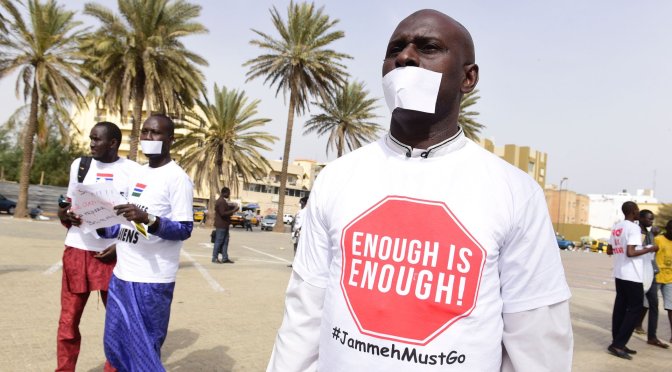
Six women charged as Gambian authorities crack down on growing dissent
  • The six were among at least 25 arrested in Banjul for protesting the prosecution of some 45 members of the United Democratic Party (UDP).
  • As demonstrations have continued calling for electoral reforms, protests increased following the death of UDP leader Solo Sandeng in police custody.
  • Public demonstration is rare in Gambia, where President Yahya Jammeh has taken a zero tolerance approach to dissent since taking power in 1994.

Read more:
Gambia charges six women for protesting trial of opposition figures” (Reuters)
Fifty-five Gambia UDP opposition members arrested in government crackdown, says party executive” (Radio France Internationale)
Protests signal serious challenge to Gambia’s ‘billion-year’ president” (Global Voices via The Guardian)

(Image Credit: SEYLLOU/AFP/Getty Images, via The Guardian)

Guinea Research | Women & Girls

Female Genital Mutilation in Guinea

Despite political and social efforts to eliminate the practice, female genital mutilation (FGM) has continued unabated in Guinea. The West African country has actually seen support for the ritual increase in the last couple of decades, and the trans-ethnic prevalence of the procedure has made FGM rates in the country one of the highest in the world. The UN recently released a report on the current state of FGM in Guinea and the cultural difficulties in ending the practice, including anti-Western sentiment, social norms, and religious traditions.

96% (2005) vs. 97% (2012)

Percentage of Guinean women aged 15-49 subjected to FGM

96.8% (urban) vs. 97% (rural)

Percentage of women subjected to FGM by area of residence

92% (low-income) vs. 68% (higher-income)

Percentage of women subjected to FGM by socioeconomic status

69% (currently aged 20-24) vs. 61% (currently aged 45-49)

Percentage of women cut prior to the age of 10 (2012)

65% (1999) vs. 76% (2012)

Percentage of Guinean women who support FGM

Read:
Rapport sur les droits humains et la pratique des mutilations génitales féminines/excision en Guinée (UN Human Rights report, in French)
UN report reveals increasing incidents of female genital mutilation in Guinea, including on infants” (UN News Service)

Additional:
Fact sheet: Female genital mutilation (World Health Organization)

South Africa News | Youth

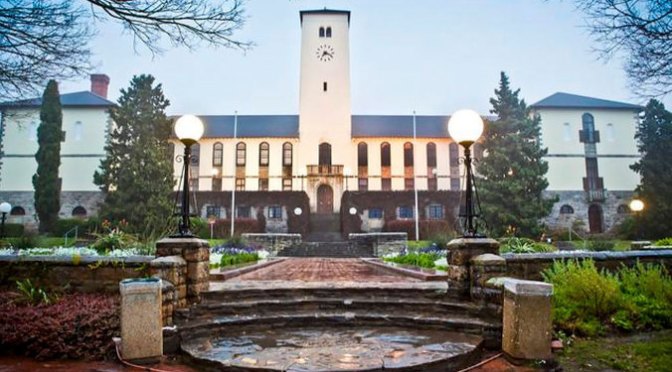
Hundreds of protesters clash with police at campus rape protests in southeast South Africa
  • Police used rubber bullets, stun guns, and pepper spray to disperse hundreds of protesters at Rhodes University in Grahamstown.
  • The protests erupted after the names of 11 alleged perpetrators of sexual violence were circulated on campus and via social media.
  • Demonstrators disrupted lectures and organized the #RUReferenceList and #Chapter212 campaigns to call for a reform of the campus sexual assault policies and trauma services, leading to an indefinite shutdown of academic activity.

Read more:
Protesters demand reform following release of #RUReferenceList” (Mail & Guardian)
South Africa police fire rubber bullets to disperse protesters at Rhodes University” (Reuters)
Academic activities disrupted at Rhodes University” (SABC News)

(Image Credit: Sophie Smith/Mail & Guardian)

Kenya Feature | Mental Illness

The Struggle to Treat Mental Illness in Kenya

Healthcare in Kenya has struggled to reach the portion of the country’s population afflicted with mental illness, particularly those in rural communities. With around one psychiatrist for every 500,000 people in the country, families struggle to find professional support services, and services that do exist are overtaxed and underresourced. Rather than seek medical help, religiously devout communities often turn to faith healers to treat what are commonly accepted as spiritual rather than medical diseases.

People with mental illness find their conditions compounded by poverty and diseases that go unidentified and untreated, facing significant HIV infection rates and vulnerability. Recent efforts by Kenya-based mental health advocacy organizations and foreign investments in the country’s mental health services have created hope for broader treatment and enfranchisement of the community in Kenya, which, like many developing countries, shoulders some of the highest mental health burdens in the world.

Read more:
The taboo of mental illness in Kenya” (Al Jazeera)
Mental Health Care Still a Challenge in Rural Kenya” (Voice of America)
11mn Kenyans suffer mental disorder – WHO” (Capital News)
Double-edged stigma for people with mental illness and HIV” (Key Correspondents)
Kenya benefits from $6.1 million fund for mental health” (Standard Digital)
Fighting the ‘funk:’ How one Kenyan battles her mental health problems by helping others” (Public Radio International)

Resources:
Africa Mental Health Foundation

(Image Credit: Osaman Mohamed Osaman/Al Jazeera)

Portugal & Angola News | Activists & Dissidents

Protests over jailing of youth activists in Angola spread to Portugal
  • Advocates in Lisbon have expressed dismay that the Portuguese government has so far refused to condemn the jailing of 17 youth activists in its former colony.
  • Angolan president José Eduardo dos Santos warned Portugal against stepping into what he considers to be an Angolan domestic matter.
  • Demonstrations in Lisbon castigated the conviction of the book-club activists as well as Angolan businessmen’s investment in Portugal’s news and telecommunications industries.

Read more:
Anger as Lisbon fails to condemn jailing of Angola book club dissidents” (The Guardian)
Tensions high after Angolan activists sentenced in ‘show trial’” (The Observers)

(Image Credit: Joao Relvas/EPA, via The Guardian)

Zimbabwe News | Black & White

Zimbabwe looks to black farmers to provide reparations to displaced white farmers
  • As the Zimbabwean government struggles to keep its economy afloat, it has toyed with shifting the burden of reparation to black farmers, who lease land from the government, through a compensation fund created through their rent payments.
  • White farmers were displaced as a part of a contentious indigenization program that saw massive land redistribution beginning in 2000, promoted as a corrective to the expropriation of land from black families under colonialism.
  • More than 6,000 farms remain for reparation assessment, with only 240 white farmers having begun to receive payment.

Read more:
We can’t pay: Zimbabwe farmers resist compensating evicted white landowners” (Reuters)
Zimbabwe May Ask Black Farmers to Help Repay Ousted Whites” (Bloomberg)
Zimbabwe begins talks to compensate evicted white farmers” (AfricaNews)

(Image Credit: via AfricaNews)

Zimbabwe News | Black, White & Foreigners

Deadline for Zimbabwe’s controversial corporate indigenization plan passes
  • President Robert Mugabe has pushed a contentious plan to have all companies operating in Zimbabwe—including major multinational corporations—comply with a 2008 law to transfer majority shares to black Zimbabweans to “indigenize” their local firms.
  • The plan was conceived as a corrective to colonial-era economic exclusion and is a follow-up to the ongoing land reform program that has transferred farm ownership from white to black Zimbabweans.
  • It is unclear how many companies, faced with the revocation of their operating licenses, have complied to date, and many concerned that the program discourages foreign direct investment.

Read more:
Zimbabwe deadline for firms to be black-owned passes” (BBC)
Zimbabwe says foreign banks, miners fail to comply on selling stakes to locals” (Reuters)
Zimbabwe: Diamond firms comply with indigenization law” (Deutsche Welle)

Cameroon Feature | Women & Children

The Weaponized Girls of Boko Haram

As Boko Haram’s successes in northeastern Nigeria have been rolled back, the extremist group’s attentions have turned elsewhere in the region, including neighboring Cameroon. Rare in other global terrorist activity, female suicide bombers between 14 and 24 years of age have formed the lion’s share of suicide attacks in Cameroon, comprising some 80% of incidents. Female suicide bombers have also been deployed in Nigeria, most recently in Maiduguri. Reuters investigates the pipeline from abduction to sexual slavery to suicide attacks that women captured by Boko Haram have found themselves caught up in.

Read:
Weakened Boko Haram sends girl bombers against Cameroon civilians” (Reuters)

Additional:
Video: The war against Boko Haram’s suicide bombers in Cameroon” (France24)
Nigeria mosque hit by Maiduguri suicide bombers” (BBC)

(Image Credit: Joe Penney/Reuters)

Ethiopia News | Oromo

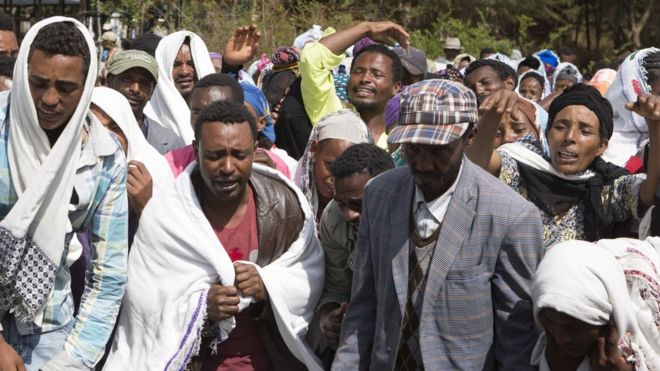
Oromo Ethiopians clash with government over land, language rights
  • Members of the ethnic community have been protesting in a cycle of dissent and retribution since November, with activists reporting as many as 200 dead despite largely peaceful demonstrations.
  • The Oromo have clashed with the government over land rights as they have found themselves pushed off their land by ongoing urban development driven by the country’s economic boom.
  • Language rights have been a particular flashpoint, with the government’s refusal to officially recognize Oromo, the country’s most widely spoken native language, leading to Amharic-only instruction in schools.

Read more:
Video: Anger among Ethiopia’s Oromo ethnic group boils over” (France 24)
What do Oromo protests mean for Ethiopian unity?” (BBC)
Ethiopian students demand end to police crackdowns in rare protest” (Reuters)

(Image Credit: via BBC)