Tag Archives: Women

Female politicians in Tanzania set their eyesights on country’s top political seats
  • The Tanzania Women Cross Party works to train women in political skills and campaign strategies ahead of October’s elections to avoid overlook and sexual manipulation by political party leadership.
  • This election cycle is seeing women step forward for the presidency for the first time, including former UN Deputy Secretary-General Asha-Rose Migiro.
  • Tanzania has a 30% parliamentary quota in place for women, but because it sets aside seats to be filled by party nominations after the election, women are now pushing to be candidates for direct election by constituents.

“There’s no democracy in the political parties. Female candidates are often ignored in the nomination process and that’s why we need to train them to reverse that unfair trend.”

More on this story at the Thomson Reuters Foundation.

Qatar Airways under fire for gender-discriminatory policies, including pregnancy discrimination and freedom to marry
  • The UN’s International Labor Organization has ruled that the state-funded airliner discriminated against women through contracts statements indicating it could terminate their contract should they become pregnant.
  • Employees also had to seek permission from the company for a change in marital status and could only be accompanied to the airport by a male if he were her father, brother, or husband.
  • Comprising 80% of the airline’s cabin crew (of which 90% are foreign workers), women remain vulnerable to discriminatory employment practices carried out under threat of deportation.

“This decision is a game-changer. …A year ago we put Qatar and Qatar Airways in the dock and today it has been proved that we were right to do so. The changes made to the rules for staff failed to fool the ILO. Now the airline must make them for real. It’s time to make Qatar Airways free from fear.”

More on this story at The Guardian.

(Image Credit: Eric Piermont/AFP/Getty Images, via The Guardian)

The U.N.’s safe cities initiative integrates women’s safety into development projects globally
  • The cross-sector “Safe Cities Global Initiative” aims to stem sexual violence and harassment of women in urban spaces through infrastructure and program development.
  • In Delhi, mobile app Safetipin crowdsources safety reviews of public spaces and integrates GPS for personal tracking and security.
  • Projects have sprung up in other cities as well, including Cairo, Port Moresby in Papua New Guinea, and Kigali in Rwanda.

“Unsafe public spaces limit women’s and girl’s life choices. This daily reality limits their freedom to participate in education, work, recreation, and in political life.”

More on this story at the Thomson Reuters Foundation.
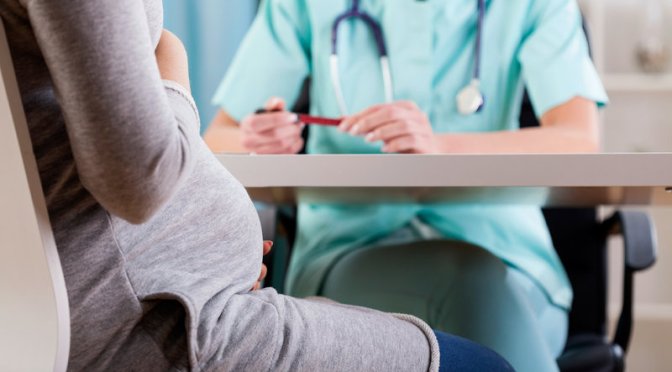
U.S. healthcare plans’ failure to ensure full coverage of maternity care leaves many women and families bearing full brunt of hospitalization costs
  • While the Affordable Care Act declares maternity and newborn care essential health benefits, employer plans continue to sidestep labor and newborn costs, which accounts for over 80% of pregnancy and childbirth costs.
  • Because the ACA allows for children to remain on their parents’ plans until the age of 26, the government has clarified that dependent children can have their prenatal care covered; labor and delivery, however, remain vulnerable.
  • There is an ongoing suit filed through the Health and Human Services’ Office of Civil Rights alleging sex discrimination in employer healthcare coverage.

“Pregnancy discrimination is per se sex discrimination.”

More on this story at NPR.

(Image Credit: iStockphoto, via NPR)

Advocates and sports federation officials express unease at Iran’s equivocation on easing of restrictions on women’s attendance at sports matches
  • With Tehran set to host a world league volleyball match, the FIVB, the sport’s international federation, says it is committed to ensuring open, inclusive participation globally, though it has indicated no countermeasures should the Iranian government refuse.
  • Last week, Iran’s VP for women and family affairs indicated that women’s attendance would be limited to family members of athletes in a select set of sports, considered by many to be capitulation to the country’s vocal conservatives.
  • British-Iranian Ghoncheh Ghavami was jailed for nearly five months for trying to attend a volleyball match, leading the FIVB to state that Iran would not be eligible to hold international championships until the ban was lifted.

“The situation has got worse in recent years and hardliners have become more extreme on this matter but on the positive side, more people are aware of our cause now than ever before.”

More on this story at The Guardian.

(Image Credit: Alexander Demianchuk/Reuters, via The Guardian)

The African Union works to tackle continent-wide child marriage problem at its latest summit in Johannesburg
  • In sub-Saharan Africa, two in five girls are married off before adulthood, with the highest rate in Niger, where three in four are.
  • The AU plan requires the criminalization of child marriage and the development of prevention strategies.
  • The practice has held the continent back from reaching six of the eight Millennium Development Goals, including education and public health targets.

“It’s unacceptable that a continent as rich as Africa – with oil and diamonds, and with coltan that is found in everyone’s phone – can leave its people so poor that they feel they have no choice but to marry off their daughters.”

More on this story at Reuters.

Former Al Jazeera America executive files suit against the media organization and its CEO for maintaining a racist and sexist work environment
  • Shannon High-Bassalik, former VP of Programming and Communications, alleges the company favored Arab and male employees, creating a hostile work environment for non-Arab women and engaging in editorial interference that diminished the objectivity of its reporting.
  • The suit comes in the wake of similar legal action taken by another employee and the resignations of three other female executives, who also cited a discriminatory work environment as the cause of their departure.
  • Al Jazeera has responded, claiming High-Bassalik did not introduce her allegations during her pre-termination external performance review.

More on this story at CNN Money.

Ethnic minority women from Thailand’s mountains find difficulties in adjustment and opportunity in the country’s urban centers
  • Government and international efforts to crackdown on deforestation, rebel territories, and drug production have driven many of Thailand’s “hill people” into the cities.
  • There, women in particular often find labor only in fruit and flower preparation or selling embroidery, which provide uneven wages at or below subsistence levels and renders women vulnerable to trafficking.
  • With little money for services, community members often rely on religious institutions for service provisions including identity card acquisition assistance and schooling for children.

“It’s better to live in the city. We don’t have land to farm in the mountains. If we had land in the mountains, I would prefer to live there.”

More on this story at Equal Times.

(Image Credit: Konstantina Vasileva, via Equal Times)

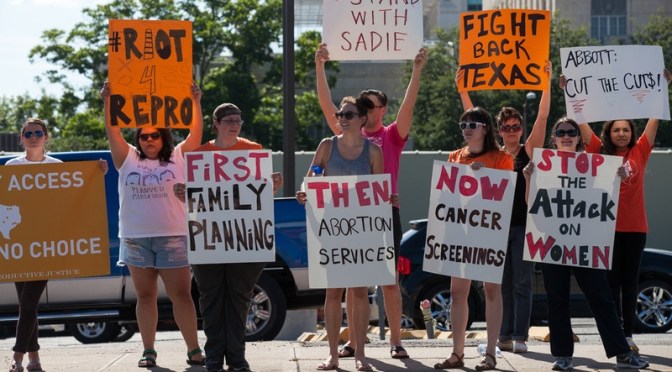
Federal appeals court upholds Texas restrictions on abortion providers, worrying reproductive rights advocates
  • The U.S. 5th Court of Appeals has ruled that the requirement that clinics meet ambulatory surgical center standards (including infrastructural requirements) does not impose undue burden on such clinics.
  • With only a handful of clinics meeting those standards, many clinics face closure unless they are able to make the costly upgrades.
  • In its lawsuit against the state, the Center for Reproductive Rights asked for exemptions for two clinics from the requirement that doctors have admitting privileges at a hospital within 30 miles from the clinic, which was granted to one of the two.

“The 5th Circuit has once again put their political ideology above the law and failed to recognize that HB 2 is an undue burden on Texans’ access to safe, legal and timely abortion. … Your zip code should not determine your health care.”

More on this story at the Texas Tribune.

(Image Credit: Todd Wiseman/Texas Tribune)

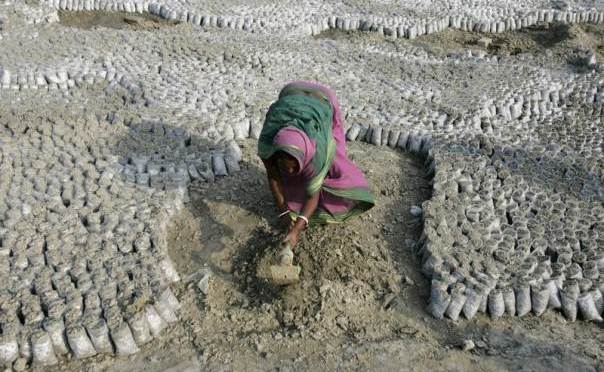
Sri Lankan mangrove preservation efforts turn to local women to lead the work.
  • The country’s new mangrove protection scheme relies on women to tend the trees, which are vital to the area’s ecosystem and protect against flooding and erosion.
  • Sudeesa, an environmental protection organization, provides the women with financial assistance (from $50 to $2,000 each) and training.
  • The program hopes to establish 15,000 community groups, providing 15,000 with job training and micro-loans.

“Now we know – and from us, our husbands and our community also have become aware.”

More on this story at the Thomson Reuters Foundation.

(Image Credit: REUTERS/Parth Sanyal)

Turkey’s parliamentary elections sees AKP lose majority, pro-minority Kurdish HDP win representation for the first time, and numerous victories for minority candidates.
  • While the AKP won the largest parliamentary share with 41%, HDP crossed the threshold of representation with around 13% of the vote, winning 80 seats in the parliament.
  • While the HDP has largely been defined by the Kurds it represents, it also opened up to all those marginalized by the party in power, including women, religious minorities, LGBT citizens, and other ethnic minorities.
  • The new parliament will see a record 96 women and its first Yazidi and Roma MPs, and the HDP also put forth the first openly gay candidate for office.
  • The momentum for the HDP grew out of 2013’s Gezi Park demonstrations, where protesters rallied against the government’s perceived encroachment on the country’s secularism.

“Turks and Kurds are well ahead of the political leaders of the country, and they have a lot of expectations of the democratic process that they have well bought into…This is a very impressive outcome. It shows that Turkey is going through an important political maturing process, and that an increasing number of people are interested in a pluralistic society.”

More on this story at The Guardian.

(Image Credit: Bulent Kilic/AFP/Getty Images, via The Guardian)

U.S. family detention centers face renewed scrutiny following attempted suicide of 19-year-old immigrant mother.
  • The young Honduran had been held with her four-year-old son in the Karnes detention camp in Texas for eight months.
  • She was detained for attempting to enter the country for a second time without proper immigration papers, the result of a crackdown following last summer’s dramatic increase in border-crossings by families and unaccompanied minors.
  • The policy has subjected families (including young children) to up to a year of detention, leading to extreme stress and suicide attempts.

“I don’t feel I can live going back to my country. But you have treated us like an animal, you look down on us.”

More on this story at The Guardian.

Officials report 8 of the 10 alleged attackers of Malala Yousafzai have been freed.
  • A Regional Police Officer and a spokesperson for the Pakistani High Commission in London support claims reported in the Daily Mirror, indicating that only two of the convicted attackers will now be serving life sentences because of lack of evidence against
  • The abrupt turnaround has drawn suspicion that the initial reports of ten convictions were an attempt to divert media attention away from the results of the case.
  • The trial was closed to the public, allowing for claims of misreporting of the judge’s actual ruling back in April.

More on this story at The Express Tribune.

(Image Credit: AFP, via The Express Tribune)

News

Colombia passes new hate crime law building in tougher punishments for gender-based violence against women.
  • The bill–passed with 104-3 in favor–targets violence of a physical, psychological, or sexual nature.
  • Those convicted could now face up to 50 years in jail.
  • The bill was named for Rosa Elvira Cely, a woman whose brutal attack, rape, and murder in a Bogota park spurred mass protests in 2012.

Presidential adviser for women’s equality Martha Ordonez said that in Colombia a woman was the victim of a violent act on average every 13 minutes, and that every four days one was killed by her partner.

More on this story at BBC.

(Image Credit: Getty Images, via BBC)

News

Masaai women in Kenya find opportunity for themselves and their villages through the solar energy industry.
  • The Women and Entrepreneurship in Renewable Energy Project (WEREP) trains local women to install solar energy products.
  • Communities benefit from easier electricity access, decreases in energy costs, and environmental and livestock protection in a country that sees 68% of its population disconnected from electrical grids.
  • With the market penetration of solar energy having risen from 0 to 20% since 2006, clean energy advocates are hopeful that these women will help market and spread the products throughout their communities.

“Our community customs do not allow women to own any property…But now women here own the solar technology, and it is something we are very happy about.”

More on this story at Reuters.