Tag Archives: Economics

Armenia News | Syrian Refugees

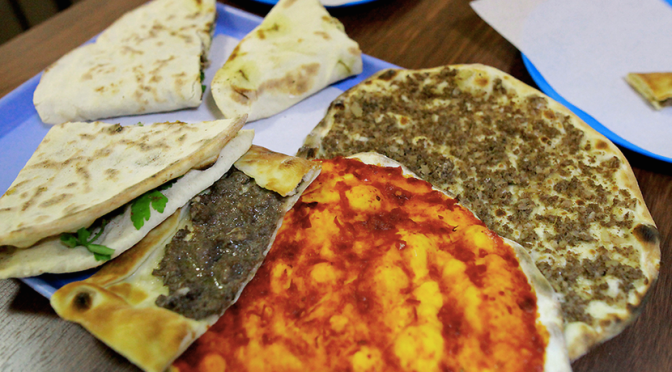
A Spice of Home in Yerevan

Despite facing economic and cultural difficulties in integrating into their new home, Syrian refugees in Yerevan have injected new life to the culinary scene of the Armenian capital. Many are ethnically Armenian but have drifted linguistically and culturally from the Armenians of the Caucasus, providing a cultural silver-lining to the tragedy-driven reunion. EurasiaNet reports on refugees’ efforts to acclimate and the unique economic opportunities Yerevan’s restaurant scene offers.

Read more:
Syrian Refugees’ Cuisine Helps Spice Up Armenia” (EurasiaNet)

Additional reading:
Syrians in Armenia: Not just another refugee story” (Al Jazeera)
Aleppo Market: Syrian Armenians bring ‘new flavor’ to Yerevan trade” (ArmeniaNow)

(Image Credit: Emma Grigoryan/EurasiaNet)

South Africa Feature | Race

The Festering Racial Wounds of South Africa

As university protests and social media rows have continued to erupt across the South African landscape, the legacy of colonialism and apartheid has continued to create sharp tensions among black and white South Africans. Black South Africans continue to trail their white counterparts significantly across several key indicators—including employment, executive representation, and living standards—while white South Africans have lashed out over being held accountable for previous generations’ atrocities. The New York Times examines some of the recent clashes.

Read more:
Raw Tensions Over Race Fester in South Africa” (The New York Times)

Global Research | Women

Global Companies Profit from Women in Leadership

As global public and private sectors alike search for ways to connect the social value of workplace diversity to companies’ economic value, a study by the Washington D.C.–based Peterson Institute for International Economics has found that increased gender diversity in corporate leadership benefits businesses’ bottom line. The analysis involved more than 20,000 firms from 91 countries.

15% increase

Profitability change associated with an increase in share of women in leadership from zero to 30%

40% of board seats / 20% of executive positions

Women’s representation in corporate leadership in Norway, the highest from countries reported

12% of board seats / 16% of executive positions

Women’s representation in corporate leadership in the U.S., near the middle of the pack

Parental leave policies

Stronger paternity (versus maternity) leave policies correlate with more female leadership

Read more:
Is Gender Diversity Profitable? Evidence from a Global Survey” (Marcus Noland, Tyler Moran, Barbara Kotschwar)
Women in Company Leadership Tied to Stronger Profits, Study Says” (The New York Times)

Additional reading:
Women and Leadership (Pew Research Center)

U.K. Research | Ethnic Minorities

The U.K.’s Minority/White Wage Gap

The Trades Union Council (TUC), a federation of trade unions in England and Wales, released a report indicating significant disparities in white and minority worker compensation in the U.K. Degreed black workers in particular face acute inequity relative to similarly qualified white peers in the labor market. The findings come as PM David Cameron has publicly committed to tackling systemic racial inequalities.

12.8% (black) / 5.6% (black and other ethnic minorities)

Average pay gap for all workers

23.1% (black) / 10.3% (black and other ethnic minorities)

Average pay gap for degreed workers

14.3% (black) / 17.1% (black and other ethnic minorities)

Average pay gap for workers with A-levels (a secondary-level graduate certification)

11.4% (black) / 13.6% (black and other ethnic minorities)

Average pay gap for workers with GCSEs (a secondary-level graduate certification)

Read more:
Black workers with degrees earn a quarter less than white counterparts, finds TUC” (The Trades Union Council)
Black graduates in Wales are being paid 23% less less than their white colleagues” (WalesOnline)

Brazil News | Children

Brazil sheds 43% of child workers over last decade
  • Brazil’s number of child workers decreased to 2.8 million in 2014 from 5 million in 2004.
  • The demographics of child workers also shifted from predominantly uneducated children from low-income families to teenagers from economically stable families.
  • The Brazilian constitution bans children under the age of 13 from working, while youth aged 14 and 15 can work under apprenticeship programs and those aged 16 and older can have formal day jobs.

Read more:
Brazil reduces child labor by 43 percent in decade” (Xinhua)
2014 Findings on the Worst Forms of Child Labor: Brazil (U.S. Department of Labor)
Brazil halves the percentage of children working” (The Guardian, 2010)

Cuba Feature | Afro-Cubans & Women

Those Whom Revolution Left Behind

As Cuba’s economy continues to experience a significant boost from normalized relations with the U.S., many black Cubans and women have yet to see the benefits. Structural inequality and ongoing discrimination have shuttled the disadvantaged into an underclass of limited opportunity despite persistent and high-profile government attempts to eradicate the problem. While a significant number of white Cubans were able to flee abroad to the U.S. and send remittances back to their families, many Afro-Cubans were tied to what opportunity they could get in low-paying government jobs. Women have found themselves disproportionately shouldering domestic tasks, disappearing jobs, and lack of social capital relative to men. Boston ReviewThe Root, and the Thomson Reuters Foundation examine how political, social, and economic developments have re-marginalized Cuba’s black minority and women over the last two decades.

“Prejudice never disappeared. It was simply concealed under the table. And silence allowed all the problems to grow, under the table.”

Read more:
Cuba After the Thaw” (Boston Review)
One-on-One With Afro-Cubans: What It Means to Be Black in Cuba” (The Root)
In Cuba, racial inequality deepens with tourism boom” (Thomson Reuters Foundation)

(Image Credit: Alexandre Meneghini/Reuters)

China Feature | The Homeless

The “McRefugees” of China

“If you don’t have money, you can barely sleep.”

China’s homeless have begun turning one of the most recognizable beacons of global American corporatism for a bit of shut-eye: McDonald’s. With more than a thousand of the restaurants in mainland China open 24 hours a day, it has become a haven for the homeless in a country that severely restricts shelter residency. The New York Times profiles a few of those who make the nightly trek to the golden arches.

Read more:
China’s Homeless Find Shelter Under McDonald’s Golden Arches” (The New York Times)

Additional reading:
1,400 homeless sleeping on Hong Kong’s streets, double government estimates” (South China Morning Post)
Down and Out in China” (Radio Free Asia)

(Image Credit: Lam Yik Fei/The New York Times)

Turkey News | LGBT

Court fines Turkey’s football governing body for firing gay referee
  • Istanbul’s 20th Court for Serious Crimes fined the Turkish Football Federation 23,000 Turkish lira ($7,900) for revoking the refereeing license of Halil İbrahim Dinçdağ, the country’s first openly gay referee, in 2009.
  • Dinçdağ’s release came after the TFF declared him unfit for military service due to the military’s exemption of gay men from military service, with which referees are required to be in good standing.
  • Dinçdağ’s lawyer plans to appeal the ruling, which fell considerably short of the 110,000 lira originally demanded.

Read more:
Turkey’s top football body fined over dismissal of gay referee” (Hürriyet News Daily)
Turkish Football Federation fined for sacking gay referee” (BBC)
Turkish FA ordered to compensate referee who lost licence for being gay” (AFP, via the Guardian)

(Image Credit: DHA Photo, via Hürriyet News Daily)

UK News | Racial Minorities & Women

British PM announces name-blind admissions and hiring measures, new gender pay equity policies
  • PM David Cameron announced that the UK’s University and College Admissions Service (UCAS) will switch to name-blind applicant evaluation in 2017 to reduce racial bias in college admissions.
  • Numerous studies have indicated that culturally inflected differences in names significantly impact job applicants’ likelihood of being hired, with those with names traditionally from black and other ethnic minority communities receiving fewer interviews.
  • Cameron also outlined new policies to address the gender pay gap, including forcing private companies to publish bonuses, requiring large public sector organizations to publish pay data, and pushing for the elimination of all-male FTSE-350 boards.

Read more:
Ucas to enforce ‘name-blind’ applications to tackle racial bias” (The Guardian)
The perfect name for a job application, based on biases” (BBC)

(Image Credit: David Cheskin/PA, via the Guardian)

Canada News | Indigenous

First Nations leaders take on Big Oil over massive proposed pipeline in Canada
  • First Nations leaders have joined environmental activists in opposing the proposed Northern Gateway, a 731-mile tar sands pipeline stretching from central Alberta to the British Columbian coast.
  • The pipeline has become a political battleground as PM Stephen Harper has vowed to make Canada an “energy superpower,” while Alberta’s premier has been enlisted by pipeline company Enbridge to negotiate with First Nations leaders.
  • Eight First Nations have taken the issue to court in what became the longest case heard before Canada’s federal court of appeals, claiming a faulty approval process, negligent environmental impact studies, and encroachment on First Nations’ rights.

Read more:
Indigenous Canadians take leading role in battle against tar sands pipeline” (The Guardian)
First Nations’ challenges of Northern Gateway pipeline to be heard in court” (The Globe and Mail)
Northern Gateway pipeline battle could set tone for future government, aboriginal relations” (The Canadian Press via The Vancouver Sun)

(Image Credit: Jonathan Hayward/The Canadian Press, via The Vancouver Sun)

Israel News | Arabs

Several Israeli cities effectively bar Arab laborers from their jobs in schools as violence in the country grows
  • Several municipalities including Tel Aviv, Rehovot, Hod Hasharon, and Modiin-Maccabim-Reut prohibited school staff including maintenance workers, cleaners, and construction workers (most of whom are Arab) from going to work during school hours.
  • To date, 41 Palestinians and seven Israelis have been killed in recent weeks as cycles of revenge killings, protests, and state-driven violence continue.
  • While Arab-Israeli politicians and NGOs denounced the restrictions as illegal and racist, the Interior Ministry called for respect and equality without reversing the restrictions.

Read more:
Four Israeli cities, citing security, ban Arab workers from schools” (Reuters)
Israeli Towns Move to Ban Arab Workers From Schools” (Haaretz)

(Image Credit: Moti Milrod/Haaretz)

Saint Lucia News | Saint Lucians

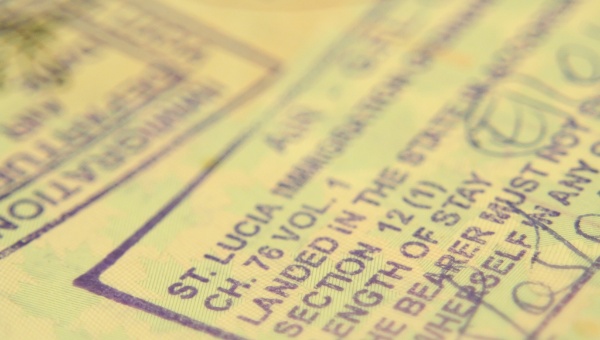
Saint Lucia prepares to launch new economic citizenship program
  • Saint Lucia’s Citizenship by Investment Programme is an economic initiative that will allow foreign investors to purchase Saint Lucian citizenship through direct investment in the country.
  • Set to launch January 1, 2016, Saint Lucian officials anticipate investment in sectors like tourism in exchange for citizenship in the Eastern Caribbean nation.
  • The country will be the fifth Caribbean nation to implement such a program, following Antigua and Barbuda, St. Kitts and Nevis, Grenada, and Dominica.

Read more:
Saint Lucia Sets a Date for the Sale of Citizenship to Investors” (teleSUR English)
Senate gives green light for economic citizenship programme in St. Lucia” (Caribbean360)
Economic Citizenship Program forthcoming for Saint Lucia” (Invest Saint Lucia)

(Image Credit: @madmack Flickr photo, via teleSUR)

Netherlands News | Women & Youth

European court rules brothel owners in Amsterdam must share language with sex workers
  • The European Court of Justice ruling sided with the city of Amsterdam, which blocked the application of a brothel owner to run a Red Light District window rental space because the owner could not communicate in the language of some of the workers.
  • The business owner had his business plan denied because he rented to Hungarian and Bulgarian immigrant workers who did not speak Dutch and whose languages the owner did not speak.
  • The court cited the safety of women, human trafficking vulnerability, the prevention of sex work by minors, and pimping deterrence as justifications.

Read more:
Court: Amsterdam brothel owners must speak prostitutes’ language” (The NL Times)
Double Dutch barred in Amsterdam brothels” (AFP, via Yahoo! News)

(Image Credit: Wikimedia Commons/LeDeuxAlpe, via The NL Times)

Jamaica News | Jamaicans

Jamaican leaders find no traction on reparations issue with U.K. PM
  • British PM David Cameron rejected calls from Jamaican PM Portia Simpson Miller and other Caribbean leaders for reparations and an unconditional apology during his recent visit to Jamaica, the first by a British PM in 14 years.
  • Caribbean leaders have chronicled the long-term economic damages that the lack of reparations following Britain’s 1833 emancipation of the enslaved has inflicted on their national economies.
  • The call for reparations in the Caribbean has been particularly strong in the region because of the significant financial compensation offered to slave owners at the time of emancipation.

Read more:
David Cameron rules out slavery reparation during Jamaica visit” (BBC)
Apologise for slavery! – Reparations committee wants David Cameron to say sorry for wrongs of UK past” (The Gleaner)
David Cameron Grapples With Issue of Slavery Reparations in Jamaica” (The New York Times)
Britain, Jamaica, and the Looming Battle Over Reparations” (The Atlantic)

(Image Credit: Francois Lenoir/Reuters, via The Atlantic)

Australia News | Indigenous Australian

Indigenous lawyer earns Australia’s most prestigious legal title
  • Having just been announced among the new class of silks, Australian barrister Anthony McAvoy is believed to be the only Indigenous lawyer with the title in a country with an estimated 15 Indigenous barristers.
  • Taking silk is a merit-driven process allowing lawyers to add the initials SC (Senior Counsel) or QC (Queen’s Counsel, a Commonwealth title) after their name, designating senior authority.
  • One of 26 who were awarded the status in New South Wales, McAvoy specializes in native title rights.

“For many years there were hardly any practitioners coming through and unless you have practised as a solicitor, making it at the Bar is very difficult. …Without the number of law graduates coming into the practice of law, the numbers would always be low.”

Read the full story at The Australian.