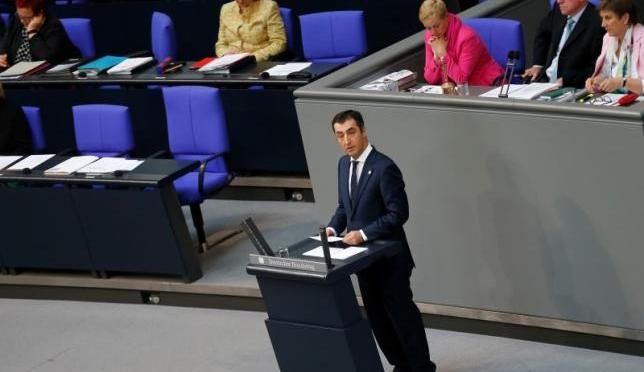
Turkish-German lawmakers receive death threats following Armenian Genocide resolution
Germany’s 11 MPs of Turkish descent received the threats following the passage of a resolution to recognize the 1915 mass killings of Armenians in Turkey as genocide.
Targets included Cem Oezdemir, the leader of Germany’s Greens Party who had pushed for the resolution.
Officials have been advised against travel to Turkey after Turkish President Tayyip Erdogan publicly accused them of betraying their Turkish heritage.
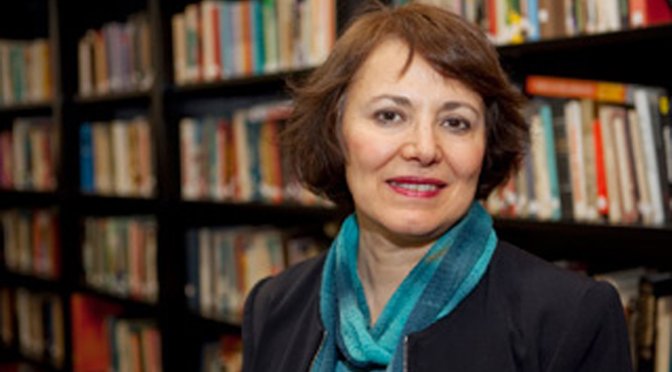
Canadian-Iranian arrested in Iran as detentions of dual citizens continue
Homa Hoodfar, an anthropology professor at Concordia University in Montreal, was arrested by the Islamic Revolutionary Guard Corps in Tehran.
Her family indicated that she had been detained and transferred to Iran’s notorious Evin prison on unspecified charges following extended interrogation.
Iran, which doesn’t recognize dual citizenship, has imprisoned a growing number of dual nationals traveling from abroad in recent years under allegations of espionage and foreign collaboration.
The Philippine Congress recently confirmed Rodrigo Duterte as the 16th president of the Philippines, ushering in a new government fueled by populist disaffection and characterized by uncertainty. A lightning rod of controversy, the tough-talking former mayor of Davao City in the south of the country has supported vigilante justice in crime-riddled cities (including against those suffering from addiction), the reinstatement of capital punishment, and paternalistic policies on smoking, alcohol consumption, and youth curfews. His unfiltered style has been likened to U.S. Republican presidential nominee Donald Trump for both his casual misogyny and penchant for offensive jokes.
But Duterte, the Philippines’ oldest president, has also expressed support for minority representation and protections, backed by a record of gender and minority inclusiveness during his time as mayor. His election has already been celebrated for breaking political regionalism in the country: Duterte has become the first president from the historically marginalized island of Mindanao. Now having to scale his leadership from the local to the national level, he inherits a range of difficult issues impacting historically disadvantaged communities, including land and environmental rights for indigenous peoples, reproductive healthcare for women, and political autonomy for Muslim groups in the south.
With international observers and diplomats concerned by Duterte’s unpredictability, his record with and plans for vulnerable communities have been scrutinized as political analysts attempt to predict what the next era of Philippine politics will look like under his leadership. Here is an overview of recent local and international commentary on the impact of Duterte’s election:
UAE acquits Libyan-Americans and Libyan-Canadian of militancy charges
Two Libyan-Americans and a Libyan-Canadian have been detained in the country since their 2014 arrests carried out in the wake of the passage of the UAE’s Anti-Terrorism Law, initially accused of supporting Libyan terrorist groups.
The men had been held in secret for months, with reports indicating torture and deteriorating health during their more than 500 days of detention without a trial.
The three businessmen had reportedly traveled in and out of the UAE without incident for decades, but the UAE’s zero-tolerance policy towards extremism has made many with even tenuous connections to countries with designated terrorist groups vulnerable.
Iranian pilgrims denied travel rights as diplomatic row between Iran and Saudi Arabia continues
Iran’s Hajj and Pilgrimage Organization announced that Iranians would not be allowed to make the annual trek to Mecca in Saudi Arabia.
Relations between the regional rivals have deteriorated in the wake of Sunni-majority Saudi Arabia’s execution of a prominent Shiite cleric, which led to violent protests at the Saudi embassy in Tehran and Riyadh’s severance of diplomatic ties.
In September 2015, hundreds of Iranians were among the thousands killed in a stampede in Mecca, and the continued absence of an official Saudi report has exacerbated tensions between the two countries.
Romanian groups work to block same-sex unions in the country
Anti-LGBT activists undertook a signature campaign to push for a constitutional amendment outlawing same-sex unions.
The campaign was spurred by the Coalition for Family, a confederation backed by the Orthodox Church that claims to have amassed 3 million signatures in support of the amendment.
Current marriage law in Romania defines marriage as a union of “partners,” which conservative activists have attempted to have changed before in a failed 2013 campaign.
25 Years of Independence and Suppression in Eritrea
As it celebrates the 25th anniversary of the overthrow of Ethiopian rule, Eritrea continues to hemorrhage citizens under one-party, anti-democratic rule. Indefinite military conscription, mobility restrictions, and the absence of civil liberties have greatly diminished prospects for Eritreans, driving youth from the country in droves and into trans-Mediterranean trafficking networks in which thousands have died. Some estimates put the emigration rate at 5,000 people per month, second only to Syrians in contributing to the swelling of the Mediterranean migration crisis in 2015.
The Eritrean government has been particularly unfriendly to journalists and other writers, who have faced high insecurity following the 2001 roundup of independent newspaper editors in a push by the Eritrean president to crack down on public dissent. In the diaspora, Eritreans have found themselves involuntarily bound to the government as attempts to access documents and send remittances has subjected them to taxes international monitors liken to extortion. Amidst independence celebrations, both native and diasporan Eritreans continue to work to organize an effective opposition against the presidential regime and bring about a democratic renaissance for the country’s disenfranchised citizenry.
Argentina establishes special council as criticism of poor indigenous relations intensifies
Established by decree, the new council is designed to bring together indigenous and government leaders to tackle cultural and policy issues affecting indigenous communities.
Activists have longed called for integration into decision-making processes affecting their communities, including enforcement of constitutional land, language, judicial, and development rights.
A recent U.N. report called out the government’s record on land rights—including intimidation and judicial harassment—and called for increased indigenous representation in political and judicial bodies.
On May 24, 1991, Israel launched an aerial operation that lifted more than 14,000 Ethiopian Jews (also known as Beta Israel) out of war-ravaged Ethiopia to begin a new life in Israel. Although similar operations (Moses and Joshua) had been carried out before, Operation Solomon, a coordination of Israeli, American, and Ethiopian efforts, was distinctive in its scale. It set the record for the largest number of passengers on a single flight as 1,087 registered Ethiopians boarded a single El Al plane, fleeing the country before an anticipated coup.
Twenty-five years later, the number of Israelis of Ethiopian descent has grown to more than 100,000, including a growing Israel-native generation. Last summer, the community was thrust into the international spotlight after anti-racism protests erupted following police officers’ assault on an Israeli soldier of Ethiopian descent. Discrimination, poverty, and relatively low educational attainment rates have continued to plague many Ethiopian Jews in Israel, but ongoing advocacy is pushing for increased public recognition of the vulnerabilities the community faces and steps to redress inequality.
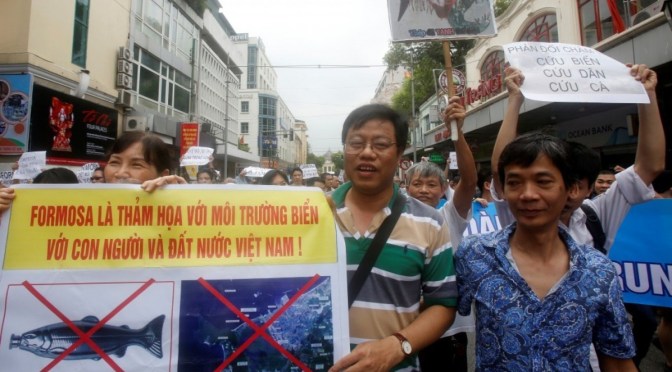
Political activists muzzled in Vietnam during visit by President Obama
Several activists reported having been detained or otherwise barred from meeting with U.S. President Barack Obama during his visit to Hanoi.
President Obama met with a group of civil society leaders and spoke to ongoing concerns over the suppression of free expression and assembly in the country.
International human rights groups estimate more than 100 political prisoners languish in Vietnamese prisons, while most of the more than 100 who attempted to run as independents in recent elections were excluded from the ballot.
More than 70 arrested in Myanmar after labor demonstration
Police reportedly detained 71 protesters and charged 51 after they attempted to march from their wood-processing factory in Sagaing State to Naypyitaw, the capital.
Protesters organized to call for organizing rights and the re-hiring of terminated factory workers.
Myanmar’s government has come under fire from rights groups for a proposal to retain junta-era restrictions on assembly and free speech, including the exclusion of non-citizens (including the Rohingya minority) from demonstration rights.
Seychelles overturns sodomy law in victory for LGBT rights
The Seychelles National Assembly voted in favor of abolishing a colonial-era law criminalizing sodomy, effectively legalizing same-sex relations in the archipelago nation.
Seychelles joins fellow African Union members São Tomé e Príncipe and Mozambique in recent pro-LGBT legal reform.
As in most countries around the world, the debate over decriminalization was dominated by religious concerns, with Catholics comprising 76% of the Seychellois population and Anglicans, the second largest religious community, comprising 6%.
The International Day Against Homophobia, Transphobia & Biphobia
Commemorating the day when homosexuality was de-pathologized by the World Health Organization in 1990, the 13th-annual International Day Against Homophobia, Transphobia & Biphobia (IDAHOT) stands as an occasion for global mobilization towards LGBT visibility and security. The day, like many global celebrations, is also one many governments choose to speak out on global human rights and minority security, announcing initiatives to support their LGBT citizens and international projects.
Even today, ongoing disagreements between nations over LGBT rights have prompted diplomatic rows and roadblocks to international cooperation, including the recent objection of 51 Muslim countries to the participation of LGBT groups in a U.N. AIDS forum in June. The push to extinguish homophobia, transphobia, and biphobia at all geographic levels remains important to the global mobility of LGBT people worldwide.
LGBT Nigerians have continued wrestling with conflicting legal messages, with the recent passage of the landmark HIV Anti-Discrimination Act doing little to undo the effects of a 2014 anti-homosexuality law.
The Gay and Lesbians Association of Zimbabwe (GALZ) organized events for IDAHOT in Bulawayo, focusing on mental health as ongoing social and healthcare difficulties plague the community.
Though homosexuality remains criminalized in Tunisia, activists have achieved increased visibility and pushed for legal reform amidst ongoing discrimination.
Israel reaffirmed its commitment to LGBT Israelis, announcing funding to support an emergency shelter for LGBT youth and a hostel for trans people who have recently undergone gender confirmation surgery.
Days before IDAHOT, activists staged a sit-in outside of a Beirut gendarmerie, protesting Lebanon‘s anti-homosexuality legal holdovers from French occupation. Similarly, the Lebanese Medical Association for Sexual Health (LebMASH) issued an appeal to the Lebanese government to decriminalize same-sex relations, arguing for recognition of homosexuality’s presence within the natural variation of human sexuality.
U.S. President Barack Obama released a statement of support as his administration lended its voice to a national debate over the bathroom rights of trans people.
Across Latin America, important gains in same-sex partnership and family rights and gender identity healthcare and legal protections have heartened LGBT Latin Americans, but the region continues to have some of the highest reported rates of violence against the LGBT community in the world.
LGBT organizations held cultural and political events throughout Argentina to highlight conditions facing the Argentine LGBT community, call for an anti-discrimination law, and press for federal recognition of the International Day Against Sexual Orientation and Gender Identity Discrimination, as the day is known.
Cuba celebrated the day fresh off Pride events in Havana, where Mariela Castro, daughter of President Raúl Castro, led a parade of thousands through the city streets.
As the country continues contentious battles including the push for marriage equality and erasure of “gay panic” legal defenses, rainbow flags and celebrations appeared across Australia, including over police stations in Canberra, in the streets of Brisbane, and in the senior-care facilities of Tasmania. In Victoria, officials announced a retreat for Aboriginal gender minorities to be held later in the year.
In China, a study conducted by the U.N. Development Programme, Peking University, and the Beijing LGBT Center, the largest of its kind to date, was released revealing that only 5% of LGBTI Chinese are fully out at school and work, but also showed encouraging levels of acceptance of LGBTI people among China’s youth. The head of Hong Kong’s Equal Opportunities Commission expressed support for anti-discrimination legislation at IDAHOT festivities in the city.
In Fiji, former President Ratu Epeli Nailatikau joined festivities at the French Ambassador’s residence to celebrate the island’s LGBTQI community.
A tug-of-war over LGBT rights between Islamic fundamentalists and pro-diversity moderates in Indonesia has led to mixed messages about LGBT security in the nation, spurring anti-discrimination protests.
A recent Human Rights Watch report on anti-LGBT bullying in Japan served as a reminder of the purpose of the day, highlighting rampant anti-LGBT sentiment even as the government has initiated broad efforts to combat bullying in schools.
The divergent prospects for LGBTI people across Europe, from Western Europe’s distinctive commitment to the protection of gender diversity to ongoing persecution in the East, was further confirmed through a UNESCO report highlighting anti-LGBT violence in schools released as global education ministers met in Paris.
Rainbow colors appeared in the shopping district of Cyprus‘s capital as 22 organizations came together to organize events to launch the country’s third Pride Festival, focusing on the need to increase legal recognition of both sexual and gender minorities in the country.
In Gibraltar, organizers canceled event plans in support of action on marriage equality legislation currently under consideration, arguing that holding a rally in front of the Parliament as uncertainty prevails would undermine pressure on MPs.
Kosovo‘s first Pride march brought out hundreds from the LGBT community to Pristina, including the U.S. and U.K. ambassadors.
Organizations in Luxembourg planned a silent march to call attention to the plight of LGBTI individuals worldwide and call for increased international protections (including asylum).
Organizers in Serbia took the day to announce the date of this year’s Pride parade (September 18) and address concerns of homophobia as right-wing parliamentary representation has increased.
Advocates, allies, and diplomats gathered around the rainbow flag raised at the US Embassy in Latvia.
After advocates scrapped plans for IDAHOT activities in Georgia due to security concerns, a group of activists were arrested for painting pro-LGBT graffiti on administrative buildings. A “Family Day” protest against LGBT rights and visibility, the third such anti-LGBT demonstration, brought together members of Georgia’s conservative Orthodox community and international religious groups.
In the U.K., London’s new mayor promised to make the city a more just place for its LGBT residents as a rainbow flag flew over the Mayor’s Office.
Kenya announces plans to close refugee camps, including world’s largest
If carried out, the decision would impact hundreds of thousands of refugees (most Somali), including more than 300,000 at Dadaab, the largest refugee camp in the world.
The government has cited national security concerns for the abandonment of a repatriation agreement with Somalia and the UN High Commissioner for Refugees, taking the initial step of disbanding the Department of Refugee Affairs and calling on the international community to support the transition.
In the lead up to the announcement, the camps experienced major reductions in resources, including food and healthcare.
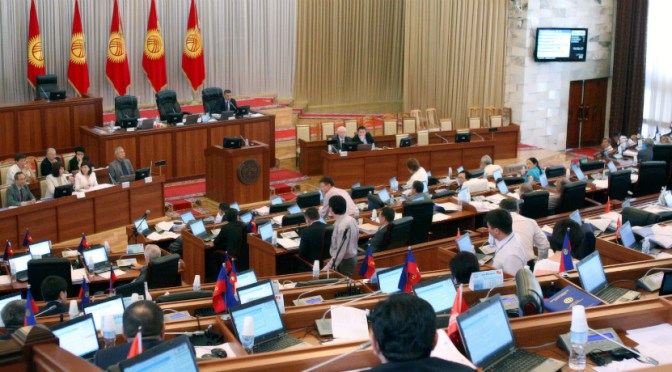
Kyrgyzstan Parliament blocks bill targeting foreign NGOs for increased government oversight
The controversial bill, modeled after Russia’s, originally sought to have foreign-funded organizations labeled “foreign agents” and increase bureaucratic oversight of international NGOs, deterring their operation in the country.
International or internationally funded NGOs in the country support public health and human rights development—particularly for vulnerable minorities—and serve as monitors of government corruption.
The bill had been revised to excise the “foreign agent” label and decrease financial reporting requirements, but the persistence of other large bureaucratic burdens led to the bill’s defeat as legislators worried over the bill’s impact on Kyrgyzstan’s international reputation.





 Outlas