Thousands protest violence against women in Buenos Aires
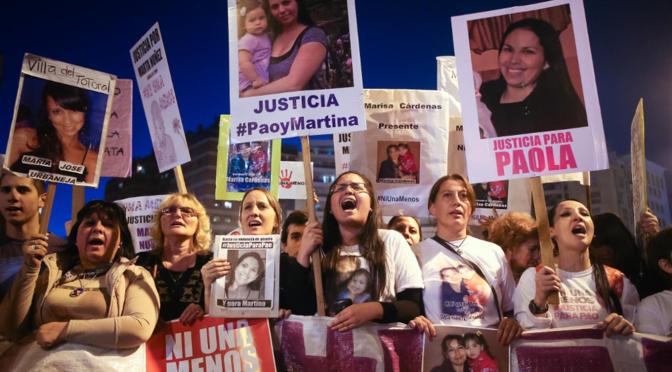
The #NiUnaMenos (“Not one less”) campaign brought thousands into the streets of the Argentinian capital to call attention to high levels of violence Argentine women of all ages have been subjected to.
The demonstration took place in the wake of the recent murders of three 12-year-old girls in separate incidents involving domestic as well as gang violence.
According to one report, 275 women have been killed in gender-based homicides in the year since the last public demonstration, including 165 from domestic violence and 40 involving women who had previously reported attacks by men.
Argentina establishes special council as criticism of poor indigenous relations intensifies
Established by decree, the new council is designed to bring together indigenous and government leaders to tackle cultural and policy issues affecting indigenous communities.
Activists have longed called for integration into decision-making processes affecting their communities, including enforcement of constitutional land, language, judicial, and development rights.
A recent U.N. report called out the government’s record on land rights—including intimidation and judicial harassment—and called for increased indigenous representation in political and judicial bodies.
The International Day Against Homophobia, Transphobia & Biphobia
Commemorating the day when homosexuality was de-pathologized by the World Health Organization in 1990, the 13th-annual International Day Against Homophobia, Transphobia & Biphobia (IDAHOT) stands as an occasion for global mobilization towards LGBT visibility and security. The day, like many global celebrations, is also one many governments choose to speak out on global human rights and minority security, announcing initiatives to support their LGBT citizens and international projects.
Even today, ongoing disagreements between nations over LGBT rights have prompted diplomatic rows and roadblocks to international cooperation, including the recent objection of 51 Muslim countries to the participation of LGBT groups in a U.N. AIDS forum in June. The push to extinguish homophobia, transphobia, and biphobia at all geographic levels remains important to the global mobility of LGBT people worldwide.
LGBT Nigerians have continued wrestling with conflicting legal messages, with the recent passage of the landmark HIV Anti-Discrimination Act doing little to undo the effects of a 2014 anti-homosexuality law.
The Gay and Lesbians Association of Zimbabwe (GALZ) organized events for IDAHOT in Bulawayo, focusing on mental health as ongoing social and healthcare difficulties plague the community.
Though homosexuality remains criminalized in Tunisia, activists have achieved increased visibility and pushed for legal reform amidst ongoing discrimination.
Israel reaffirmed its commitment to LGBT Israelis, announcing funding to support an emergency shelter for LGBT youth and a hostel for trans people who have recently undergone gender confirmation surgery.
Days before IDAHOT, activists staged a sit-in outside of a Beirut gendarmerie, protesting Lebanon‘s anti-homosexuality legal holdovers from French occupation. Similarly, the Lebanese Medical Association for Sexual Health (LebMASH) issued an appeal to the Lebanese government to decriminalize same-sex relations, arguing for recognition of homosexuality’s presence within the natural variation of human sexuality.
U.S. President Barack Obama released a statement of support as his administration lended its voice to a national debate over the bathroom rights of trans people.
Across Latin America, important gains in same-sex partnership and family rights and gender identity healthcare and legal protections have heartened LGBT Latin Americans, but the region continues to have some of the highest reported rates of violence against the LGBT community in the world.
LGBT organizations held cultural and political events throughout Argentina to highlight conditions facing the Argentine LGBT community, call for an anti-discrimination law, and press for federal recognition of the International Day Against Sexual Orientation and Gender Identity Discrimination, as the day is known.
Cuba celebrated the day fresh off Pride events in Havana, where Mariela Castro, daughter of President Raúl Castro, led a parade of thousands through the city streets.
As the country continues contentious battles including the push for marriage equality and erasure of “gay panic” legal defenses, rainbow flags and celebrations appeared across Australia, including over police stations in Canberra, in the streets of Brisbane, and in the senior-care facilities of Tasmania. In Victoria, officials announced a retreat for Aboriginal gender minorities to be held later in the year.
In China, a study conducted by the U.N. Development Programme, Peking University, and the Beijing LGBT Center, the largest of its kind to date, was released revealing that only 5% of LGBTI Chinese are fully out at school and work, but also showed encouraging levels of acceptance of LGBTI people among China’s youth. The head of Hong Kong’s Equal Opportunities Commission expressed support for anti-discrimination legislation at IDAHOT festivities in the city.
In Fiji, former President Ratu Epeli Nailatikau joined festivities at the French Ambassador’s residence to celebrate the island’s LGBTQI community.
A tug-of-war over LGBT rights between Islamic fundamentalists and pro-diversity moderates in Indonesia has led to mixed messages about LGBT security in the nation, spurring anti-discrimination protests.
A recent Human Rights Watch report on anti-LGBT bullying in Japan served as a reminder of the purpose of the day, highlighting rampant anti-LGBT sentiment even as the government has initiated broad efforts to combat bullying in schools.
The divergent prospects for LGBTI people across Europe, from Western Europe’s distinctive commitment to the protection of gender diversity to ongoing persecution in the East, was further confirmed through a UNESCO report highlighting anti-LGBT violence in schools released as global education ministers met in Paris.
Rainbow colors appeared in the shopping district of Cyprus‘s capital as 22 organizations came together to organize events to launch the country’s third Pride Festival, focusing on the need to increase legal recognition of both sexual and gender minorities in the country.
In Gibraltar, organizers canceled event plans in support of action on marriage equality legislation currently under consideration, arguing that holding a rally in front of the Parliament as uncertainty prevails would undermine pressure on MPs.
Kosovo‘s first Pride march brought out hundreds from the LGBT community to Pristina, including the U.S. and U.K. ambassadors.
Organizations in Luxembourg planned a silent march to call attention to the plight of LGBTI individuals worldwide and call for increased international protections (including asylum).
Organizers in Serbia took the day to announce the date of this year’s Pride parade (September 18) and address concerns of homophobia as right-wing parliamentary representation has increased.
Advocates, allies, and diplomats gathered around the rainbow flag raised at the US Embassy in Latvia.
After advocates scrapped plans for IDAHOT activities in Georgia due to security concerns, a group of activists were arrested for painting pro-LGBT graffiti on administrative buildings. A “Family Day” protest against LGBT rights and visibility, the third such anti-LGBT demonstration, brought together members of Georgia’s conservative Orthodox community and international religious groups.
In the U.K., London’s new mayor promised to make the city a more just place for its LGBT residents as a rainbow flag flew over the Mayor’s Office.
Peruvian Máxima Acuña de Chaupe may have seemed like an unlikely agent for the deterrence of a major international company’s mining project, but the 47-year-old farmer and mother of four was able to halt U.S.-based Newmont and Peru-based Buenaventura’s joint development of a mine on her 60-acre farm with the help of social media and international organizations. Despite physical violence, arson, lawsuits, and fines, Acuña fought to stop the expropriation of her land and stave off eviction attempts that began back in 2011. A recipient of the 2016 Goldman Environmental Prize, Acuña has brought global attention to ongoing rights battles as private development encroaches upon territory small, often poor farmers depend on for their livelihoods. The Guardian and El País have profiled Acuña and the centrality of international solidarity in efforts to protect land and environmental rights.
“No sé si la situación se calmará, voy a seguir defendiendo mi tierra, tengo fe y seguiré pidiendo justicia.”
Translation: “I don’t know if the situation will calm down, I’m going to keep defending my land, I have faith and will continue demanding justice.”
Thousands from Argentina’s main unions protest economic policies in Buenos Aires
Demonstrators took to the streets to protest currency devaluation, inflation, and massive layoffs stemming from new President Mauricio Macri’s economic policies.
Union leaders delivered speeches accusing the government of shifting the burden of economic stabilization onto workers and demanding measures to protect job security.
The mass demonstration took place ahead of International Workers’ Day, with leaders threatening to strike if the government ignored their concerns.
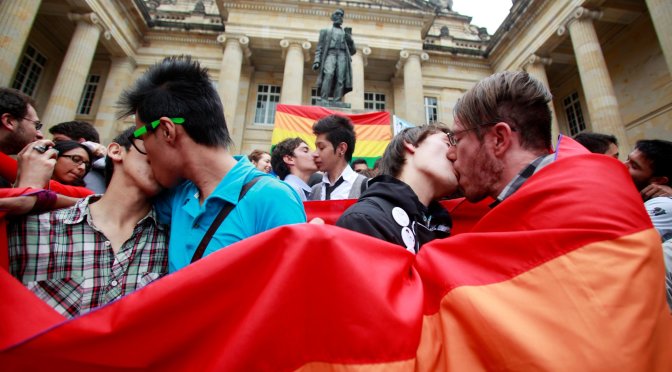
Colombia’s Constitutional Court opens door to marriage equality in 6-3 ruling
The Court voted against a proposal to establish marriage as between “one man and one woman” and declared that public employees could not refuse to perform same-sex weddings.
Colombian couples won their first partnership rights in 2007 and, in 2015, adoption without full marriage rights, which the Court had ordered the legislature to enact by 2013 in a 2011 ruling.
Colombia will join Argentina, Brazil, Uruguay, and parts of Mexico in permitting marriage for same-sex couples in Latin America.
Study shows 90% of indigenous peoples in Amazonian Brazil suffering from mercury poisoning
Illegal gold mining in northern Brazil has contaminated the water and food sources of at least 19 different Yanomami and Yekuana communities along with Nahua tribes in Peru.
In addition to the rise of illegal mining over the last three decades, uncontacted Yanomami communities have faced environmental crises and decades-old controversies over the status of their blood used for genetic testing by American anthropologists.
The study was a joint project of Brazilian health foundation Fiocruz, the Hutukara Yanomami Association, the Yekuana Association, and Brazilian NGO Socio-Environmental Institute.
As cases of Zika infection and newborn microcephaly have exploded in heavily Catholic and evangelical Brazil, the country’s tough abortion laws—preventing the procedure except in cases of rape, maternal health endangerment, and child inviability—have come back into the international spotlight. Legislators have proposed the possible prison sentence for women who undergo an abortion from one to three years to four-and-a-half for women who abort because of detected microcephaly, with doctors facing up to 15 years. Brazil’s class divide has exacerbated healthcare restrictions, constraining women of less means to life-threatening procedures (including black market pills, Internet-advised intervention, acid injections, and self-attempted extraction) while wealthy women enjoy access to overseas healthcare and hidden networks of clinics and doctors. Vocativ takes a look at the dire straits Brazilian women seeking an abortion find themselves in and attempts to gain reproductive rights.
Countries around the world are increasingly acknowledging the extreme physical and psychological effects of LGBT “conversion” or “reparative therapy,” pseudoscientific practices including electroshock therapy, sexual violence, and psychological assault run in an effort to purge LGBT individuals of their sexual and gender orientations and identities. From East Asia to the Americas to the Middle East, governments have begun banning such practices, though they continue to run to the financial and psychological detriment of their subjects. The Guardian examines global stories and efforts to dismantle the phenomenon.
Brazil sheds 43% of child workers over last decade
Brazil’s number of child workers decreased to 2.8 million in 2014 from 5 million in 2004.
The demographics of child workers also shifted from predominantly uneducated children from low-income families to teenagers from economically stable families.
The Brazilian constitution bans children under the age of 13 from working, while youth aged 14 and 15 can work under apprenticeship programs and those aged 16 and older can have formal day jobs.
Colombian high court legalizes adoption for same-sex couples
Colombia’s constitutional court ruled 6-2 in favor of opening adoption up to same-sex couples, drawing on both constitutional and international law as justification.
The Court struck down the prohibition against adoption by same-sex couples by affirming the rights of children to a family, arguing that parental gender and sexual diversity has no negative impact on a child.
The country joins regional neighbors Brazil, Argentina, and Uruguay in allowing same-sex couples to adopt.
Argentinian president calls for investigation after murder of trans activist
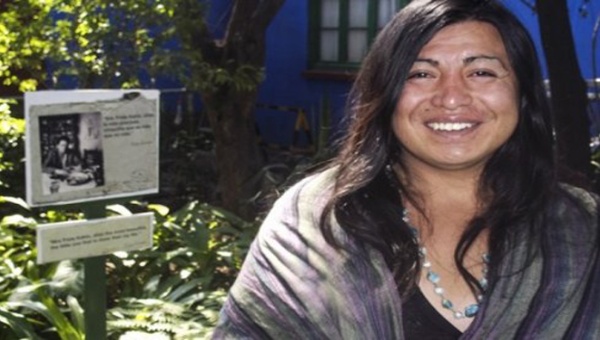
Trans rights activist Diana Sacayán was found dead in her apartment, the victim of a fatal stabbing that police believe may have been perpetrated by an acquaintance of Sacayán.
Sacayán had led both the International Association of Lesbians, Gays, and Bisexuals (ILGA) and the Anti-Discrimination Liberation Movement (MAL) in Argentina, and had been personally issued her new national identity card with her correct gender identity by President Cristina Kirchner.
With Sacayán’s death the third for transwomen in a month, President Kirchner called for local police and national security forces to investigate as a part of a broader push to tackle the high rates of gender-based violence in the country.
With the slow emergence of a black middle class in the country, demands have grown for more and better media representation among Brazil’s majority black and mixed-race population. Television has become a prime battleground for visibility and equal representation as Brazil continues the difficult process of shedding its history of racial repression. The Guardian takes a look at Mister Brau, Brazil’s new musical comedy at the forefront of that battle, its popular stars, and the cultural landscape it’s making a statement in.
Ecuador government passes resolution to include Afro-Ecuadorian history in textbooks
As Ecuadoreans around the country celebrate National Day of the Afro-Ecuadorian People, the government announced the new education measure to foster inclusion of Afro-Ecuadorians in the nation’s history.
Afro-Ecuadorians number more than 600,000 in the country, but continue to face discrimination and economic difficulty.
The National Day of the Afro-Ecuadorian People began with the 1997 congressional declaration of the National Day of the Black Ecuadorian, symbolized by celebration of fugitive slave leader Alonso de Illescas and Afro-Ecuadorian history and culture.
“On this day we have to remember all the contributions we have made as a people and bring it, together with our history, to the rest of the people because many don’t know it, which enables a lot of forms of discrimination.”
Indigenous Colombian communities condemn arrest of leader Feliciano Valencia as blow to autonomy
In a blow to Indigenous criminal justice autonomy, Valencia was arrested for the alleged 2008 kidnapping of a Colombian soldier, which community members say involved the soldier’s detention and sentencing to 20 lashes for espionage in Indigenous territory.
Delegates from multiple of Colombia’s 84 registered Indigenous communities arrived at the Indigenous Intercultural University of Popayan to organize the Symbolic March for the Freedom of Feliciano Valencia.
Valencia had faced the same charges in 2010 but released after the defense argued that Indigenous communities’ right to administer justice in their own territories, guaranteed in the Colombian Constitution, was administered collectively and not just by Valencia.
“They want to delegitimize (a right) that is inscribed in the Constitution and that should prevail over ordinary legal norms.”







 Outlas