Tag Archives: Women

U.S. News | Black Women

American Ballet Theater names the first African-American female principal in its history
  • Misty Copeland, 32, has now become only the third black principal to be named in the renowned New York-based ballet company’s history.
  • Copeland has enjoyed a standing in popular culture rare for ballet dancers, having appeared in commercials and music videos, written books, and established a substantial social media following.
  • Image prejudices, stereotypes, and lack of community and early development resources are believed to have contributed to the lack of black principals, the first of whom, Arthur Mitchell, was named in New York City Ballet in 1962.

“I had moments of doubting myself, and wanting to quit, because I didn’t know that there would be a future for an African-American woman to make it to this level. … At the same time, it made me so hungry to push through, to carry the next generation. So it’s not me up here — and I’m constantly saying that — it’s everyone that came before me that got me to this position.”

Read the full story at The New York Times.

(Image Credit: Julieta Cervantes/The New York Times)

Afghanistan News | Women

Afghan president appoints second female governor despite vocal opposition
  • President Ashraf Ghani appointed Seema Joyenda to the governorship of the Ghor Province in central Afghanistan, the second of three female governor appointments promised by the administration.
  • The first, Massoma Muradi, has been marooned in Kabul, unable to take her post in the Daikundi Province due to demonstrations against her appointment.
  • Provincial leaders and community members opposed to the appointments claim a woman will be unable to navigate the complex security terrains of the provinces, which see continuing conflict between tribal groups, including the Taliban.

“This is not new to me. As their former representative, I traveled the province, I know my people’s pain.”

Read the full story at the New York Times.

Kenya News | Girls

Kenyan mother sues government for denying safe access to abortion following daughter’s botched backstreet procedure
  • The 15-year-old girl sought the abortion following her rape by an older man, but complications arose that have led to ongoing health complications.
  • While abortion is permitted in cases of emergencies involving maternal health under Kenya’s 2010 constitution, the state has banned training for government healthcare providers and harassed and charged other doctors.
  • Unsafe abortions account for 35% of maternal deaths in Kenya (well above the 13% global average), with around 2,600 women per year dying in hospitals after having attempted to get an abortion elsewhere.

“The Kenyan government is allowing thousands of women in Kenya to needlessly die or suffer severe complications every year due to unsafe abortion, and it must be held accountable.”

Read the full story at Reuters.

Singapore News | Women

Colonel Gan Siow Huang promoted to become first female general in Singapore Armed Forces
  • On July 1, Huang, 40, will assume the rank of Brigadier-General after 22 years in the army.
  • She was one of four women to receive the first SAF merit scholarship in 1993 when the military first began actively recruiting women.
  • A graduate of the London School of Economics and mother of three, she credits the SAF’s family-friendly policies with allowing for some of the flexibility needed for her to balance her demanding work with starting a family.

“I think women entered this game late. It was only in 1993 that the SAF seriously started to look at and bring in talent, and to develop woman leaders. Back then, the SAF also did not know how far women could go.  In the 1990s, we didn’t have many woman COs in the Army, Navy and Air Force. Over time, when women in different jobs and vocations did well, confidence was gradually built.”

Read the full story at AsiaOne.

(Image Credit: via AsiaOne)

Caribbean News | Afro-Latinas

Inaugural Latin American Afrodescendent Women Leaders’ Summit brings Afro-Latina leaders together to address community security
  • The summit convened in Managua, Nicaragua, bringing leaders together to address such issues as black women’s rights and protections, health, education, the environment, poverty reduction, and public services access.
  • Organizers aimed to use the discussions to adopt a shared political platform for Afro-Latinas throughout Latin America to combat the disproportionate impact of poverty and other socioeconomic barriers on black women.
  • Afro-Latinos make up between 20 and 30% of the population in Latin America, with complex histories of colonization, slavery, and migration making identification uneven.

Read the full story at teleSUR.

(Image Credit: Network of Afroamerican, Afrocaribbean, and Diasporic Women; via teleSUR)

U.S. News | Women

Ohio Senate passes legislation outlawing abortion after 20 weeks of pregnancy
  • Republicans drove through the legislation that will make it a fourth-degree felony for doctors to perform abortion procedures after 20 weeks, sending it to the House of Representatives for approval.
  • Other politicians and reproductive rights advocates have criticized the bill for its lack of exceptions for cases of rape, incest, or severe fetal medical anomalies.
  • The U.S. Supreme Court has let stand federal rulings striking down similar laws in Idaho and Arizona.

“Most women targeted by this bill are suffering from medical complications with a wanted pregnancy. Doctors shouldn’t have their hands tied by legislators, they need to be able to treat their patients in the way that is best for their patient and their family.”

Read the full story at Cleveland.com.

(Image Credit: Robert Higgs/Northeast Ohio Media Group, via Cleveland.com)

India News | Women

Mumbai shutters police counseling centers for women involved in domestic disputes
  • The centers had previously provided trained police counselors working with not-for-profit organizations in conflict-resolution service provision.
  • From 2010 to present, 8,786 applications for counseling have been received, which has led to counseling and resolution options including compromise and further police action.
  • Instead of counseling, police will now only be able to outline steps that can be taken and refer women to outside resources.

Read the full story at the Hindustan Times.

Canada News | Minorities

Toronto government works to boost proportion of minority-led and diverse businesses receiving government contracts
  • The city council has begun rolling out a social procurement framework for business development, which could lead to a policy in which one of three short-listed bids for city contracts would be from diverse or minority-led businesses (including those identified as immigrant, racial/ethnic minorities, women, and/or gay or lesbian).
  • In 2012, 7% of bidders were minority-led or -controlled and received C$339 million in contracts, while in 2013, 5% were and received C$434 million.
  • The city and business leaders acknowledge that the highest hurdles facing minority business owners are lack of awareness about minority-friendly programs, aversion to working with the government because of perceived rigidity, and self-selection out of the contracting process from fear of lacking necessary connections.

Read the full story at Inside Toronto.

Canada News | Muslim Women

Quebec premier defends proposed legislation banning face-covering attire for certain civic employees and toughening consequences for hate speech
  • Premier Philippe Couillard indicated that the legislation under consideration by Quebec lawmakers would ban face coverings on public servants in roles requiring face-to-face engagement with the public.
  • The draft legislation is a narrower version of the previous government’s proposal to ban the wearing of religious symbols by all public servants.
  • The current draft of the hate speech law creates a Human Rights Tribunal, which would oversee investigations and punitive actions for individuals inciting violence against vulnerable groups.

“The role of the government is to draw a line in the sand. … This issue of face covering for me has very little to do with religion, and a lot to do about the image of women, the status of women in our society. Showing your face is the essence of communication.”

Read the full story at the New York Times.

(Image Credit: Mary Altaffer/Associated Press, via the New York Times)

U.A.E. News | Visitors

UAE hoteliers advise hotel guests to align themselves with local sartorial standards during Ramadan
  • At their hotels’ iftars, the fast-breaking dinners held at sunset, hotel managers have said that they will turn away inappropriately dressed patrons, including those in beachwear and tight-fitting clothing.
  • Managers and security organizations encourage guests to dress modestly, covering shoulders and legs as they move through communal spaces.

“Ramadan is a time of devoutness, modesty and moderation. … Refrain from wearing revealing clothing out of respect to those observing Ramadan. This is particularly important when visiting malls, hotels and restaurants or iftar tents in the evening. As a general rule, clothing that is sheer, too short, low-cut or tightfitting should be avoided, particularly shorts, miniskirts and sleeveless tops.”

Read the full story at The National.

(Image Credit: Delores Johnson/The National)

Egyptian women convene in “stand” against political detentions and bans on assembly
  • At the same location in Cairo where 23 opposition activists were arrested for protesting last year, dozens of women gathered in demonstration against the detentions.
  • The “stand,” a form of nonviolent protest, took place for an hour outside of the presidential palace despite prohibitions on unsanctioned assembly.
  • While police confronted journalists and attempted to block the protest from view, the women held up images of the detained, with messages calling for their release.

Read the full story at the New York Times.

(Image Credit: Omar Kamel/Twitter photo, via the New York Times)

Namibia’s military looks to expand percentage of women among its ranks as it reaffirms its commitment to inclusiveness in conflict resolution
  • The Namibian Defence Force currently sees women representing 23% of its forces and 5% of its management, and the Defence Minister has signaled a desire to expand the proportion to 30% in the near future.
  • The country is looking to fortify its commitment to UN Resolution 1325, introduced in 2000 by Namibian cabinet member Netumbo Nandi-Ndaitwah to put women’s rights and inclusion in peace and security efforts at the forefront of international security and conflict resolution.
  • The remarks came during a seminar on gender mainstreaming in Namibia, which connected gains in women’s participation in conflict resolution to expanded opportunities in other sectors.
“When I introduced this important role women could play to the Security Council, it was completely rejected. They said women were not a security issue but a social issue. We persisted, though, and started lobbying and won the confidence of Unicef and other groups, which eventually strengthened our proposal that was finally adopted.”
Read the full story at the Namibian.
Zimbabwe Prosecutor-General says marriage and sex should be an option for young girls disengaged from school
  • As MPs and children’s rights advocates call for increased legal protections for girls under the age of 16, head government prosecutor Johannes Tomana indicated that girls disconnected from educational opportunities should not be kept from sex or marriage.
  • Zimbabwe’s age of consent is 16, and the country suffers from one of the highest child marriage rates in the world, with provinces seeing up to 50% of its minors married off.
  • Tomana also indicated agreement with community service sentences for sexual abusers, claiming that public embarrassment is sufficient punishment for the crime.

“We’ve nine-year-olds, 12-year-olds, 13-year-olds who’re actually not in school, who’re not doing anything for example. What are we saying to them? We say you can’t even do this [have sex], when the environment is not giving them alternative engagements? What are we talking about?”

Read the full story at the Herald.

(Image Credit: via the Herald)

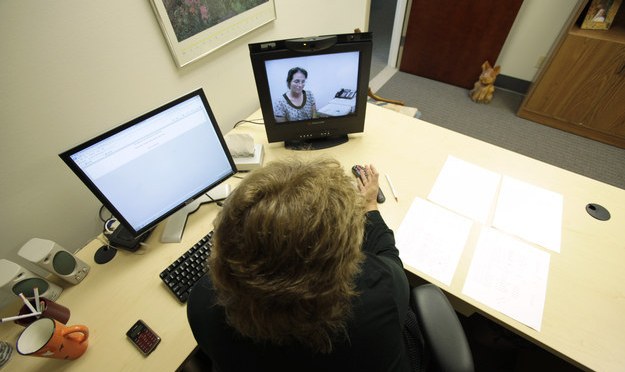
Iowa Supreme Court declares telemedical abortions legal in the state
  • The practice, where doctors prescribe women pills for a medical abortion prior to the second trimester via medical-conferencing system, first began in 2008 before being effectively being effectively banned in 2013.
  • The Court ruled that the ban placed an undue burden on women in Iowa seeking an abortion, where access to such care is limited.
  • Because the case was analyzed under federal law, the ruling could encourage other states–including the 18 states where the practice is banned–to look into establishing telemedical abortion services.

“Without remote access to medication abortion, more women would have to delay or even forego abortion care. …This is especially true in a state like Iowa, where many women would have to travel hundreds of miles in order to reach an abortion clinic.”

More on this story at BuzzFeed.

(Image Credit: Charlie Neibergall/AP, via BuzzFeed)

Redesigned U.S. $10 bill to feature woman historical figure and new tactility
  • The currency redesign will be the first to include a female figure on a major U.S. bill denomination.
  • The Treasury Secretary has called on the public to offer its opinions on who should grace the bill using the hashtag #TheNew10, with the only stipulations being that the figure not be alive and should represent American democracy.
  • The redesigned bill will debut in 2020 and will also be the first to include tactile features so as to be distinguishable to blind people.

“We have only made changes to the faces on our currency a few times since bills were first put into circulation, and I’m proud that the new 10 will be the first bill in more than a century to feature the portrait of a woman.”

More on this story at CNN.