Tag Archives: Women

India News | Muslim Women

Indian court grants women access to famous Islamic tomb in Mumbai
  • The Bombay High Court ruled that trustees of the Haji Ali tomb could not ban women from entering the tomb, though the decision was stayed in anticipation of an appeal to the Supreme Court.
  • Although India’s constitution protects religious groups’ rights to manage their own affairs, the Court invoked an exception for matters that are not “an essential and integral part of the religion.”
  • The ruling follows a similar one earlier in the year allowing Hindu women access to temples in the state of Maharashtra.

Read more:
Indian Court Orders Haji Ali Tomb to Give Women Full Access” (The New York Times)
Women can enter Haji Ali sanctum, rules HC” (The Hindu)
Haji Ali: India court says women can enter Mumbai shrine” (BBC)

(Image Credit: Punit Paranjpe/Agence France-Presse/Getty Images, via The New York Times)

France News | Muslim Women

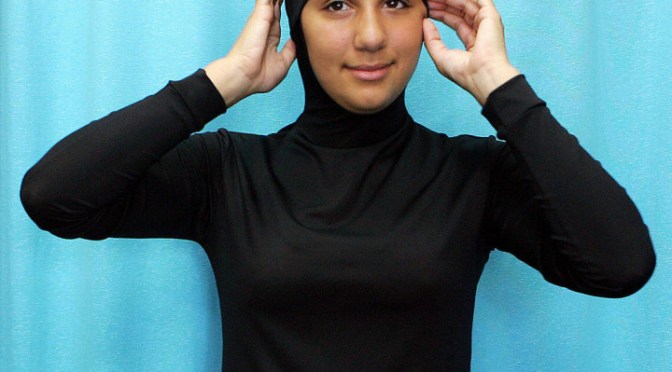
French court overturns ban on burkinis in Villeneuve-Loubet
  • The State Council, the highest administrative court in the country, ruled the ban on the religiously inspired bathing suit constituted a violation of civil liberties, including freedom of movement and religious freedom.
  • The decision opens the door to challenges to similar bans in at least 30 other municipalities.
  • The bans have roiled political tensions in the aftermath of IS-coordinated and -inspired attacks in the country, with government officials and civil liberties advocates clashing over the limits of the national security apparatus.

Read more:
Court Overturns ‘Burkini’ Ban in French Town” (The New York Times)
Le Conseil d’Etat met un terme aux arrêtés « anti-burkini »” (Le Monde, in French)
Burkini ban suspended by top French court” (euronews)

(Image Credit: Hannah Mckay/European Pressphoto Agency, via The New York Times)

Peru News | Women

#NiUnaMenos demonstrations brings tens of thousands out in Peru
  • The campaign, which has ignited throughout Latin America, protests the high levels of gender-based violence women face, with a particular focus on women’s and girls’ vulnerability to femicide.
  • Peru’s women’s minister indicated that 10 women are killed per month in the country, with an additional 20 attempted murders.
  • A series of court rulings that gave reduced or lenient sentences to perpetrators of violence against women led to social media outcry, which has fueled the demonstrations that reportedly brought out more at least 50,000 in downtown Lima, including the President and First Lady.

Read more:
#NiUnaMenos: 50,000 protest violence against women in Lima” (Peru Reports)
Women in Peru protest against rising tide of murder and sexual crime” (The Guardian)
#NiUnaMenos: así fue la marcha contra la violencia a la mujer” (El Comercio, in Spanish)

(Image Credit: Omer Musa Targal/Getty Images, via The Guardian)

France News | Muslim Women

Cannes and Villeneuve-Loubet mayors ban burkinis on public beaches
  • Cannes Mayor David Lisnard said the hooded full-body swimsuits “create risks of disrupting public order,” with another municipal official elaborating that such garments display “allegiance to terrorist movements.”
  • The measure falls in line with the French government’s antagonism of public displays of religious affiliation, which have discriminated against observant Muslims—particularly women—in the country.
  • Following in Cannes’ footsteps, Mayor Lionnel Luca banned burkinis in the coastal town of Villeneuve-Loubet, stating such garments aren’t “hygienic” or in line with the ideological principle of laïcité, or enforced public secularism.

Read more:
The Mayor Of Cannes Has Banned Burkinis On The Riviera’s Beaches” (BuzzFeed News)
Cannes, Citing Security Risks, Bans Full-Body ‘Burkinis’ From Its Beaches” (The New York Times)
Après Cannes, Villeneuve-Loubet interdit le burkini” (Le Monde, in French)

(Image Credit: AFP/Getty Images, via BuzzFeed News)

Argentina News | Women

Argentina announces new plans to combat violence against women
  • President Mauricio Macri announced the National Plan of Action for the Prevention, Assistance, and Eradication of Violence Against Women, a plan to combat the cultural roots of gender-based violence and support women through measures including the creation of a network of shelters.
  • The plan also includes the use of geolocation technology to ensure that aggressors are kept from physical proximity with their victims and a phone app that will allow threatened women to bypass dialing to access emergency safety services.
  • The measures come in the wake of a national campaign to combat violence against women that brought thousands to the streets in demonstration.

More:
Plan to cut violence against women launched” (The Buenos Aires Herald)
Cómo es el plan que presentó Mauricio Macri contra la violencia de género” (La Nacíon, in Spanish)
Argentina announces new gender violence plan” (BBC)

(Image Credit: Getty Images via BBC)

Indonesia Research | Sexual Violence

The Unreported Rapes of Indonesia

A recent online survey conducted jointly by support group Lentera Sindas Indonesia, Indonesian magazine Magdalene, and Change.org indicated that more than 9 out of 10 respondents who had been raped had not reported the crime to authorities. The findings come as Indonesians have expressed outrage over the gang rape and murder of a teenage girl in April and ongoing sexual violence across the country. In response, the government has pledged to begin tracking and reporting data on sexual violence in the country.

25,213

Number of respondents

1,636 (6.5%)

Number of respondents reporting having been raped

62.8% (cisgender women) / 37.1% (cisgender men) / 0.1% (all transgender people)

Breakdown by gender identity of respondents reporting having been raped

93%

Percentage of respondents reporting having been raped who did not report the crime

1%

Percentage of reported cases resulting in legal punishment

58%

Percentage of respondents reporting having been verbally harassed

~25%

Percentage of respondents reporting having been physically assaulted

Read:
Over 90 percent rape cases go unreported in Indonesia: poll” (The Thomson Reuters Foundation)
93% of rape victims in Indonesia do not report the crime to the police: Survey” (Coconuts Jakarta)

Additional:
How a rape that was ignored angered Indonesia’s women” (BBC)

ClimateWatch | Turkey

ClimateWatch
Turkey’s “Purge”

The recent attempted coup by a faction within Turkey’s military has left the country in the throes of uncertainty, further increasing citizens’ and human rights watchdogs’ already pronounced concerns about the future of civil liberties in Turkey. Ground zero for the attempted overthrow of the government were Ankara and Istanbul, home to journalists overrun on the air by military forces and ordinary citizens called into the streets by President Recep Tayyip Erdogan via FaceTime.

Daylight illuminated the deaths of nearly 300, the wounds of the 1,400 injured, and the beginning of a so-called “purge” that has further endangered groups already vulnerable under Erdogan’s regime: political critics, journalists, and intellectuals. Women, too, found themselves targeted amidst the instability, and Turkish Kurds worry that the aftermath will further heighten anti-Kurd sentiment.

But the coup attempt and retaliation are only the latest in Turkey’s security woes. Terrorist attacks in Istanbul and Ankara, conflict with Kurdish militants and pro-Kurd advocates, ongoing intimidation and blackouts of journalists and political dissidents, and a regional refugee crisis have upended the tenuous stability in the country secured through a 2013 ceasefire with the Kurdistan Workers’ Party (PKK). While the restoration of Erdogan’s government was seen as a victory for democracy, Turks and observers alike fear what measures Erdogan, already intolerant of dissent, will take in its wake.

Here is a look at coverage of the destabilizing security situation for at-risk communities in Turkey: Continue reading ClimateWatch | Turkey

U.S. News | Women

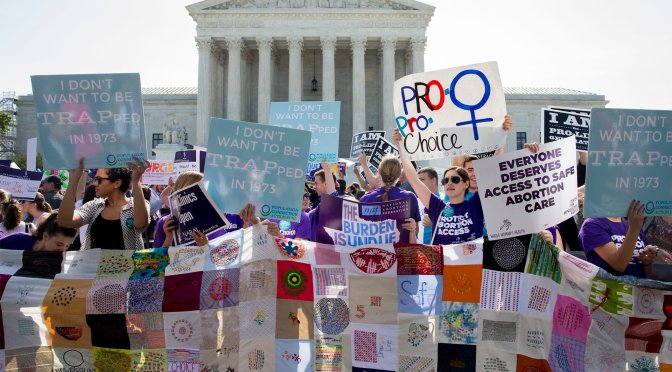
U.S. Supreme Court rejects restrictions on abortion clinics in Texas, Mississippi, and Wisconsin
  • The Court ruled 5-3 in favor of blocking restrictions enacted through a 2013 Texas law on the standards necessary for clinics to be allowed to operate within the state, the most expansive decision on abortion rights since 1992’s Planned Parenthood v. Casey.
  • The majority opinion found that the restrictions—which included requiring admitting privileges of doctors in nearby hospitals and heightened operational standards for the clinics—were medically unnecessary and reduced women’s access to safe abortion procedures.
  • The justices also declined to hear cases involving abortion provision restrictions in Mississippi and Wisconsin, and Alabama announced it would no longer pursue restrictions on abortion doctors in the wake of the Court’s decision.

Read more:
Supreme Court Strikes Down Texas Abortion Restrictions” (The New York Times)
Supreme Court spurns abortion restrictions in two more states” (Reuters)
How the Texas abortion ruling will affect access across the US” (The Guardian)

(Image Credit: Michael Reynolds/EPA, via The Guardian)

Indonesia & Middle East News | Indonesian Women

Indonesian women continue migrating to Middle East for work despite government ban
  • A new report from Migrant Care has found that more than 1,000 women have traveled to the Middle East for domestic work despite government moratorium.
  • The Indonesian government announced a ban on any new labor-based migration to the Middle East in May 2015 after several high-profile reports of abuse.
  • The revelation comes amidst ongoing efforts by the government to formalize labor practices in the domestic services industry both at home and abroad, with an estimated 2.3 million Indonesian domestic workers abroad and an additional undocumented population.

Read more:
Indonesian women defy ban to work as maids in Middle East: survey” (The Thomson Reuters Foundation)
Indonesia plans to stop sending new live-in maids abroad” (The Straits Times)
Six Gulf countries informed of Indonesia domestic workers ban” (Gulf News)

U.K. News | Politicians

UK MP assassinated after meeting with constituents
  • Labour Party MP Jo Cox was murdered near near a library in the village of Birstall, near Leeds.
  • The homicide was allegedly the culmination of an altercation between Cox, elected to Parliament in 2015, and 52-year-old Tommy Mair.
  • At least three witnesses reported that Mair shouted “Britain first” while shooting Cox, the slogan and name of a far-right nationalist group pushing for the U.K.’s exit from the European Union in the upcoming referendum on June 23.

Read more:
Labour MP Jo Cox dies after being shot and stabbed” (The Guardian)
Labour MP Jo Cox Dies After Shooting” (BuzzFeed News)
Jo Cox MP dead after shooting attack” (BBC)

(Image Credit: via BBC)

Interregional News | Yazidi Women

IS to be tried for crimes against Yazidi women in international court
  • Human rights lawyer Amal Clooney will prosecute the Islamic State for crimes against the Yazidi community including sexual slavery, rape, and genocide.
  • The prosecution follows a campaign by Yazidi advocates like Nadia Murad Basee Taha, who petitioned the U.N. Security Council and the international community to take action.
  • IS has accused Yazidis of being devil-worshippers, driven more than 700,000 from their homes in northern Iraq, and enslaved more than 7,000 women and girls.

Read more:
Exclusive: Amal Clooney to represent ISIS survivor Nadia Murad and victims of Yazidi genocide” (The New York Times)
Human rights lawyer Amal Clooney to defend Yazidi women, ISIS sex slaves” (Reuters)
Amal Clooney to represent Yazidi sex slaves and demand Isis genocide investigation at The Hague” (International Business Times)

(Image Credit: Mustafa Yalcin/Anadolu Agency/Getty Images, via The New York Times)

South Africa Research | Youth

Child Sexual Abuse in South Africa

Commissioned by the UBS Optimus Foundation, the Optimus Study is a first-of-its-kind national survey of the annual incidence and lifetime prevalence of child sexual abuse in South Africa, providing both a point-in-time and longitudinal perspective on South African child victimization. In the context of the study, sexual abuse is defined in both its contact and non-contact forms, including exposure (subjection to voyeurism, exhibitionism, and forced pornographic viewing), exploitation (involvement in sexual activities for pornography and/or prostitution), and contact (sexual assault and rape). With more than a third of schoolchildren reporting having experienced some form of sexual violence, the report offers a framework for addressing not only the high levels of abuse incidence, but also the negative outcomes associated with abuse including mental illness and lowered educational outcomes.

35.6%

Percentage of South African schoolchildren reporting having experienced some form of sexual abuse

36.8% (boys) / 33.9% (girls)

Percentage reporting having been sexually abused, by gender

15 (boys) / 14 (girls)

Average age of first incidence of sexual abuse

11.3%

Percentage who reported unwanted sexual touching by an adult

9.4%

Percentage who reported being made to do sexual things by another child or teen

11.7%

Percentage reporting being forced to have sex

12.9%

Percentage reporting exposure abuse

0% (boys) / 31.0% (girls)

Percentage who reported abuse by a familiar adult to police

~20%

Percentage experiencing trouble with schoolwork and/or school attendance in wake of abuse

2x (anxiety and depression) / 3x (PTSD symptoms)

Likelihood of those who experienced abuse to report symptoms of mental illness relative to young South Africans as a whole

Read:
Optimus Study South Africa: Technical Report (The Centre for Justice and Crime Prevention and the University of Cape Town)

Additional:
Perfect Storm of kids at risk: Why a third of SA’s children are sexually abused” (The Daily Maverick)
1 in 3 young South Africans sexually abused” (UBS Optimus Foundation press release, via Parent24)

Commissioning Organization: UBS Optimus Foundation

Brazil News | Women

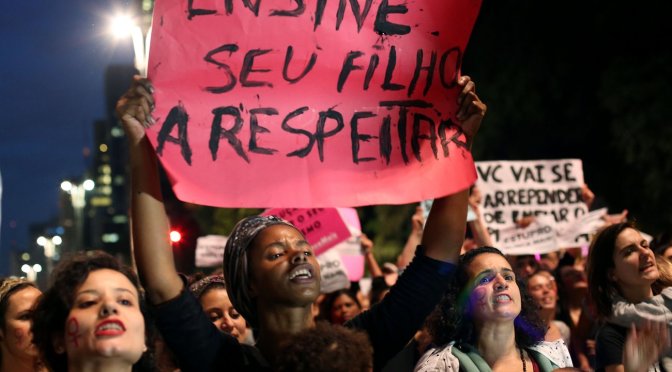
Gang rape of 16-year-old sparks protests in Brazil
  • The case garnered international attention when a video went up on Twitter showing more than 30 men participating in the rape of the girl, apparently unconscious, in a Rio favela.
  • The crime was exacerbated by a slow, victim-antagonistic police response and a flood of misogynistic messages on social media.
  • Thousands marched in Rio de Janeiro and São Paulo in protest of high levels of gender-based violence in the country, with upwards of 10% of Brazilian women reporting cases of sexual violence along and a larger number of unreported cases.

Read more:
Brazil and Argentina unite in protest against culture of sexual violence” (The Guardian)
Massive Protests in Brazil After a Girl Was Blamed for Being Gang-Raped in Rio” (VICE News)
Gender violence protests in São Paulo” (The Buenos Aires Herald)

(Image Credit: Xinhua/Barcroft Images, via The Guardian)

Argentina News | Women

Thousands protest violence against women in Buenos Aires
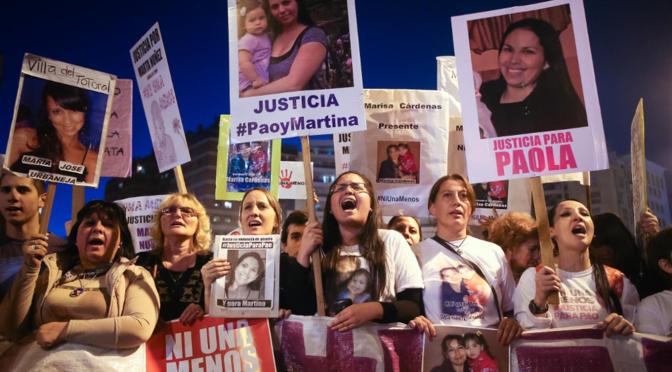
  • The #NiUnaMenos (“Not one less”) campaign brought thousands into the streets of the Argentinian capital to call attention to high levels of violence Argentine women of all ages have been subjected to.
  • The demonstration took place in the wake of the recent murders of three 12-year-old girls in separate incidents involving domestic as well as gang violence.
  • According to one report, 275 women have been killed in gender-based homicides in the year since the last public demonstration, including 165 from domestic violence and 40 involving women who had previously reported attacks by men.

Read more:
Argentines Protest Violence Against Women” (The New York Times)
NiUnaMenos: 275 femicidios entre una marcha y otra” (La Nación, in Spanish)
60% of femicides committed by partners” (The Buenos Aires Herald)

View:
Ni una menos, en fotos: imágenes de la concentración en Buenos Aires” (La Nación)

(Image Credit: via La Nación)

ClimateWatch | The Philippines

ClimateWatch
The Philippines

The Philippine Congress recently confirmed Rodrigo Duterte as the 16th president of the Philippines, ushering in a new government fueled by populist disaffection and characterized by uncertainty. A lightning rod of controversy, the tough-talking former mayor of Davao City in the south of the country has supported vigilante justice in crime-riddled cities (including against those suffering from addiction), the reinstatement of capital punishment, and paternalistic policies on smoking, alcohol consumption, and youth curfews. His unfiltered style has been likened to U.S. Republican presidential nominee Donald Trump for both his casual misogyny and penchant for offensive jokes.

But Duterte, the Philippines’ oldest president, has also expressed support for minority representation and protections, backed by a record of gender and minority inclusiveness during his time as mayor. His election has already been celebrated for breaking political regionalism in the country: Duterte has become the first president from the historically marginalized island of Mindanao. Now having to scale his leadership from the local to the national level, he inherits a range of difficult issues impacting historically disadvantaged communities, including land and environmental rights for indigenous peoples, reproductive healthcare for women, and political autonomy for Muslim groups in the south.

With international observers and diplomats concerned by Duterte’s unpredictability, his record with and plans for vulnerable communities have been scrutinized as political analysts attempt to predict what the next era of Philippine politics will look like under his leadership. Here is an overview of recent local and international commentary on the impact of Duterte’s election:

Continue reading ClimateWatch | The Philippines