U.S. News | LGBT

U.S. federal judge rules Mississippi ban on same-sex adoption unconstitutional
  • Judge Daniel P. Jordan III found that the law interfered with gay and lesbian citizens’ equal protection under the law in the wake of the Supreme Court’s 2015 decision overturning same-sex marriage bans.
  • Judge Jordan argued that Mississippi’s Department of Human Services couldn’t interfere with the “rights and responsibilities intertwined with marriage.”
  • The ruling came as the Mississippi Senate passed an extensive religious freedom bill, sending one of the most expansive anti-LGBT bills introduced after the establishment of the nationwide right to marry to the governor’s desk.

Read more:
Mississippi Same-Sex Adoption Ban Unconstitutional, Federal Judge Rules” (BuzzFeed News)
Federal judge overturns Mississippi’s adoption ban on same-sex couples” (The Guardian)
Mississippi Senate Passes Sweeping Anti-LGBT Religious Freedom Bill” (BuzzFeed News)

(Image Credit: Dominic Lipinski/PA, via The Guardian)

China News | Tibetan Activist

Tibetan education activist charged with inciting separatism
  • Tashi Wangchuk has been detained in Yushu, Qinghai Province, for months in secret and faces up to 15 years in prison.
  • While Tashi’s writings promote widely accepted Tibetan autonomy, the Tibetan entrepreneur has publicly opposed Tibetan independence.
  • Tashi has been a vocal advocate for Tibetan-language education in line with constitutional guarantees to ethnic autonomy.

Read more:
China Charges Tibetan Education Advocate With Inciting Separatism” (The New York Times)
Inciting Separatism Charge for Tibetan Education Advocate” (China Digital Times)
Tibetans Fight to Salvage Fading Culture in China” (The New York Times, November 2015)

(Image Credit: Gilles Sabrie/The New York Times)

Cameroon Feature | Women & Children

The Weaponized Girls of Boko Haram

As Boko Haram’s successes in northeastern Nigeria have been rolled back, the extremist group’s attentions have turned elsewhere in the region, including neighboring Cameroon. Rare in other global terrorist activity, female suicide bombers between 14 and 24 years of age have formed the lion’s share of suicide attacks in Cameroon, comprising some 80% of incidents. Female suicide bombers have also been deployed in Nigeria, most recently in Maiduguri. Reuters investigates the pipeline from abduction to sexual slavery to suicide attacks that women captured by Boko Haram have found themselves caught up in.

Read:
Weakened Boko Haram sends girl bombers against Cameroon civilians” (Reuters)

Additional:
Video: The war against Boko Haram’s suicide bombers in Cameroon” (France24)
Nigeria mosque hit by Maiduguri suicide bombers” (BBC)

(Image Credit: Joe Penney/Reuters)

South Korea News | Sex Workers

South Korean sex workers protest court ruling upholding criminalization of sex work
  • Pro-sex work activists protested the Constitutional Court’s decision to uphold a 2004 law that set punishments for both sex workers and customers, arguing it unfairly limits women’s economic opportunity and punishes poor clientele while paid relationships among the wealthy persist.
  • Sex workers and consumers face up to a year in jail or a fine of 3 million won ($2,600).
  • Activists say the ruling violates their right to work and announced intentions to petition the United Nations.

Read more:
South Korean Court Upholds Ban on Prostitution” (The New York Times)
South Korea prostitutes decry court ruling, demand right to work” (Reuters)
South Korea Upholds Tough Anti-Prostitution Laws” (AP via ABC News)

(Image Credit: Jean Chung/The New York Times)

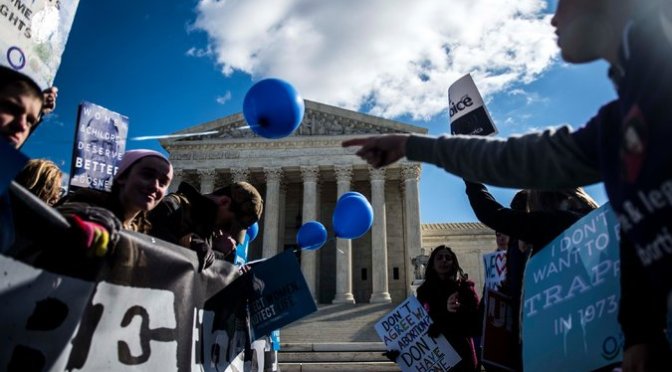
U.S. News | Women

FDA eases restrictions around abortion pill, increasing access for rural and low-income women
  • The U.S. Food and Drug Administration now allows for mifepristone (Mifeprex) to be legally prescribed and taken further into pregnancy (10 vs. 7 weeks), with reduced dosage (200 vs. 600 mg), and requiring only two rather than three doctor’s visits.
  • Medical professionals and researchers have held that the restrictions, based on science from the 1990s, were out of step with advanced medical and pharmacological understanding.
  • Conservative states have long restricted access to mifepristone, requiring the drug to be administered by licensed physicians and at times in the presence of the prescribing doctor.

Read more:
New F.D.A. Guidelines Ease Access to Abortion Pill” (The New York Times)
FDA backs expanded use of medical abortion pill” (Reuters)
FDA Extends Abortion Pill Recommendations To Later In Pregnancy” (BuzzFeed News)

(Image Credit: Gabriella Demczuk/The New York Times)

Vietnam News | Women

Vietnam parliament elects first woman chair
  • Nguyen Thi Kim Ngan became the country’s first parliament chairwoman, the fourth-highest government office.
  • Legislators lauded the historic moment and noted the ongoing push for 30% of the parliament’s seats to be occupied by women.
  • Her election was expected after she was re-elected to the 19-member Politburo within the Communist Party, the lead decision-making body in the country.

Read more:
Vietnam has first chairwoman of parliament” (Thanh Nien News)
Vietnam elects first woman to lead parliament” (Deutsche Welle)
Vietnam Elects First Chairwoman of Parliament” (AP via ABC News)

(Image Credit: Ngoc Thang/Thanh Nien)

U.S. Research | Black

The Ongoing Arrest Disparity in Marijuana-Legal States

A recent study conducted by YouthFacts analyzing FBI Criminal Justice Information Services data has found that although arrests in states that have legalized marijuana possession have dropped dramatically, a disproportionate number of black people continue to be arrested relative to non-black peers. While arrests for marijuana in both marijuana-legal and marijuana-illegal states have been trending downward, the ongoing post-reform disparity continues to point to enforcement- rather than law-based problems in the U.S. criminal justice system.

877.8 (2008) vs. 57.2 (2014)

Black arrest rate in Washington (per 100,000)

390.5 (2008) vs. 27.3 (2014)

Non-black arrest rate in Washington (per 100,000)

601.3 (2008) vs. 242.2 (2014)

Black arrest rate in Colorado (per 100,000)

293.3 (2008) vs. 103.8 (2014)

Non-black arrest rate in Colorado (per 100,000)

2.7 (marijuana-legal) vs. 3.0 (marijuana-legal)

Disparity in arrest rates across states

-76% (marijuana-legal) vs. -15% (marijuana-illegal)

Decrease in arrest rates across states from 2008 to 2014

Marijuana-legal states included: Colorado, Washington
Marijuana-illegal states included
: California, Connecticut, Massachusetts

Read more:
Are Young People and African Americans Better Off under Marijuana Reform? (YouthFacts)
Pot legalization hasn’t done anything to shrink the racial gap in drug arrests” (The Washington Post)
Black People Twice As Likely To Be Arrested For Pot In Colorado And Washington — Where It’s Legal” (ThinkProgress)

Japan News | Korean Immigrants

Japanese study finds anti-Korean demonstrations subsiding but still ongoing
  • The government study found that Zaitokukai, an anti-Korean nationalist organization, and other ultraconservative groups held 347 rallies in 2013, 378 in 2014, and 190 through September 2015.
  • Anti-Korean sentiment has been fueled by territorial disputes, North Korea, and ongoing disagreements over the Korean woman enslaved as “comfort women” for the Japanese in WWII .
  • In 2014, the Osaka High Court ordered Zaitukukai to pay ¥12 million following hate rallies in front of a Korean school in Kyoto.

Read more:
Japan’s first-ever hate speech probe finds rallies are fewer but still a problem” (The Japan Times)
Abe eager to tackle hate speech” (The Japan News)
Osaka assembly passes nation’s first ordinance against hate speech” (The Japan Times, January 2016)

(Image Credit: Satoko Kawasaki/The Japan Times)

Ethiopia News | Oromo

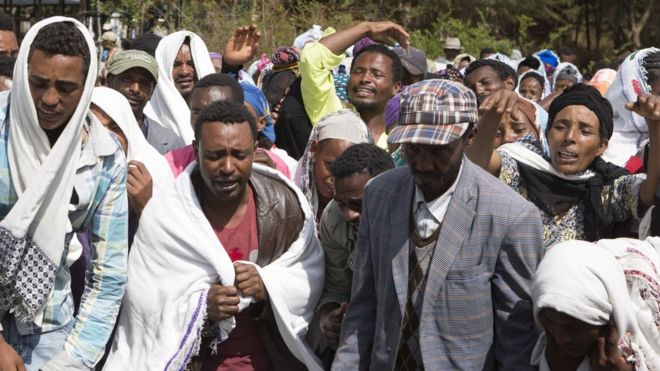
Oromo Ethiopians clash with government over land, language rights
  • Members of the ethnic community have been protesting in a cycle of dissent and retribution since November, with activists reporting as many as 200 dead despite largely peaceful demonstrations.
  • The Oromo have clashed with the government over land rights as they have found themselves pushed off their land by ongoing urban development driven by the country’s economic boom.
  • Language rights have been a particular flashpoint, with the government’s refusal to officially recognize Oromo, the country’s most widely spoken native language, leading to Amharic-only instruction in schools.

Read more:
Video: Anger among Ethiopia’s Oromo ethnic group boils over” (France 24)
What do Oromo protests mean for Ethiopian unity?” (BBC)
Ethiopian students demand end to police crackdowns in rare protest” (Reuters)

(Image Credit: via BBC)

Myanmar News | Ethnic Minorities

Ethnic health groups in Myanmar call for government recognition as new president sworn in
  • The Health Convergence Core Group (HCCG), a coalition eight ethnic and community health organizations, has led the effort to see local health organizations recognized under the new Burmese government.
  • At a conference that brought together 110 people from 21 organizations ahead of the swearing in of Myanmar’s new president, healthcare leaders called for the decentralization of public health services to be more inclusive of healthcare provided by community organizations.
  • Ethnic health groups provide a broad range of services, from reproductive healthcare to health education, that are shaped by the cultural and health specificities of Myanmar’s ethnic minorities.

Read more:
Ethnic health organizations call for Burmese government’s recognition of community-based health services” (Burma News International)
Community health: We care for our own” (The Myanmar Times)

(Image Credit: EPA via The Myanmar Times)

Mozambique Feature | LGBT & HIV

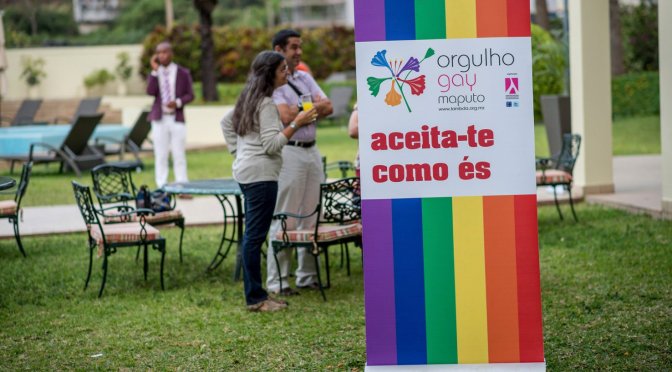
LGBT Mozambicans’ Struggle for Healthcare Visibility and Protection

Despite the decriminalization of homosexuality in Mozambique in June 2015, LGBT Mozambicans, particularly those living with HIV, are still struggling for health security in the nation. While international organizations have stepped in to provide support, domestic clinics continue to discriminate while attempting to contain the country’s HIV infection rates, one of the highest in the world. Advocacy groups have begun working to create guidelines for the testing and treatment of the LGBT population as the continued exclusion of the highest-risk population has exacerbated the public health crisis.

Read more:
Mozambique’s enduring discrimination leaves gay men untreated for HIV” (The Guardian)

Additional:
Lambda (Mozambique LGBT advocacy group)
Dispatches: Mozambique’s Double Speak on LGBT Rights” (Human Rights Watch, January 2016)
Mozambique decriminalises gay and lesbian relationships” (BBC, July 2015)

(Image Credit: LambdaMoz, via The Guardian)

India Feature | Women

The Women Enforcers of Ghunduribadi

While international media attention often focuses on oppressive conditions women face in India’s tribal regions, women from Ghunduribadi, in the eastern state of Odisha, have stepped up as the security forces to protect the land rights of their villages. Land rights reforms have sought to reclaim ancestral lands expropriated under British colonial laws, but enforcement has been spotty and, according to some advocates and lawmakers, diluted. As their community suffered from illegal incursions into the forest their village relies on for food and supplies, the women banded together to conduct patrols, stepping in where the law wouldn’t to ensure that their land and community are protected.

Read more:
These Indian women said they could protect their local forests better than the men in their village. The men agreed.” (Public Radio International)

Additional reading:
‘Centre, states undermining tribal rights’” (Hindustan Times)
Cong. protests ‘dilution’ of Forest Rights Act” (The Hindu)

(Image Credit: Sam Eaton/PRI)

Sudan Feature | Women Activists

The Embattled Women Activists of Sudan

A new Human Rights Watch report details the threatening conditions faced by women activists in Sudan. Women have reported being subjected to abuse, sexual violence, and arbitrary detention by Sudan’s security forces, while local media have slurred them as “lesbians and prostitutes.” As international agencies have called for more women in conflict resolution and men have continued violating women activists without impunity, women seeking to invest in their country’s future have struggled to find ways to include their voices while protecting their well-being.

Read more:
Good Girls Don’t Protest (Human Rights Watch)
Sudan: Silencing Women Rights Defenders (Human Rights Watch, YouTube)
‘Good girls don’t protest’: report exposes attacks on Sudan’s female activists” (The Guardian)

Saudi Arabia News | LGBT & Mistaken Identity

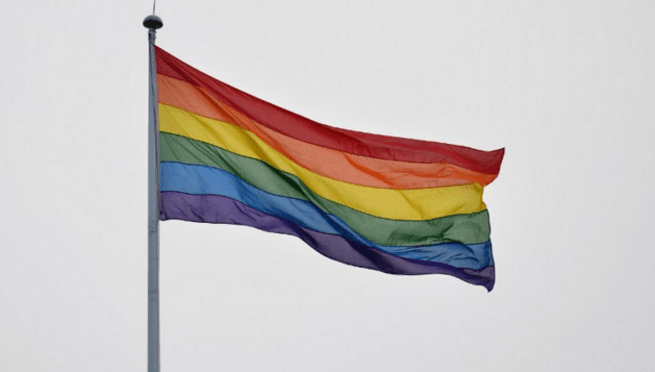
Saudi man arrested in Jeddah for flying rainbow flag
  • The doctor was arrested by the Committee for the Promotion of Virtue and the Prevention of Vice, Saudi Arabia’s religious police, for displaying the international symbol of LGBT pride.
  • The man claimed to be unfamiliar with the meaning, having purchased the flag online because his children enjoyed it, and was later released on bail after an investigation and the removal of the flag.
  • His arrest comes as Saudi authorities have announced that “soliciting homosexual acts” via social media will be punishable by death.

Read more:
Saudi man arrested for flying Pride flag above home” (Middle East Eye)
Saudi man arrested for flying ‘pretty’ rainbow flag, had no idea it represented gay pride” (Al Bawaba)
(CNN Arabic) طبيب يرفع علم “المثليين” على منزله بجدة.. والقتل تعزيراً قد تصبح عقوبة الشواذ المجاهرين إلكترونياً

(Image Credit: via Al Bawaba)

Bahrain News | Shiite Dissidents

Bahrain revokes citizenship of dissidents as denaturalization campaign continues
  • Five Bahrainis were stripped of their citizenship and sentenced to five to 15 years of jail time after being convicted of terror affiliation, public-institution disruption, and weapon possession.
  • Political dissidents and human rights organizations have accused the Sunni monarchy of weaponizing citizenship for demographic redistribution and the suppression of dissent and rights advocacy among the Shia-majority population.
  • Denaturalization is a controversial practice that leaves many effectively stateless and subject to deportation, with 208 Bahrainis having been denaturalized in 2015 alone.

Read more:
Manama Deprives Five More Bahrainis of Citizenship” (Tasnim News Agency)
Bahrain: Stop Deportations of Nationals” (Human Rights Watch)
Bahrain citizen expulsions ‘chilling’, says Amnesty” (Arabian Business)

(Image Credit: via Human Rights Watch)