Partial ban on public dress in Islamic veils clears hurdle in the Netherlands
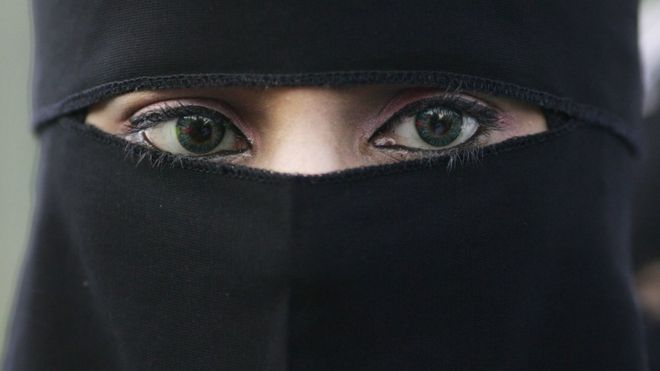
The Dutch lower house approved legislation that would ban the wearing of “face-covering clothing” including the burqa and the niqab, sending the bill to the Senate for final approval.
The ban, which would impose a more than €400 fine on offenders, would apply to public spaces including educational institutions, healthcare centers, public transportation, and government buildings.
Although data indicates only a few hundred women wear the veils, the legislation comes as a part of a wave of European legislation targeting traditional Islamic wear, including in France and Belgium.
Dutch government announces inquiry into violent twilight of colonialism in Indonesia
Prime Minister Mark Rutte announced an investigation into the violent conflict between the Dutch military and Indonesians that took place from 1945 to 1949.
The Dutch government has begun to admit to a host of war crimes during the colonial war including mass killings, torture, and summary executions, with the conflict having brought about the death of at least 100,000 Indonesians.
Indonesia was a Dutch colony from 1800 to 1949 and is widely recognized as having contributed significantly to the contemporary wealth of the western European nation.
More than 100 arrested during anti-Black Pete protest in the Netherlands
Despite a day-long ban, demonstrators took to a holiday festival in Maassluis to protest the ongoing national reverence for Zwarte Piet (Black Pete), a controversial figure black Dutch and allies say perpetuates racist stereotypes.
The figure has been under fire for years as its status as a national holiday tradition has been called into question for its ties to the Netherlands’ racist colonial history, including by the U.N.
Adding to the controversy is the frequency with which Black Pete is performed by white people in blackface in parades and other celebratory events.
Shelterless migrants arrive on streets of Paris, leading to denunciation by French president
More than 6,000 migrants and refugees seeking to enter the U.K. from France have been funneled into shelters and streets around France following the forced evacuation of the “Jungle” camp in Calais.
Paris security officials estimate an increase in the number of unsheltered asylum-seekers from around 1,500 to 2,000-2,500 in just a few days.
Hundreds of tents and cardboard flooring mark attempts by migrants to shelter themselves from the cold as Paris’s shelter supply—fewer than 1,000 beds—has been far outstripped by demand in the French capital.
France and U.K. resettle asylum-seekers in preparation for dismantlement of Calais camp
The government—with the help of more than 10,000 refugee aid agencies—has begun moving an estimated 5,000 to 10,000 asylum-seekers out of the Calais camp (known as the “Jungle”) and into “reception centers” throughout the country.
The UK has committed to accepting unaccompanied children across the border, although local agencies have expressed concern about a lack of planning to facilitate the transfer process.
The asylum-seekers are expected to spend an average of two months in the centers under the supervision of social workers before being again relocated while their asylum applications are processed, though some report having languished in limbo for longer.
French court overturns ban on burkinis in Villeneuve-Loubet
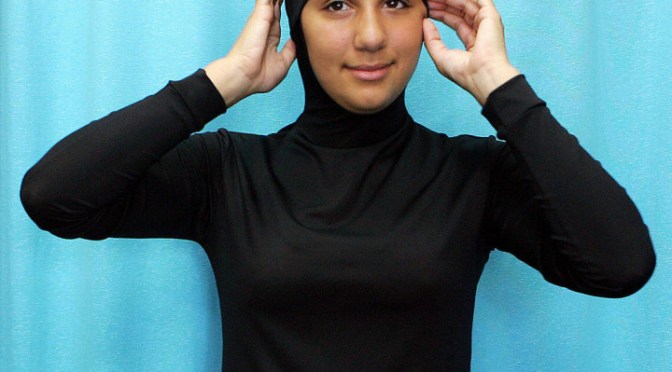
The State Council, the highest administrative court in the country, ruled the ban on the religiously inspired bathing suit constituted a violation of civil liberties, including freedom of movement and religious freedom.
The decision opens the door to challenges to similar bans in at least 30 other municipalities.
The bans have roiled political tensions in the aftermath of IS-coordinated and -inspired attacks in the country, with government officials and civil liberties advocates clashing over the limits of the national security apparatus.
Cannes and Villeneuve-Loubet mayors ban burkinis on public beaches
Cannes Mayor David Lisnard said the hooded full-body swimsuits “create risks of disrupting public order,” with another municipal official elaborating that such garments display “allegiance to terrorist movements.”
The measure falls in line with the French government’s antagonism of public displays of religious affiliation, which have discriminated against observant Muslims—particularly women—in the country.
Following in Cannes’ footsteps, Mayor Lionnel Luca banned burkinis in the coastal town of Villeneuve-Loubet, stating such garments aren’t “hygienic” or in line with the ideological principle of laïcité, or enforced public secularism.
In the wake of the attack that left more than 80 dead during Bastille Day festivities in Nice, French Muslims have expressed fears of scapegoating for the violent crime and others that have erupted over the last two years in France. An attack that left a Catholic priest dead in Saint-Etienne-du-Rouvray further inflamed tensions in the country as the nation responded to its fifth terrorist attack in 2016. Fearing the ongoing state of emergency and retaliatory attacks against their communities, many French Muslims, who have been among the victims of these attacks, have made large public condemnations of the attackers and expressed solidarity with non-Muslim French neighbors and the counterterrorism efforts. Observers and commentators have offered analysis on what the recent attacks mean for Muslim relations in France and how the country can move forward as the country battles inequality at home and threats from abroad.
As a series of controversial shootings of African-American men by police has renewed attention to the Black Lives Matter movement in the U.S., people around the world have stood in solidarity with black Americans seeking to root out racial profiling, excessive use of force, and lack of accountability in U.S. law enforcement. For some, the demonstrations have been defined mostly by a kind of international allyism, but in many parts of the world, the American movement has prompted reflection on the treatment of local black communities—native, historical, and immigrant—by law enforcement, politicians, and broader society. Here is a look at the global demonstrations and solidarity movements in the name of Black Lives Matter: Continue reading Global Events: Black Lives Matter Protests→
Hate crime reports surge in U.K. in wake of Brexit
Since the U.K. voted to leave the European Union, a 500% increase in hate crimes reported online has drawn attention to a wave of racist, anti-immigrant sentiment in the country.
Some 331 reports have been filed through the online report filing portal in the week since the vote (a significant increase from the weekly average of 63) as critics of the “Leave” campaign have accused the anti-E.U. movement of stirring xenophobic sentiment in the country.
PM David Cameron announced additional funding to security forces to stem the tide and called on politicians across political parties to condemn hate crimes.
UK MP assassinated after meeting with constituents
Labour Party MP Jo Cox was murdered near near a library in the village of Birstall, near Leeds.
The homicide was allegedly the culmination of an altercation between Cox, elected to Parliament in 2015, and 52-year-old Tommy Mair.
At least three witnesses reported that Mair shouted “Britain first” while shooting Cox, the slogan and name of a far-right nationalist group pushing for the U.K.’s exit from the European Union in the upcoming referendum on June 23.
Citations
Education for Refugees, from Preschool to Professorship
Global emergencies like war, natural disaster, and health pandemics have uprooted families and disrupted education at all levels as displaced students have been deprived of access to schools. Students in early childhood, primary, secondary, and higher education as well as teachers, professors, and other educational professionals have experienced delayed educational and professional development during times of crisis, disabling dreams and prospects for the future. Whether in Malaysia, Greece, or Lebanon, displaced communities have struggled to adjust to lost livelihoods, new cultures, and uncertain futures.
As the average duration of displacement has dramatically increased over the last three decades, international humanitarian organizations have been pressed to develop long-term programs and partnerships to replace short-term emergency educational provision. These challenges have been compounded by the disproportionate burden of education in emergencies shouldered by developing countries, where refugee populations vastly outnumber those in high-income countries. Over time, the educational pipeline has come to look less like a pipe than a funnel, with progressive exclusion and decreasing resources constraining opportunity as refugee children age. Workarounds developed in earlier stages have at times installed barriers for students at more advanced education stages as credentialing standardization and selective admissions disadvantage students from newly developed, temporary, and informal educational institutions outside of the national curriculum.
From connected learning hubs in refugee camps in Kenya to elementary classrooms in Canada, technological innovation and international coordination have worked to connect displaced students to well-resourced institutions and support educational continuity through crises. Meanwhile, new momentum in the development of transnational platforms for educational financing, advising, and service delivery has reinvigorated the global education community and increased commitment to education for all, regardless of circumstance. Here is a look at select recent news, features, and open research on and resources for global refugee education and scholar protection: Continue reading Citations | Refugee Education→
The International Day Against Homophobia, Transphobia & Biphobia
Commemorating the day when homosexuality was de-pathologized by the World Health Organization in 1990, the 13th-annual International Day Against Homophobia, Transphobia & Biphobia (IDAHOT) stands as an occasion for global mobilization towards LGBT visibility and security. The day, like many global celebrations, is also one many governments choose to speak out on global human rights and minority security, announcing initiatives to support their LGBT citizens and international projects.
Even today, ongoing disagreements between nations over LGBT rights have prompted diplomatic rows and roadblocks to international cooperation, including the recent objection of 51 Muslim countries to the participation of LGBT groups in a U.N. AIDS forum in June. The push to extinguish homophobia, transphobia, and biphobia at all geographic levels remains important to the global mobility of LGBT people worldwide.
LGBT Nigerians have continued wrestling with conflicting legal messages, with the recent passage of the landmark HIV Anti-Discrimination Act doing little to undo the effects of a 2014 anti-homosexuality law.
The Gay and Lesbians Association of Zimbabwe (GALZ) organized events for IDAHOT in Bulawayo, focusing on mental health as ongoing social and healthcare difficulties plague the community.
Though homosexuality remains criminalized in Tunisia, activists have achieved increased visibility and pushed for legal reform amidst ongoing discrimination.
Israel reaffirmed its commitment to LGBT Israelis, announcing funding to support an emergency shelter for LGBT youth and a hostel for trans people who have recently undergone gender confirmation surgery.
Days before IDAHOT, activists staged a sit-in outside of a Beirut gendarmerie, protesting Lebanon‘s anti-homosexuality legal holdovers from French occupation. Similarly, the Lebanese Medical Association for Sexual Health (LebMASH) issued an appeal to the Lebanese government to decriminalize same-sex relations, arguing for recognition of homosexuality’s presence within the natural variation of human sexuality.
U.S. President Barack Obama released a statement of support as his administration lended its voice to a national debate over the bathroom rights of trans people.
Across Latin America, important gains in same-sex partnership and family rights and gender identity healthcare and legal protections have heartened LGBT Latin Americans, but the region continues to have some of the highest reported rates of violence against the LGBT community in the world.
LGBT organizations held cultural and political events throughout Argentina to highlight conditions facing the Argentine LGBT community, call for an anti-discrimination law, and press for federal recognition of the International Day Against Sexual Orientation and Gender Identity Discrimination, as the day is known.
Cuba celebrated the day fresh off Pride events in Havana, where Mariela Castro, daughter of President Raúl Castro, led a parade of thousands through the city streets.
As the country continues contentious battles including the push for marriage equality and erasure of “gay panic” legal defenses, rainbow flags and celebrations appeared across Australia, including over police stations in Canberra, in the streets of Brisbane, and in the senior-care facilities of Tasmania. In Victoria, officials announced a retreat for Aboriginal gender minorities to be held later in the year.
In China, a study conducted by the U.N. Development Programme, Peking University, and the Beijing LGBT Center, the largest of its kind to date, was released revealing that only 5% of LGBTI Chinese are fully out at school and work, but also showed encouraging levels of acceptance of LGBTI people among China’s youth. The head of Hong Kong’s Equal Opportunities Commission expressed support for anti-discrimination legislation at IDAHOT festivities in the city.
In Fiji, former President Ratu Epeli Nailatikau joined festivities at the French Ambassador’s residence to celebrate the island’s LGBTQI community.
A tug-of-war over LGBT rights between Islamic fundamentalists and pro-diversity moderates in Indonesia has led to mixed messages about LGBT security in the nation, spurring anti-discrimination protests.
A recent Human Rights Watch report on anti-LGBT bullying in Japan served as a reminder of the purpose of the day, highlighting rampant anti-LGBT sentiment even as the government has initiated broad efforts to combat bullying in schools.
The divergent prospects for LGBTI people across Europe, from Western Europe’s distinctive commitment to the protection of gender diversity to ongoing persecution in the East, was further confirmed through a UNESCO report highlighting anti-LGBT violence in schools released as global education ministers met in Paris.
Rainbow colors appeared in the shopping district of Cyprus‘s capital as 22 organizations came together to organize events to launch the country’s third Pride Festival, focusing on the need to increase legal recognition of both sexual and gender minorities in the country.
In Gibraltar, organizers canceled event plans in support of action on marriage equality legislation currently under consideration, arguing that holding a rally in front of the Parliament as uncertainty prevails would undermine pressure on MPs.
Kosovo‘s first Pride march brought out hundreds from the LGBT community to Pristina, including the U.S. and U.K. ambassadors.
Organizations in Luxembourg planned a silent march to call attention to the plight of LGBTI individuals worldwide and call for increased international protections (including asylum).
Organizers in Serbia took the day to announce the date of this year’s Pride parade (September 18) and address concerns of homophobia as right-wing parliamentary representation has increased.
Advocates, allies, and diplomats gathered around the rainbow flag raised at the US Embassy in Latvia.
After advocates scrapped plans for IDAHOT activities in Georgia due to security concerns, a group of activists were arrested for painting pro-LGBT graffiti on administrative buildings. A “Family Day” protest against LGBT rights and visibility, the third such anti-LGBT demonstration, brought together members of Georgia’s conservative Orthodox community and international religious groups.
In the U.K., London’s new mayor promised to make the city a more just place for its LGBT residents as a rainbow flag flew over the Mayor’s Office.
Massive protests against French labor reform bring about violence, arrests, strikes
Demonstrations have been ongoing since March, when labor and student unions organized against government proposals perceived as decreasing job security and negotiating power for workers.
More than 1,000 have been arrested during clashes with police in cities like Paris and Nantes that have seen more than 300 officers injured as protesters have alleged instances of police brutality, with police unions organizing counter-protests against anti-police violence.
After President François Hollande’s government survived a no-confidence vote, union leaders planned rolling strikes and continuing demonstrations across the country.
France’s leading political women, journalists, and activists confront sexism in French politics
Two op-eds appeared over the last week as protests have grown confronting what many women in French politics—politicians, reporters, and petitioners alike—report is a culture of silence and impunity towards sexual harassment.
Appearing in the Journal du Dimanche and Libération, the op-eds called for women who have experienced sexual harassment to speak out and register formal complaints and for an expansion of investigative capacity to ensure the behavior does not go unpunished.
The effort comes as a number of scandals have engulfed male politicians, including the most recent leading to the resignation of Denis Baupin, vice president of the National Assembly, following multiple allegations of sexual harassment.
“Ce n’est pas aux femmes à s’adapter à ces milieux, ce sont les comportements de certains hommes qui doivent changer.”
Translation: “It’s not on women to adapt to these environments; it’s the conduct of certain men that must change.”





 Outlas