
Tag Archives: Economics

Israel’s Taglit-Birthright program celebrates its 500,000th participant
  • Founded at the turn of the millennium by Michael Steinhardt and Charles Bronfman, Taglit-Birthright provides free 10-day identity-building trips to Israel for Jewish youth around the world.
  • The young American woman who presented the co-founders with celebratory reminders of the beginnings of the program shares her story of reconnecting with an identity lost to her when her parents passed in her childhood.
  • Since 2000, 500,000 Jews aged 18-26 from more than 66 countries have participated.

“Molly embodies what Taglit, literally translated as ‘discovery,’ is all about, as she travels to define herself as a member of the Jewish community for the rest of her life.”

More on this story at The Times of Israel.

(Image Credit: via The Times of Israel)
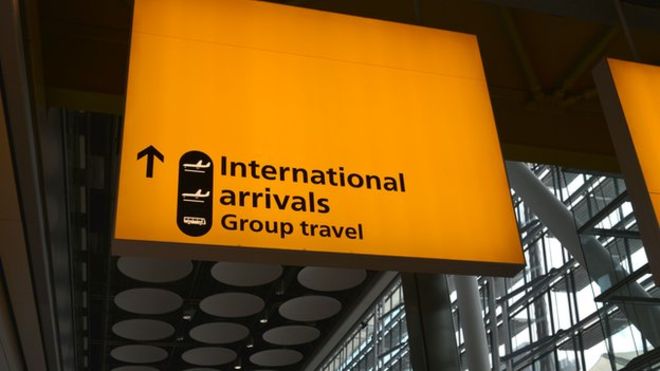
U.K. PM David Cameron proposes new restrictions on non-EU skilled-worker immigration
  • With non-EU migration to the U.K. having increased to 290,000 in 2014, Cameron has proposed increasing the base salary threshold, further restricting eligible job functions and industries, and a “skills levy” on companies hiring non-nations to be put towards domestic apprenticeships.
  • Net migration stands at 318,000 and Cameron’s government hopes to get it below 100,000.
  • Some in the business community have complained that the government’s anti-immigration stance hurts the country’s global competitiveness and economic growth.

“We understand the public’s concerns around immigration, but limiting highly skilled workers from coming to the UK is not the answer. They bring their skills and ideas to this country, pay their taxes here and boost growth. We need to keep up-skilling our population, but at the same time as attracting the best and brightest global talent.”

More on this story at BBC.

(Image Credit: BBC)

Aspirational emigration, not violence or economic destitution, is sending large numbers of Senegalese abroad in search of opportunity
  • Senegal has seen a 123% emigration rate increase versus the same time period last year, with 1,187 leaving for destinations such as France (its former colonizer), Morocco, Latin America, and Turkey.
  • Senegalese emigrants, who have at times outnumbered refugees from war-torn countries like Syria and Eritrea along Mediterranean migration routes, are leaving a politically stable, economically growing country that has seen great improvements in citizens’ standard of living.
  • Remittances from abroad have comprised an increasing share of Senegal’s economy, allowing for the infrastructural improvements driving Senegal’s success.

“People don’t go because they have nothing, they go because they want better and more. It’s aspiration. …What is happening now is not that different from the time of slavery. We are losing the arms we need to build this country.”

More on this story at The Wall Street Journal.

(Image Credit: Mackenzie Knowles-Coursin/The Wall Street Journal)

Former Al Jazeera America executive files suit against the media organization and its CEO for maintaining a racist and sexist work environment
  • Shannon High-Bassalik, former VP of Programming and Communications, alleges the company favored Arab and male employees, creating a hostile work environment for non-Arab women and engaging in editorial interference that diminished the objectivity of its reporting.
  • The suit comes in the wake of similar legal action taken by another employee and the resignations of three other female executives, who also cited a discriminatory work environment as the cause of their departure.
  • Al Jazeera has responded, claiming High-Bassalik did not introduce her allegations during her pre-termination external performance review.

More on this story at CNN Money.

Ethnic minority women from Thailand’s mountains find difficulties in adjustment and opportunity in the country’s urban centers
  • Government and international efforts to crackdown on deforestation, rebel territories, and drug production have driven many of Thailand’s “hill people” into the cities.
  • There, women in particular often find labor only in fruit and flower preparation or selling embroidery, which provide uneven wages at or below subsistence levels and renders women vulnerable to trafficking.
  • With little money for services, community members often rely on religious institutions for service provisions including identity card acquisition assistance and schooling for children.

“It’s better to live in the city. We don’t have land to farm in the mountains. If we had land in the mountains, I would prefer to live there.”

More on this story at Equal Times.

(Image Credit: Konstantina Vasileva, via Equal Times)

New South African visa regulations produce ambivalent response in the travel community
  • The new regulations include an unabridged birth certificate for traveling minors and biometric applications.
  • The birth certificate measure hopes to curb child trafficking, but industry officials express worry over growth slowdown and access issues in places like India and China where difficulties emerge with completing biometric applications.
  • In addition, South African aviation officials note economic problems with some of the national carrier’s longhaul routes (including to Beijing and Argentina), potentially constraining South Africans’ own mobility.

“I cannot criticise the reason for wanting an unabridged birth certificate, but in the global village we live in we compete, for instance, with Kenya for wild life safaris…It is, therefore, a complex issue and I wish it did not have a direct impact. I am not an expert on the issue, but from an airline standpoint I think it will have a negative impact.”

More on this story at Fin 24.

(Image Credit: Fin 24)

The NY Times has published a graphically enhanced look at the global migration crisis that is being called the worst since World War II
  • 38 million have been displaced within their own countries, while 16.7 million refugees have fled internationally.
  • Roughly 11 million Syrians and 3 million Iraqis have been internally displaced, while 4 million Syrians have left the country, straining the intake abilities of neighboring countries like Lebanon, Jordan, and Turkey.
  • Approximately 25,000 Bangladeshi and Rohingya migrants have been trafficked via sea in Southeast Asia, some finding conditional acceptance in Indonesia and Malaysia and others being repatriated.
  • To date, around 78,000 have traveled across the Mediterranean Sea from North Africa and Turkey, fleeing violence, persecution, and poor economic prospects in North, West, and East Africa.
  • Finally, the conflict in Ukraine has displaced 1.3 million inside the country and sent 867,000 abroad, mostly to Russia with few European countries willing to accept them.

More on this story at The New York Times.

Contracting economic prospects and increasing restrictions are driving Central Asian migrant workers from Moscow.
  • As Russia slides into recession, large net decreases in foreign populations have indicated flight from the country and fewer attempting to enter.
  • New requirements including acquisition of a work “patent,” an advance tax, medical examinations, and a test on Russian language, culture, and history have set significant new administrative and financial obstacles for migrant laborers.
  • The article highlights Kyrgyz workers, who face social isolation, discrimination, and barriers to service access.

“If America was next door, [migrants] would all leave…But what’s next door is Ukraine, Uzbekistan, Tajikistan, where the level of living is lower and there are no jobs. There’s nowhere to go.”

More on this story at The Guardian.

(Image Credit: Denis Sinyakov/Reuters, via The Guardian)

The Football League, one of England and Wales’ major association football leagues, looks to implement new management diversity initiative.
  • League Chairman Greg Clarke has worked with clubs and managers on reforming the recruitment process to be more inclusive of black, Asian, and minority ethnic (BAME) candidates.
  • Proposals such as a requirement to interview at least one BAME candidate where an application is received mirror the U.S. National Football League’s Rooney Rule.
  • Of the 72 current club managers, only six are are minorities.

“It is our hope that this moment of enlightenment might stir some into adopting best practices in recruitment, appointment and retention to achieve equality and diversity outcomes. Professional football clubs should reflect the demography of their location and the aspirations of the communities surrounding their existence.”

More on this story at The Guardian.

(Image Credit: Football League/PA, via The Guardian)

U.S. Supreme Court rules Muslim woman can pursue discrimination claim against Abercrombie & Fitch for being denied job because of religious headscarf.
  • The ruling was 8-1 in rejection of the notion that companies can shield themselves from discrimination claims through neutrally applied, one-size-fits-all policies.
  • The claim sparking the judgment came from Samantha Elauf, who in 2008 was turned down for a job at an Abercrombie Kids store due to the company’s policy banning headwear.
  • Shifting the responsibility onto employers for discussing accommodations, the judgment clarifies that applicants do not have to disclose their religious affiliation in order for a necessary, reconciliatory conversation about accommodations to begin with applicants.

More on this story from Reuters.

News

Masaai women in Kenya find opportunity for themselves and their villages through the solar energy industry.
  • The Women and Entrepreneurship in Renewable Energy Project (WEREP) trains local women to install solar energy products.
  • Communities benefit from easier electricity access, decreases in energy costs, and environmental and livestock protection in a country that sees 68% of its population disconnected from electrical grids.
  • With the market penetration of solar energy having risen from 0 to 20% since 2006, clean energy advocates are hopeful that these women will help market and spread the products throughout their communities.

“Our community customs do not allow women to own any property…But now women here own the solar technology, and it is something we are very happy about.”

More on this story at Reuters.

News

Satori Interactive, a tech company founded and led by two black sisters, wins Black Enterprise‘s Family Business of the Year award.
  • The sisters, both computer science graduates, founded the company in 2004 in an industry that still struggles with diversity in both gender and race.
  • The 2013 U.S. Census Report revealed that only 25% of STEM employees in 2011 were women and only 6% African-Americans, despite the latter graduating with computer science degrees from elite universities  at twice that rate.
  • Satori Interactive provides business-to-business services focusing on user experience research and consulting.

“Our father would tell us, ‘If you’re good at what you do, people respect you and they welcome your suggestions and feedback. Nobody can take your knowledge away from you.’”

More on this story at The Root.

(Image Credit: Ashley Zimmerman, via The Root)

The Ethical Fashion Initiative works to give designers and artisans from the developing world a voice in the global fashion industry.
  • The program is supporting four brands with designers representing Cote d’Ivoire, South Africa, Nigeria, and Angola at this year’s major international trade show for men’s fashion, Pitti Imagine Uomo.
  • The Initiative also confronts unethical labor practices, pushing for heightened standards throughout the supply chain that will improve conditions for the laborers on which the industry is built.
  • EFI notes that its efforts help financially empower women in sustainable ways, allowing them to mobilize their creativity and talents to gain independence and support their families.

“We work with women who sometimes face discrimination in their communities, but by having a job, their position in society improves…They gain independence and respect, and in many situations they become the only breadwinner in their families.”

More on this story at the Inter Press Service News Agency.

(Image Credit: ITC Ethical Fashion Initiative 5, via Inter Press News Agency)

Pop-up restaurant Mazi Mas’s open menu creates unique opportunities for immigrant women in London.
  • Founder/CEO Nikandre Kopcke, himself German and Greek-American, offers not only work opportunity but also entrepreneurial lessons to its workers.
  • Women from Brazil, China, Ethiopia, Iran, Jamaica, Nicaragua, Peru, the Philippines, Senegal, and Turkey have worked with Mazi Mas.
  • Kopcke hopes for international expansion, including to Berlin and hopefully New York.

More on this story at Gulf News.

Image Source: Bloomberg, via Gulf News

The Moroccan government publishes first data on its sex-worker population despite social conservatives who have long prohibited such official recognition. More from Al Jazeera.