Tag Archives: India & Sri Lanka

International Day Against Homophobia, Transphobia & Biphobia

The International Day Against Homophobia, Transphobia & Biphobia

Commemorating the day when homosexuality was de-pathologized by the World Health Organization in 1990, the 13th-annual International Day Against Homophobia, Transphobia & Biphobia (IDAHOT) stands as an occasion for global mobilization towards LGBT visibility and security. The day, like many global celebrations, is also one many governments choose to speak out on global human rights and minority security, announcing initiatives to support their LGBT citizens and international projects.

Even today, ongoing disagreements between nations over LGBT rights have prompted diplomatic rows and roadblocks to international cooperation, including the recent objection of 51 Muslim countries to the participation of LGBT groups in a U.N. AIDS forum in June. The push to extinguish homophobia, transphobia, and biphobia at all geographic levels remains important to the global mobility of LGBT people worldwide.

Here are highlights from IDAHOT 2016:

Africa & the Middle East

Video Credit: Collectif Arc-en-Ciel

LGBT Nigerians have continued wrestling with conflicting legal messages, with the recent passage of the landmark HIV Anti-Discrimination Act doing little to undo the effects of a 2014 anti-homosexuality law.

While a moratorium on LGBT criminalization is officially in place in Malawi, individuals are subject to entrenched marginalization and stigmatization in healthcare services, with a national referendum on LGBT rights having stalled.

The Gay and Lesbians Association of Zimbabwe (GALZ) organized events for IDAHOT in Bulawayo, focusing on mental health as ongoing social and healthcare difficulties plague the community.

Though homosexuality remains criminalized in Tunisia, activists have achieved increased visibility and pushed for legal reform amidst ongoing discrimination.

Israel reaffirmed its commitment to LGBT Israelis, announcing funding to support an emergency shelter for LGBT youth and a hostel for trans people who have recently undergone gender confirmation surgery.

Days before IDAHOT, activists staged a sit-in outside of a Beirut gendarmerie, protesting Lebanon‘s anti-homosexuality legal holdovers from French occupation.  Similarly, the Lebanese Medical Association for Sexual Health (LebMASH) issued an appeal to the Lebanese government to decriminalize same-sex relations, arguing for recognition of homosexuality’s presence within the natural variation of human sexuality.

The Americas

https://www.youtube.com/watch?v=uB9r1jcQPX0
Video Credit: teleSUR

U.S. President Barack Obama released a statement of support as his administration lended its voice to a national debate over the bathroom rights of trans people.

In Canada, PM Justin Trudeau announced an anti-discrimination bill protecting trans security as advocates organized a demonstration for trans healthcare rights following the firebombing of a trans health clinic.

Across Latin America, important gains in same-sex partnership and family rights and gender identity healthcare and legal protections have heartened LGBT Latin Americans, but the region continues to have some of the highest reported rates of violence against the LGBT community in the world.

LGBT organizations held cultural and political events throughout Argentina to highlight conditions facing the Argentine LGBT community, call for an anti-discrimination law, and press for federal recognition of the International Day Against Sexual Orientation and Gender Identity Discrimination, as the day is known.

Cuba celebrated the day fresh off Pride events in Havana, where Mariela Castro, daughter of President Raúl Castro, led a parade of thousands through the city streets.

Asia Pacific

Video Credit: Out for Australia

As the country continues contentious battles including the push for marriage equality and erasure of “gay panic” legal defenses, rainbow flags and celebrations appeared across Australia, including over police stations in Canberra, in the streets of Brisbane, and in the senior-care facilities of Tasmania. In Victoria, officials announced a retreat for Aboriginal gender minorities to be held later in the year.

In China, a study conducted by the U.N. Development Programme, Peking University, and the Beijing LGBT Center, the largest of its kind to date, was released revealing that only 5% of LGBTI Chinese are fully out at school and work, but also showed encouraging levels of acceptance of LGBTI people among China’s youth. The head of Hong Kong’s Equal Opportunities Commission expressed support for anti-discrimination legislation at IDAHOT festivities in the city.

In Fiji, former President Ratu Epeli Nailatikau joined festivities at the French Ambassador’s residence to celebrate the island’s LGBTQI community.

Advocates took to op-ed columns in India to confront ongoing transphobia, reflect on gay representation in film, and highlight everyday homophobia in urban life.

A tug-of-war over LGBT rights between Islamic fundamentalists and pro-diversity moderates in Indonesia has led to mixed messages about LGBT security in the nation, spurring anti-discrimination protests.

A recent Human Rights Watch report on anti-LGBT bullying in Japan served as a reminder of the purpose of the day, highlighting rampant anti-LGBT sentiment even as the government has initiated broad efforts to combat bullying in schools.

Europe & Eurasia

Video Credit: Radio Free Europe/Radio Liberty

The divergent prospects for LGBTI people across Europe, from Western Europe’s distinctive commitment to the protection of gender diversity to ongoing persecution in the East, was further confirmed through a UNESCO report highlighting anti-LGBT violence in schools released as global education ministers met in Paris.

Rainbow colors appeared in the shopping district of Cyprus‘s capital as 22 organizations came together to organize events to launch the country’s third Pride Festival, focusing on the need to increase legal recognition of both sexual and gender minorities in the country.

In Gibraltar, organizers canceled event plans in support of action on marriage equality legislation currently under consideration, arguing that holding a rally in front of the Parliament as uncertainty prevails would undermine pressure on MPs.

Kosovo‘s first Pride march brought out hundreds from the LGBT community to Pristina, including the U.S. and U.K. ambassadors.

Organizations in Luxembourg planned a silent march to call attention to the plight of LGBTI individuals worldwide and call for increased international protections (including asylum).

Organizers in Serbia took the day to announce the date of this year’s Pride parade (September 18) and address concerns of homophobia as right-wing parliamentary representation has increased.

Advocates, allies, and diplomats gathered around the rainbow flag raised at the US Embassy in Latvia.

On the island of Gozo in Malta, NGO leaders celebrated gender diversity in the country.

After advocates scrapped plans for IDAHOT activities in Georgia due to security concerns, a group of activists were arrested for painting pro-LGBT graffiti on administrative buildings. A “Family Day” protest against LGBT rights and visibility, the third such anti-LGBT demonstration, brought together members of Georgia’s conservative Orthodox community and international religious groups.

In the U.K., London’s new mayor promised to make the city a more just place for its LGBT residents as a rainbow flag flew over the Mayor’s Office.

(Image Credit: EPA, via The Straits Times)

India News | Women, Indigenous & Dalit

India PM launches entrepreneurship initiative for members of historically disadvantaged communities
  • PM Narendra Modi announced Stand Up India, a program to spur entrepreneurship and business-technological integration among women and India’s Scheduled Castes and Scheduled Tribes, historically disadvantaged groups subject to affirmative action by the government.
  • Banks will be required to sponsor relatively inexpensive loans for entrepreneurs from disadvantaged and underrepresented communities.
  • The initiative comes ahead of next year’s elections in the state of Uttar Pradesh, with the Modi-led National Democratic Alliance (NDA) coalition seeking to court Dalit and tribal votes.

Read more:
PM promises to ‘change’ lives of tribals, Dalits with ‘Stand up India’” (The Hindustan Times)
‘Stand Up India’ will transform lives of Dalits, tribals: Modi” (The Hindu)
‘Stand up India’: PM Modi to book first e-rickshaw through Ola” (The Times of India)

(Image Credit: Sandeep Saxena/The Hindu)

India Feature | Women

The Women Enforcers of Ghunduribadi

While international media attention often focuses on oppressive conditions women face in India’s tribal regions, women from Ghunduribadi, in the eastern state of Odisha, have stepped up as the security forces to protect the land rights of their villages. Land rights reforms have sought to reclaim ancestral lands expropriated under British colonial laws, but enforcement has been spotty and, according to some advocates and lawmakers, diluted. As their community suffered from illegal incursions into the forest their village relies on for food and supplies, the women banded together to conduct patrols, stepping in where the law wouldn’t to ensure that their land and community are protected.

Read more:
These Indian women said they could protect their local forests better than the men in their village. The men agreed.” (Public Radio International)

Additional reading:
‘Centre, states undermining tribal rights’” (Hindustan Times)
Cong. protests ‘dilution’ of Forest Rights Act” (The Hindu)

(Image Credit: Sam Eaton/PRI)

India News | Gay & Lesbian

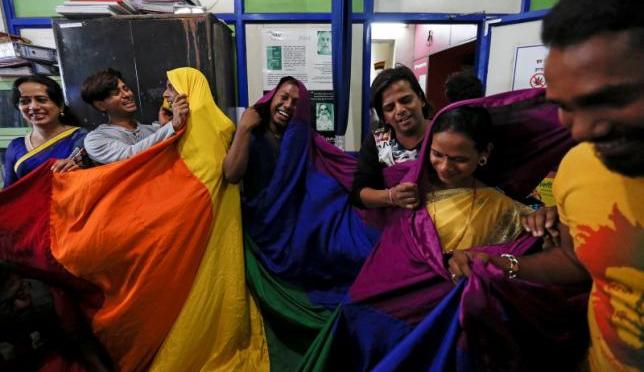
India’s top court to reconsider law criminalizing homosexual sex
  • The court announced it will review the constitutionality of the law following a five-judge panel to review the 1860 law, reinstated in 2013 after a four-year reprieve.
  • Homosexual acts carry a 10-year prison sentence, and though rarely enforced, the law can be used to coerce and intimidate individuals in a country where 75% of the population continues to express disapproval of homosexuality.
  • Should the court uphold the law, advocates would have to depend on future reform to come from the country’s largely conservative parliament.

Read more:
India’s Supreme Court will review law criminalizing gay sex” (Reuters)
Supreme Court agrees to revisit law criminalising homosexuality” (The Indian Express)
SC to hear petitions on criminalisation of homosexuality tomorrow” (The Hindustan Times)

(Image Credit: Danish Siddiqui/Reuters)

Interregional News | Shiite Muslims

Execution of Saudi Shiite leader sparks protests throughout the Middle East and South Asia
  • From Saudi Arabia to India by way of Bahrain, Lebanon, Iraq, Iran, and Pakistan, Shiite Muslims protested the Saudi government’s execution of Shia cleric Nimr al-Nimr.
  • Nimr had been convicted of order followers to attack the police, a crime of “banditry” that carries an automatic death sentence.
  • Before his arrest in 2012, Nimr had publicly called for nonviolent demonstrations to draw attention to the oppression of the minority Shia community in Saudi Arabia.

Read more:
Shi’ite Muslims worldwide decry execution of Saudi cleric” (Reuters)
Protests in Kashmir, Bahrain and Pakistan over killing of Sheikh Nimr al-Nimr” (The Guardian)
Sheikh Nimr al-Nimr: Figurehead Shia cleric” (BBC)

(Image Credit: AFP, via BBC)

India News | Foreigners & Non-Hindus

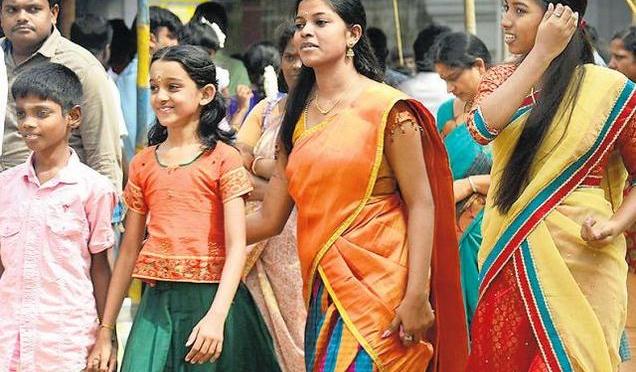
Court orders Hindu temples in Tamil Nadu to turn away out-of-dress-code visitors
  • The Madras high court issued an order banning jeans, shorts, skirts, leggings, and short sleeves from the 6,000 Hindu temples in the southern Indian state.
  • The court cited a desire to “enhance spiritual ambiance” as the motivation for the ruling.
  • The ruling applies to locals as well as foreigners at what are major tourist attractions, with one temple receiving more than 4 million visitors per year.

Read more:
Tamil Nadu temples ring in dress code” (The Hindu)
Hindu temples in southern India enforce western clothing ban” (The Guardian)

(Image Credit: M. Vedhan/The Hindu)

Sri Lanka News | Tamils

Sri Lanka announces reconciliation measures to facilitate civil war resolution
  • As part of the reconciliation process following the country’s 26-year civil war, the government will provide certificates acknowledging the forced disappearance of thousands, many of whom were ethnic Tamils abducted by security forces.
  • In addition to an Office of Missing Persons, Sri Lankan Foreign Minister Mangala Samaraweera promoted the establishment of a truth commission, Office of Reparations, and new constitution as part of the resolution process.
  • The announced measures follow a survey of families of the missing conducted nationwide, with more than 20,000 complaints have been filed with the government over such disappearances since 2013.

Read more:
Sri Lanka plans new statute to redress Tamils’ grievances” (The Hindu)
Sri Lanka to issue missing certificates to families of civil war disappeared” (The Guardian)
Sri Lanka Prepares ‘Certificates of Absence’” (Inter Press Service)

India News | Muslims

Muslim man killed, son injured by mob outside New Delhi over alleged beef consumption
  • Mohammad Akhlaq, 50, was beaten to death by a crowd in Dadri after rumors of his family’s storing and eating beef spread.
  • After police arrested six from the mob, protests erupted between hundreds of Muslim and Hindu residents, leading to riot intervention by the police.
  • Recent incidents of violence against Muslims in rural villages fueled by suspicions of cow-slaughtering highlight tensions over bovine protection in the country, with cows occupying a sacred space according to the theology of the India’s majority Hindus.

Read the full story:
Dadri: Mob kills man, injures son over ‘rumours’ that they ate beef” (The Indian Express)
Hindu mob lynches Muslim rumored to have killed a cow” (Reuters)
‘Beef-eating rumour’: Massive security in Dadri near Delhi after man’s death” (The Times of India)

India News | Critics

Indian activist targeted by government investigations during pursuit of PM for negligence during 2002 massacres
  • Rights activist Teesta Setalvad has been seeking to hold PM Narendra Modi responsible for negligence and conspiracy during the 2002 riots that left more than 1,000 dead–many of them Muslim–in Gujarat, where Modi was chief minister.
  • Setalvad has been subject to numerous unannounced searches, bank freezes, mobility restrictions, interrogations, and lawsuits by government bodies and Modi’s allies.
  • Tensions have also led to government monitoring of and restrictions on international NGOs including the Ford Foundation, from whom Setalvad received funding for projects unrelated to her battle with Modi.

“What I’m not worried about is them finding anything incriminating against us. … I’m worried they’ll find things we have that incriminate them.”

Read the full story at The New York Times.

(Image Credit: Manpreet Romana/The New York Times)

India News | Muslim Women

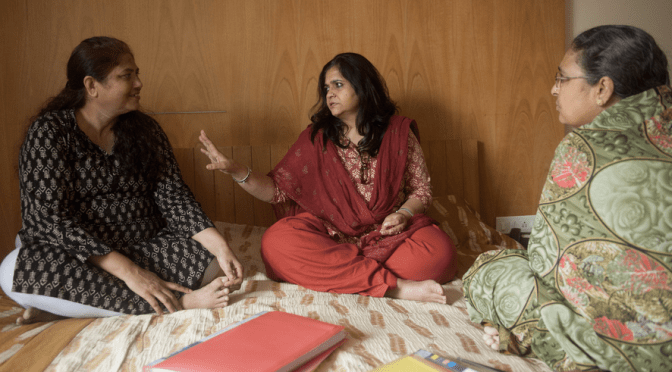
“Instant divorce” in Muslim personal law leaves Indian Muslim women highly vulnerable
  • Triple talaq (saying the word “talaq” three times in a row) grants men instant, unquestioned divorce from their wives, allowing them to throw women out of their home and take their children.
  • A government committee has submitted a recommendation for a ban on the practice to India’s ministry of women and child development, but it faces stiff opposition from religious groups.
  • Because of India’s religious plurality, the government has left matters of personal law (including marriage and divorce) to be governed by individual religious communities, allowing talaq (permitted under sharia law) to have legal standing.

“For the women I see in my office – hardworking women, good wives and good mothers – this is just plain and simple cruelty.”

Read the full story at the Guardian.

(Image Credit: Amrit Dhillon, via The Guardian)

India News | Immigrants

India plans to amend law to grant citizenship to migrants seeking asylum from religious persecution
  • The Home Ministry is expected to amend the Citizenship Act, 1955, to grant citizenship to religious minorities who fled persecution in neighboring Pakistan and Bangladesh.
  • Immigrants who arrived before the start of 2015 will be eligible for citizenship through either a 7-year residency or 12-year naturalization process.
  • Legislators are also looking to amend visa laws to allow undocumented religious asylum-seekers to remain in the country while their citizenship applications are processed.

Read the full story at The Hindu.

(Image Credit: AP file photo, via The Hindu)

India Perspectives | Jewish Indian

Jewish in India

Nathaniel Jhirad shares his perspective on growing up Jewish in India, a country where the religions of the world often find themselves in close quarters. From Muslim-majority Jewish schools to overlapping calls to prayer, Nathaniel offers an optimistic view on interfaith relations in the world’s second-largest nation.

Read Nathaniel’s story at Forward.

(Image Credit: Nathaniel Jhirad, via Forward)

India News | LGBTQ

Inaugural flashmob draws crowds and attention to LGBTQ issues in New Delhi
  • Led by the queer collective Harmless Hugs, around two dozen youth created a flashmob performance in a major New Delhi commercial district in support of sexual and gender minorities.
  • Spending hours over weekends learning choreography, the group focused on using dance and other messaging to communicate acceptance and support of same-sex love and queer identities.
  • The event followed up on similar annual flashmobs organized in Mumbai.

“Through this dance, I hope the message reaches the government that if loving someone is a crime, then the whole world is a criminal.”

Read the full story at the Hindustan Times.

(Image Credit: Arun Sharma/Hindustan Times)

India & Bangladesh News | Immigrants & Nationals

Indian and Bangladeshi enclave residents decide on citizenship as deadline nears
  • In May, India and Bangladesh agreed to return enclaves within their respective borders to one another.
  • More than 50,000 enclave residents must now choose which citizenship they would like to have by July 31st, which will determine whether they will have to move.
  • Despite having officially been citizens of their country of national origin, the residents have effectively been stateless as they lack access to public services in their country of residence.

Read the full story at the BBC.

(Image Credit: via BBC)

India Research | Women

Indian women and children showing progress in key health indicators
  • The U.N.-supported Rapid Survey on Children showed significant positive developments in the rates of stuntedness in children, child marriage, breastfeeding, immunization, and hospital childbirths.
  • The survey–the first of its kind in India in nearly a decade–still indicated that rates of adverse behaviors and conditions remain high, however.
  • Since the initial report covering 2005-06, the government has introduced a number of public health measures, including introducing female community health advisers and free facilitation services, such as hospital transportation for pregnant women.

“Overall we are pleased about the data as it shows a positive trend. … Anything India does on development has a huge impact globally and I think everyone is optimistic about the progress made.”

Read the full story from the Thomson Reuters Foundation at Reuters.