
Tag Archives: Indigenous

U.S. Feature | Native Americans

The Dakota Access Pipeline Protests, from Land to Twitter

Source: Al Jazeera YouTube

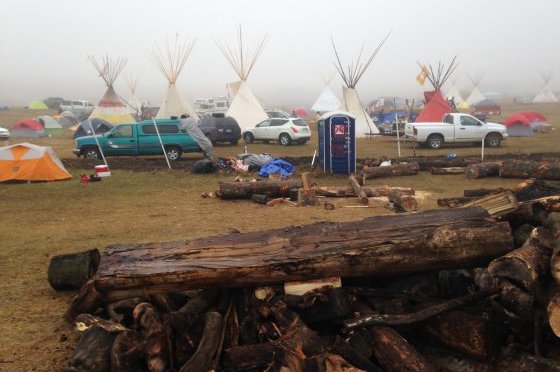
Though having only recently had the spotlight of the national media trained on them, the Dakota Access Pipeline protests have been a months-long clash between, on the one hand, Standing Rock Sioux tribe members, indigenous and non-indigenous allies, and environmental activists, and, on the other, proponents of the nearly 1,200-mile long oil pipeline from western North Dakota to southern Illinois. Indigenous protesters have made recourse to both litigation and direct action in an attempt to halt construction on a pipeline slated to come within a half-mile of the Standing Rock Sioux reservation. The protests have drawn both state and federal intervention, with the National Guard having been brought to protest sites, violent clashes between police and protesters, a legal tango between the Obama administration and district court judges, and increasing pressure on the U.S. presidential candidates to take a stand on the issue.

At issue is what activists say has been a failure on the government’s part to engage Native communities, conduct a thorough environmental and cultural impact assessment ahead of the pipeline’s construction, confront tribe members’ concerns about the potential for water contamination, and adhere to laws regarding the preservation of sacred cultural sites. The approach of the bitter North Dakotan winter has punctuated current protests with a question mark as activists and advocates seek to perpetuate the recently gained media momentum and mobilize public opinion—and, by extension, political pressure—against the pipeline’s construction.

Read:
A History of Native Americans Protesting the Dakota Access Pipeline(Mother Jones)
What to Know About the Dakota Access Pipeline Protests” (TIME)
The Standing Rock Sioux ‘know what they’re doing’ in North Dakota” (Public Radio International)

Additional:
Tension Between Police and Standing Rock Protesters Reaches Boiling Point” (The New York Times, October 2016)
Tribe Says Police Are Violating The Civil Rights Of Dakota Access Pipeline Opponents” (The Huffington Post, October 2016)
Dakota Pipeline Company Buys Ranch Near Sioux Protest Site, Records Show” (NBC News, September 2016)
The Legal Case for Blocking the Dakota Access Pipeline” (The Atlantic, September 2016)

(Image Credit: James MacPherson/AP, via TIME)

Global Events: Black Lives Matter Protests

Black Lives Matter Globally

As a series of controversial shootings of African-American men by police has renewed attention to the Black Lives Matter movement in the U.S., people around the world have stood in solidarity with black Americans seeking to root out racial profiling, excessive use of force, and lack of accountability in U.S. law enforcement. For some, the demonstrations have been defined mostly by a kind of international allyism, but in many parts of the world, the American movement has prompted reflection on the treatment of local black communities—native, historical, and immigrant—by law enforcement, politicians, and broader society. Here is a look at the global demonstrations and solidarity movements in the name of Black Lives Matter: Continue reading Global Events: Black Lives Matter Protests

ClimateWatch | The Philippines

ClimateWatch
The Philippines

The Philippine Congress recently confirmed Rodrigo Duterte as the 16th president of the Philippines, ushering in a new government fueled by populist disaffection and characterized by uncertainty. A lightning rod of controversy, the tough-talking former mayor of Davao City in the south of the country has supported vigilante justice in crime-riddled cities (including against those suffering from addiction), the reinstatement of capital punishment, and paternalistic policies on smoking, alcohol consumption, and youth curfews. His unfiltered style has been likened to U.S. Republican presidential nominee Donald Trump for both his casual misogyny and penchant for offensive jokes.

But Duterte, the Philippines’ oldest president, has also expressed support for minority representation and protections, backed by a record of gender and minority inclusiveness during his time as mayor. His election has already been celebrated for breaking political regionalism in the country: Duterte has become the first president from the historically marginalized island of Mindanao. Now having to scale his leadership from the local to the national level, he inherits a range of difficult issues impacting historically disadvantaged communities, including land and environmental rights for indigenous peoples, reproductive healthcare for women, and political autonomy for Muslim groups in the south.

With international observers and diplomats concerned by Duterte’s unpredictability, his record with and plans for vulnerable communities have been scrutinized as political analysts attempt to predict what the next era of Philippine politics will look like under his leadership. Here is an overview of recent local and international commentary on the impact of Duterte’s election:

Continue reading ClimateWatch | The Philippines

Argentina News | Indigenous Argentines

Argentina establishes special council as criticism of poor indigenous relations intensifies
  • Established by decree, the new council is designed to bring together indigenous and government leaders to tackle cultural and policy issues affecting indigenous communities.
  • Activists have longed called for integration into decision-making processes affecting their communities, including enforcement of constitutional land, language, judicial, and development rights.
  • A recent U.N. report called out the government’s record on land rights—including intimidation and judicial harassment—and called for increased indigenous representation in political and judicial bodies.

Read more:
Government Creates Special Council for Indigenous Affairs” (The Argentina Independent)
Decreto 672/2016: Consejo Consultivo y Participativo de los Pueblos Indígenas de la República Argentina. Creación.” (Ministry of Justice & Human Rights, in Spanish)
Argentina’s indigenous people face ‘appalling’ plight: U.N.” (The Thomson Reuters Foundation)

(Image Credit: Resistencia Qom, via The Argentina Independent)

Brazil News | Farmers & Indigenous

Increasing violence plagues Brazilian land rights activists
  • After 50 died in 2015, at least six activists were killed in the first two months of 2016 as land rights groups report increased intimidation, criminalization, and violence committed against them.
  • Activists have sought reform to protect the at times conflicting land rights of small farmers and indigenous communities, particularly in rural states.
  • Brazil has some of the highest land-proprietary inequality in the world, with 1% of the population owning nearly 50% of the land and single families subject to payments from as many as tens of thousands of property owners thanks to a colonial-era law.

Read more:
Brazil land activists facing ‘increased intimidation’ with six killings in 2016” (The Thomson Reuters Foundation)
Indigenous Continue to Face Violence in Reclaiming Territory in Brazil” (Indian Country Today)
Journalist survives shooting at his home in northwestern Brazil” (Journalism in the Americas)

Additional reading:
For Brazil’s 1 Percenters, The Land Stays In The Family Forever” (NPR, August 2015)

Canada News | First Nations

Rash of suicide attempts leads to emergency declaration in Ontario First Nations community
  • Soon after the Attawapiskat First Nation’s council had declared a state of emergency following months of suicides and suicide attempts, 16 members of the northern Ontario First Nation attempted to take their lives.
  • Since last fall, the community has seen more than 100 suicide attempts among its population of 2,000, with victims ranging in age from 11 to 71.
  • Poor standards of living, limited healthcare access, and the legacies of brutal policies against First Nations have contributed to high indigenous suicide rates, with suicide/self-harm the leading cause of death among indigenous people under the age of 44.

Read more:
How the Attawapiskat suicide crisis unfolded” (The Toronto Star)
First Nations community grappling with suicide crisis: ‘We’re crying out for help’” (The Guardian)
5 more Attawapiskat youth attempt suicide in ‘spiralling situation’” (CBC News)

(Image Credit: Chris Wattie/Reuters, via The Toronto Star)

India News | Women, Indigenous & Dalit

India PM launches entrepreneurship initiative for members of historically disadvantaged communities
  • PM Narendra Modi announced Stand Up India, a program to spur entrepreneurship and business-technological integration among women and India’s Scheduled Castes and Scheduled Tribes, historically disadvantaged groups subject to affirmative action by the government.
  • Banks will be required to sponsor relatively inexpensive loans for entrepreneurs from disadvantaged and underrepresented communities.
  • The initiative comes ahead of next year’s elections in the state of Uttar Pradesh, with the Modi-led National Democratic Alliance (NDA) coalition seeking to court Dalit and tribal votes.

Read more:
PM promises to ‘change’ lives of tribals, Dalits with ‘Stand up India’” (The Hindustan Times)
‘Stand Up India’ will transform lives of Dalits, tribals: Modi” (The Hindu)
‘Stand up India’: PM Modi to book first e-rickshaw through Ola” (The Times of India)

(Image Credit: Sandeep Saxena/The Hindu)

India Feature | Women

The Women Enforcers of Ghunduribadi

While international media attention often focuses on oppressive conditions women face in India’s tribal regions, women from Ghunduribadi, in the eastern state of Odisha, have stepped up as the security forces to protect the land rights of their villages. Land rights reforms have sought to reclaim ancestral lands expropriated under British colonial laws, but enforcement has been spotty and, according to some advocates and lawmakers, diluted. As their community suffered from illegal incursions into the forest their village relies on for food and supplies, the women banded together to conduct patrols, stepping in where the law wouldn’t to ensure that their land and community are protected.

Read more:
These Indian women said they could protect their local forests better than the men in their village. The men agreed.” (Public Radio International)

Additional reading:
‘Centre, states undermining tribal rights’” (Hindustan Times)
Cong. protests ‘dilution’ of Forest Rights Act” (The Hindu)

(Image Credit: Sam Eaton/PRI)

U.S. Research | Black & Children with Disabilities

Disproportionate Suspension Rates in U.S. Charter Schools

A new study has found that black students and students with disabilities are suspended at considerably higher rates than their peers in charter schools at both the elementary and secondary level. At the secondary level, Latino and Native American students join them in disproportionate suspension. The report from the Center for Civil Rights Remedies at the UCLA Civil Rights Project spells particular trouble for black students with disabilities and has troubling implications in the fight against the school-to-prison pipeline.

4.1% (all students) vs. 9.7% (with disabilities) vs. 3.7% (without disabilities)

Suspension rates at the elementary level by ability

4.1% (all students) vs. 8.7% (black) vs. 2.1% (white) vs. 2.4% (Latino) vs. 3% (Native American)

Suspension rates at the elementary level by race/ethnicity

11.6% (all students) vs. 20.8% (with disabilities) vs. 10.6% (without disabilities)

Suspension rates at the secondary level by ability

11.6% (all students) vs. 22% (black) vs. 5.6% (white) vs. 9.1% (Latino) vs. 10.9% (Native American)

Suspension rates at the secondary level by race/ethnicity

7.8% (charters) vs. 6.7% (non-charters)

Suspension rates at the K-12 level

15.5% (charters) vs. 13.7% (non-charters)

Suspension rates of students with disabilities (K-12)

7% (charters) vs. 5.7% (non-charters)

Suspension rates of students without disabilities (K-12)

50+%

Suspension rate of students with disabilities at 235 charter schools

Years studied: 2011-12

Read more:
Charter Schools, Civil Rights, and School Discipline: A Comprehensive Review (The Center for Civil Rights Remedies)
Students With Disabilities Suspended More Often At Charters” (Disability Scoop)

Brazil News | Indigenous Peoples

Study shows 90% of indigenous peoples in Amazonian Brazil suffering from mercury poisoning
  • Illegal gold mining in northern Brazil has contaminated the water and food sources of at least 19 different Yanomami and Yekuana communities along with Nahua tribes in Peru.
  • In addition to the rise of illegal mining over the last three decades, uncontacted Yanomami communities have faced environmental crises and decades-old controversies over the status of their blood used for genetic testing by American anthropologists.
  • The study was a joint project of Brazilian health foundation Fiocruz, the Hutukara Yanomami Association, the Yekuana Association, and Brazilian NGO Socio-Environmental Institute.

Read more:
Mercury poisoning of Amazon Indians: alarming new statistics revealed” (Survival)
90% of Indigenous in Brazil’s Amazon Suffer Mercury Poisoning” (teleSUR English)
Indigenous tribe’s blood returned to Brazil after decades” (BBC)

(Image Credit: Fiona Watson/Survival)

Honduras News | Indigenous Activists

Indigenous activist murdered days after famous campaigner in Honduras
  • Nelson García, member of the Civic Council of Popular and Indigenous Organizations of Honduras (COPINH), was gunned down on his way to his family home.
  • His murder follows that of fellow activist Berta Cáceres, the co-founder of COPINH killed in her home after having received threats from police and anonymous individuals.
  • The deaths come as government officials have subjected COPINH affiliates to illegal surveillance and coercive detention, part of an anti-environmentalist environment in Honduras that saw more than 100 killed between 2010 and 2014.

Read more:
Fellow Honduran activist Nelson García murdered days after Berta Cáceres” (The Guardian)
Another Member of Berta Caceres’ Group Assassinated in Honduras” (teleSUR English)
Berta Cáceres, Honduran human rights and environment activist, murdered” (The Guardian)

(Image Credit: Orlando Sierra/AFP/Getty Images, via The Guardian)

Japan Research | Ainu

Japan’s Ethnic Discrimination Perception Gap

Two government studies have revealed discrepancies in perception of discrimination against the Ainu, an ethnic group indigenous to Hokkaido and nearby islands. Ainu individuals report experiencing inequality and discrimination at higher levels than non-Ainu Japanese recognize. While the Japanese government has long pursued assimilationist policies towards ethnic groups in areas taken over through centuries of imperialist expansion, in recent years, the government has officially recognized the Ainu as an indigenous group and planned to promote its cultural visibility. The surveys represent the first state-level research on public perception of Ainu Japanese.

72.1% (Ainu) vs. 17.9% (non-Ainu)

Percentage of respondents who believe anti-Ainu discrimination and prejudice persist

19.1% (Ainu) vs. 50.7% (non-Ainu)

Percentage of respondents who believe little to no anti-Ainu discrimination and prejudice persist

74.1%

Percentage of non-Ainu respondents reporting having never encountered an Ainu person or Ainu culture

51.4%

Percentage of Ainu respondents reporting having friends and family who have experienced discrimination

26.2%

Percentage of Ainu respondents reporting having experienced discrimination directly

57.5%

Percentage of those who have experienced direct discrimination reporting opposition to their marriage or relationships from their non-Ainu partner’s family

53.8%

Percentage of those who have experienced direct discrimination reporting discomfort due to discrimination in the workplace

Survey response:
707/1,000 (Ainu)
1,727/3,000 (non-Ainu)

Read more:
Discrimination of Ainu persists; Japanese people largely unaware” (Japan Today)
72% of indigenous Ainu sense discrimination 18% of mainstream Japanese are ignorant of: surveys” (The Japan Times)

Additional reading:
Everything you wanted to know about the Ainu, with photos and video” (RocketNews24)

(Image Credit: via The Japan Times)

Sweden News | Indigenous Peoples

Judge rules in favor of exclusive land rights for indigenous group in northern Sweden
  • A district court ruled that the Sami, an ethnic group indigenous to northern Scandanavia and northwest Russia, should have exclusive rights to control hunting and fishing in the Arctic village of Girjas.
  • The legal battle began in the early 1990s, when the Swedish government stripped land rights to the village from the Sami, Sweden’s only officially recognized indigenous group who trace their lineage in the region back thousands of years.
  • The victory comes as the Church of Sweden has released a two-volume report detailing the history of its treatment of the Sami, including the segregated schools it ran for from the 1910s to the 1960s.

Read more:
Sweden’s indigenous Sami people win rights battle against state” (The Guardian)
Sami minority wins symbolic court victory over Sweden” (The Local)
Swedish church admits it ran ‘racist’ Sami schools” (The Local)

(Image Credit: Alamy/The Guardian)

Canada News | Women & Minorities

PM Trudeau forms most diverse government in Canadian history
  • Fulfilling a campaign promise, Trudeau has created a gender-equal 30-member cabinet “because it’s 2015,” as he bluntly stated at a press conference unveiling his new government.
  • The cabinet also includes the country’s first Muslim minister, two indigenous ministers, three Sikhs, and two ministers with disabilities.
  • Trudeau’s cabinet is also relatively youthful, with most ministers under the age of 50, reflecting Trudeau’s commitment to generational change.

Read more:
A Canadian Cabinet for 2015” (The Atlantic)
Prime Minister Justin Trudeau unveils diverse cabinet in touching ceremony” (The Star)
Trudeau gives Canada first cabinet with equal number of men and women” (The Guardian)

(Image Credit: Chris Wattle/Reuters, via the Atlantic)

Canada News | Women & Minorities

Canadian elections bring significant victories for women,  First Nations, and other minorities
  • A wave of victories swept a record 10 new indigenous MPs (eight Liberal and two NDP) into the House of Commons as preliminary reports indicate higher than normal turnout rates among indigenous Canadian communities.
  • Women won 88 seats, increasing their representation to 26%, while new PM Justin Trudeau has promised to have equal gender representation in his Cabinet.
  • Six Muslims won seats during an election cycle that saw religious freedom issues contentiously debated, and visible minority representation increased to 13.6% from 9.7% in 2011.

Read more:
Record 10 indigenous MPs elected to the House of Commons” (CBC News)
On-reserve voters endure lines and ballot issues for historic election” (The Globe and Mail)
Women and visible minorities make election gains” (Yahoo! News)

(Image Credit: CBC)