U.S. issues first birth certificate acknowledging intersex status
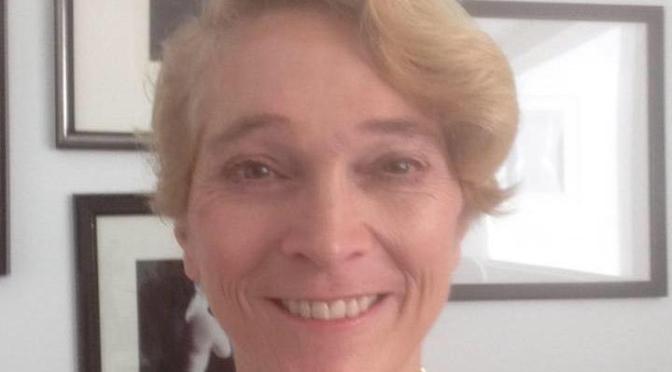
Sara Kelly Keenan was issued a revised birth certificate by New York City acknowledging her intersex identity, which follows a California ruling earlier in the year that allowed Keenan to change her legal status to non-binary.
The reality of 55-year-old Keenan’s biological identity was long hidden from her by her parents and doctors, who made a series of decisions regarding gender assignment and hormonal therapy without her consent.
The movement for non-binary gender options on birth certificates has gained momentum in recent years in parallel with the increased visibility of the trans, queer, and nonbinary communities.
The Growing Workforce Inclusion of the U.S. Autism Community
Companies like EY, Microsoft, and HP Enterprises have begun launching new neurodiversity initiatives at their firms, with a particular focus on recruiting people on the autism spectrum. The new outreach is welcome by advocates for the autism community, which faces a 58% unemployment rate despite having skills in high demand by employers in the knowledge economy. The Atlantic features an overview of industry efforts at inclusion, including innovation in recruiting, training, and management processes to ensure the successful identification and integration of people on the spectrum into organizations.
The failure of prisons to comply with the Americans with Disabilities Act, ruled applicable to prisons in 1998, has created a quagmire within the criminal justice system: although people with disabilities are incarcerated at rates far higher than their demographic proportion and comprise nearly a third of the total prison population, they are funneled into systems that refuse to follow the law when it comes to adapting their protocols and facilities to those disabilities. Beyond the mass incarceration of people with disabilities, once incarcerated, disabled people face longer sentencing, solitary confinement, inaccessible vocational training, poor education administration, and limited medical access, exacerbating the negative effects of physical and mental illnesses and creating cycles of re-marginalization and inadequate preparation for release.
VICE News examines the impact of incarceration on people with disabilities and attempts to advocate on their behalf given the numerous conflicts of interest present in the reporting and petitioning process.
Despite comprising half of the population of Angelenos, Hispanics have been largely absent from the center of Hollywood narratives using the City of Angels as its backdrop. The Guardian examines the reception of the depictions that have managed to make it to the big screen, a brief history of Hispanic actors’ relationship to Hollywood, and the tales of bigotry encountered in an industry whose whitewashed screens have often drained the nation’s most vibrant and multicultural cities of color and complexity, further distancing those at the margins from the idea of “Americanness.”
An extensive multi-part series by The Houston Chronicle has revealed the devious tactics the Texas Education Agency and school administrators have deployed to reduce the number of students with disabilities their schools serve, masking an alarming decrease in support beneath the glean of “improved pedagogy” and “early intervention.” An arbitrary, unscientific 8.5% benchmark was set across the state for the percentage of students taught in special education classes, which necessitated a dramatic and at times aggressive reduction in the number of students evaluated and identified as in need of special education. From stories of families trapped in bureaucratic labyrinths to data on the disproportionate negative effect on English-language learners, the Chronicle series investigates the broken system responsible for the education of children with disabilities and the political struggle to right the listing ship.
The bill criminalizes abortion procedures after 20 weeks of gestation (currently 145 out of the nearly 21,000 abortions performed in Ohio), including because of rape, incest, or severe fetal anomalies.
Governor John Kasich vetoed a second controversial bill known as the “Heartbeat Bill” that would have banned abortion procedures as soon as a fetal pulse is detected, which occurs around six weeks of pregnancy (or around two weeks after a woman is able to determine her pregnancy status).
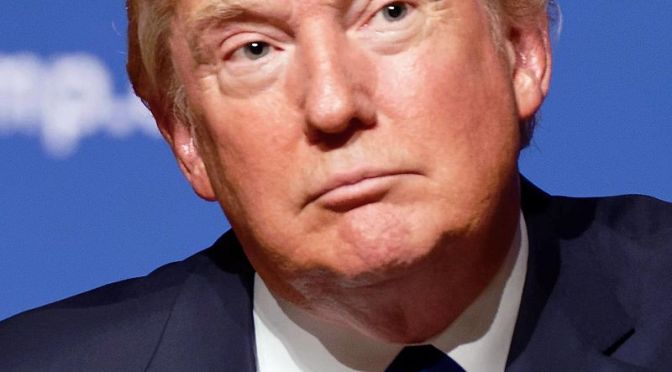
The bills emerged as anti-abortion activists have been emboldened by the election of Donald Trump, signaling what they believe will be a new era in abortion politics given the precariousness of the current Supreme Court makeup.
Tensions escalate in North Dakota as protesters and police clash in Dakota Access Pipeline protests
Protesters reported police wielding tear gas and water cannons in the 23-degree weather after claiming the protests had dissolved into a “riot,” heightening already pronounced concerns about hypothermia in the below-freezing conditions.
Reports indicated that more than 150 were injured and at least seven hospitalized as a result of the confrontation.
More than 400 activists have been arrested since the standoff began over the ongoing dispute over the construction of the Dakota Access Pipeline near the Standing Rock Sioux reservation.
New joint Jewish-Muslim council arises to combat growing religious tensions in U.S.
The American Jewish Committee and the Islamic Society of North America announced the formation of the Muslim-Jewish Advisory Council.
The Council will advocate on behalf of religious minorities on issues of concern, including anti-Semitism, Islamophobia, immigration, and civil rights policy.
Co-chaired by Stanley Bergman and Farooq Kathwari, the 31-person Council includes religious, business, and academic leaders from across the political spectrum.
The conclusion of an election that saw an historic clash over the values of diversity, inclusion, and the meaning of “America” has brought with it a surge in uncertainty for minority and other historically disadvantaged communities in the U.S. The damage was extensive: the nearly year and a half of campaigning saw ethnic and religious minorities disparaged, immigrants targeted, women (including his opponent) subjected to misogynistic abuse, the mainstream press caught in the crosshairs of an anti-media campaign, and rhetorical and symbolic resonances in speeches and advertising that drew white supremacists and other far-right extremists out of the woodwork.
In what ways has Trump’s election reshaped the social and political climate for vulnerable American populations, including women, Latinos, black people, immigrants, LGBTQ people, and people with disabilities? How is the post-election retreat from data showing racial resentment as the highest predictor of Trump support endangering reality-based solutions for vulnerable communities, politicians, and analysts? And how has his rise to power connected to and amplified similar right-wing, ethno-nationalist politics globally?
Whether and how American conservatives and the Republican Party—now set to hold power in all three branches of government—are able to manage a resurgent coalition of ethno-nationalist voters as well as the capacity for progressive and Democratic activists to create social, political, and legal structures to protect vulnerable communities will determine what life in Trump’s America will look like for the at-risk. This ClimateWatch rounds up a number of key news items, analyses, and commentaries providing insight on what has happened and what could be on the horizon. Continue reading ClimateWatch: U.S.→
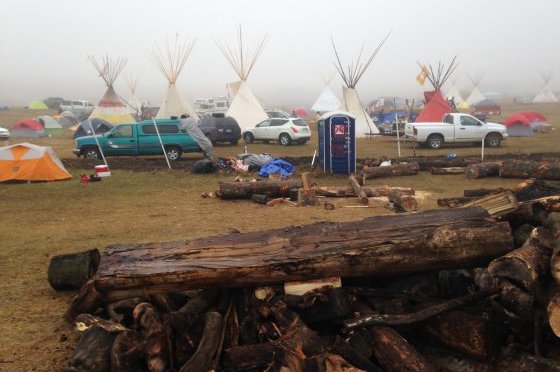
Though having only recently had the spotlight of the national media trained on them, the Dakota Access Pipeline protests have been a months-long clash between, on the one hand, Standing Rock Sioux tribe members, indigenous and non-indigenous allies, and environmental activists, and, on the other, proponents of the nearly 1,200-mile long oil pipeline from western North Dakota to southern Illinois. Indigenous protesters have made recourse to both litigation and direct action in an attempt to halt construction on a pipeline slated to come within a half-mile of the Standing Rock Sioux reservation. The protests have drawn both state and federal intervention, with the National Guard having been brought to protest sites, violent clashes between police and protesters, a legal tango between the Obama administration and district court judges, and increasing pressure on the U.S. presidential candidates to take a stand on the issue.
At issue is what activists say has been a failure on the government’s part to engage Native communities, conduct a thorough environmental and cultural impact assessment ahead of the pipeline’s construction, confront tribe members’ concerns about the potential for water contamination, and adhere to laws regarding the preservation of sacred cultural sites. The approach of the bitter North Dakotan winter has punctuated current protests with a question mark as activists and advocates seek to perpetuate the recently gained media momentum and mobilize public opinion—and, by extension, political pressure—against the pipeline’s construction.
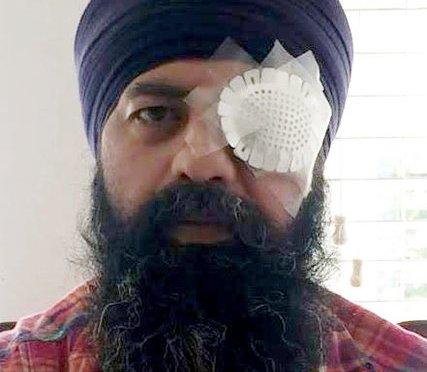
Assailants face hate crime charges following attack on Sikh man in California
The attackers had thrown beer cans at Maan Singh Khalsa‘s car in Richmond, California, and then physically attacked him, including knocking off his turban, forcing his head down, and cutting more than 10 inches of his hair.
Unshorn hair is a religious mandate for observant Sikhs, and the specific targeting of his hair led to the hate crime designation.
The attack follows years of similar targeting of Sikhs in the U.S., with many mistaken for Muslims and subject to violence because of their religious wear.
Muslims of Somali descent targeted in Kansas bomb plot
Three men were arrested on charges of domestic terrorism after a plot to bomb an apartment complex in Garden City, Kansas housing a large number of immigrant Somali Muslims.
The conspirators went by the name “The Crusaders” and had come under surveillance during an eight-month investigation by the FBI.
The failed plot comes amidst a wave of anti-Muslim attacks in the U.S., with 2015 and 2016 having had the highest number on record.
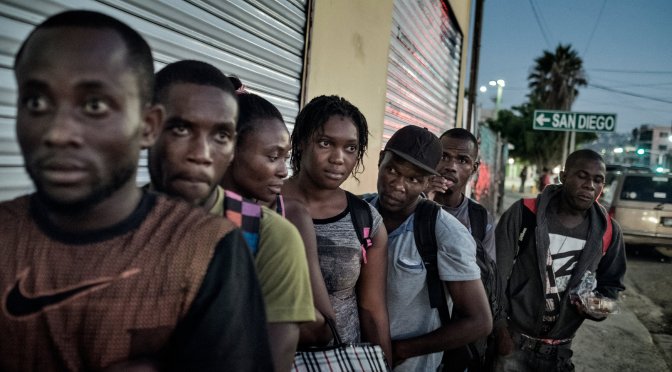
End of special immigration protections diminishes hopes of Haitians looking to cross into U.S. from Mexico
Thousands of Haitians have become trapped in Mexico as an ongoing migration crisis has been exacerbated by the recent destruction wrought by Hurricane Matthew in their home country.
The U.S. recently ended special protections for Haitian migrants in the country in place since the 2010 earthquake that killed more than 200,000, though activists have begun pressuring the government to renew them in light of the most recent natural disaster.
Monitors estimate as many as 40,000—many coming from an economically distraught Brazil—may be en route throughout the Americas as they pay upwards of thousands of dollars to pass through the most legally treacherous parts.
U.S. meets target of 10,000 Syrian refugee admissions
The White House announced that the 10,000th Syrian refugee had been scheduled for arrival a month before the end of the fiscal year, with Michigan and California topping the list of most popular destinations for arrivals.
The number of admissions is expected to be capped at 10,000 again for 2017, though plans have been announced to increase the number by a few thousand each year thereafter.
The number of admissions will be contingent upon the outcome of the 2016 national elections, with refugee admissions and immigration more broadly a controversial topic in the presidential campaigns.
As a series of controversial shootings of African-American men by police has renewed attention to the Black Lives Matter movement in the U.S., people around the world have stood in solidarity with black Americans seeking to root out racial profiling, excessive use of force, and lack of accountability in U.S. law enforcement. For some, the demonstrations have been defined mostly by a kind of international allyism, but in many parts of the world, the American movement has prompted reflection on the treatment of local black communities—native, historical, and immigrant—by law enforcement, politicians, and broader society. Here is a look at the global demonstrations and solidarity movements in the name of Black Lives Matter: Continue reading Global Events: Black Lives Matter Protests→






 Outlas